
Rousette 蝙蝠树突状细胞通过上调干扰素相关基因和下调促炎疾病介质来克服马尔堡病毒介导的抗病毒反应。
Rousette Bat Dendritic Cells Overcome Marburg Virus-Mediated Antiviral Responses by Upregulation of Interferon-Related Genes While Downregulating Proinflammatory Disease Mediators.
机构信息
Center for Biological Threats and Special Pathogens, Robert Koch Institute, Berlin, Germany
Viral Special Pathogens Branch, Centers for Disease Control and Prevention, Atlanta, Georgia, USA.
出版信息
mSphere. 2019 Dec 4;4(6):e00728-19. doi: 10.1128/mSphere.00728-19.
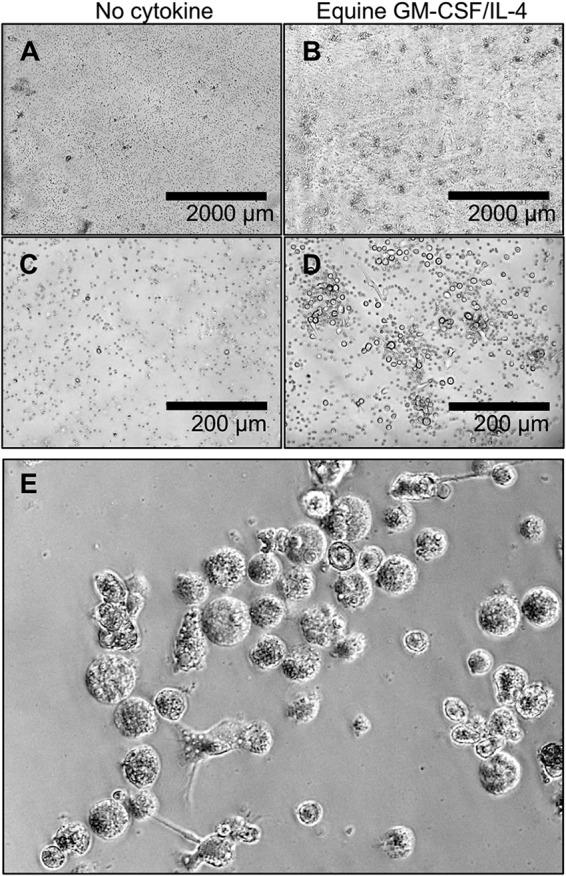
Dysregulated and maladaptive immune responses are at the forefront of human diseases caused by infection with zoonotic viral hemorrhagic fever viruses. Elucidating mechanisms of how the natural animal reservoirs of these viruses coexist with these agents without overt disease, while permitting sufficient replication to allow for transmission and maintenance in a population, is important for understanding the viral ecology and spillover to humans. The Egyptian rousette bat (ERB) has been identified as a reservoir for Marburg virus (MARV), a filovirus and the etiological agent of the highly lethal Marburg virus disease. Little is known regarding how these bats immunologically respond to MARV infection. In humans, macrophages and dendritic cells (DCs) are primary targets of infection, and their dysregulation is thought to play a central role in filovirus diseases, by disturbing their normal functions as innate sensors and adaptive immune response facilitators while serving as amplification and dissemination agents for the virus. The infection status and responses to MARV in bat myeloid-lineage cells are uncharacterized and likely represent an important modulator of the bat's immune response to MARV infection. Here, we generate DCs from the bone marrow of rousette bats. Infection with a bat isolate of MARV resulted in a low level of transcription in these cells and significantly downregulated DC maturation and adaptive immune-stimulatory pathways while simultaneously upregulating interferon-related pathogen-sensing pathways. This study provides a first insight into how the bat immune response is directed toward preventing aberrant inflammatory responses while mounting an antiviral response to defend against MARV infection. Marburg viruses (MARVs) cause severe human disease resulting from aberrant immune responses. Dendritic cells (DCs) are primary targets of infection and are dysregulated by MARV. Dysregulation of DCs facilitates MARV replication and virus dissemination and influences downstream immune responses that result in immunopathology. Egyptian rousette bats (ERBs) are natural reservoirs of MARV, and infection results in virus replication and shedding, with asymptomatic control of the virus within weeks. The mechanisms that bats employ to appropriately respond to infection while avoiding disease are unknown. Because DC infection and modulation are important early events in human disease, we measured the transcriptional responses of ERB DCs to MARV. The significance of this work is in identifying cell type-specific coevolved responses between ERBs and MARV, which gives insight into how bat reservoirs are able to harbor MARV and permit viral replication, allowing transmission and maintenance in the population while simultaneously preventing immunopathogenesis.
失调和适应不良的免疫反应是由人畜共患病毒性出血热病毒感染引起的人类疾病的前沿。阐明这些病毒的自然动物宿主如何在没有明显疾病的情况下与这些病原体共存,同时允许足够的复制以允许在人群中传播和维持,对于了解病毒生态学和溢出到人类至关重要。埃及果蝠(ERB)已被确定为马尔堡病毒(MARV)的储主,马尔堡病毒是丝状病毒,也是高度致命的马尔堡病毒病的病原体。关于这些蝙蝠如何对 MARV 感染产生免疫反应,人们知之甚少。在人类中,巨噬细胞和树突状细胞(DC)是感染的主要靶标,它们的失调被认为在丝状病毒病中起着核心作用,通过扰乱它们作为先天传感器和适应性免疫反应促进剂的正常功能,同时充当病毒的放大和传播剂。蝙蝠髓系细胞中 MARV 的感染状况和反应尚不清楚,并且可能代表对蝙蝠对 MARV 感染的免疫反应的重要调节剂。在这里,我们从 Rousette 蝙蝠的骨髓中生成 DC。用蝙蝠 MARV 分离株感染这些细胞会导致转录水平降低,并显著下调 DC 成熟和适应性免疫刺激途径,同时上调干扰素相关的病原体感应途径。这项研究首次深入了解蝙蝠的免疫反应如何针对防止异常炎症反应,同时对 MARV 感染产生抗病毒反应。马尔堡病毒(MARVs)引起异常免疫反应导致严重的人类疾病。树突状细胞(DCs)是感染的主要靶标,并且被 MARV 失调。DC 的失调促进 MARV 复制和病毒传播,并影响导致免疫病理学的下游免疫反应。埃及 Rousette 蝙蝠(ERBs)是 MARV 的天然储主,感染导致病毒复制和脱落,数周内无症状控制病毒。蝙蝠用来适当应对感染而避免疾病的机制尚不清楚。由于 DC 感染和调节是人类疾病的早期重要事件,我们测量了 MARV 对 ERB DC 的转录反应。这项工作的意义在于确定 ERB 和 MARV 之间细胞类型特异性共同进化的反应,这为了解蝙蝠储主如何能够容纳 MARV 并允许病毒复制,允许在人群中传播和维持,同时同时防止免疫发病机制提供了线索。




 Zotero 插件