
小麦(Triticum aestivum L.)在多种胁迫和激素处理下谷胱甘肽转移酶基因家族的全基因组鉴定和表达谱分析。
Genome-wide identification and expression profiling of glutathione transferase gene family under multiple stresses and hormone treatments in wheat (Triticum aestivum L.).
机构信息
The Genetic Engineering International Cooperation Base of Chinese Ministry of Science and Technology, Key Laboratory of Molecular Biophysics of Chinese Ministry of Education, College of Life Science and Technology, Huazhong University of Science and Technology (HUST), Wuhan, 430074, China.
出版信息
BMC Genomics. 2019 Dec 16;20(1):986. doi: 10.1186/s12864-019-6374-x.
BACKGROUND
Glutathione transferases (GSTs), the ancient, ubiquitous and multi-functional proteins, play significant roles in development, metabolism as well as abiotic and biotic stress responses in plants. Wheat is one of the most important crops, but the functions of GST genes in wheat were less studied.
RESULTS
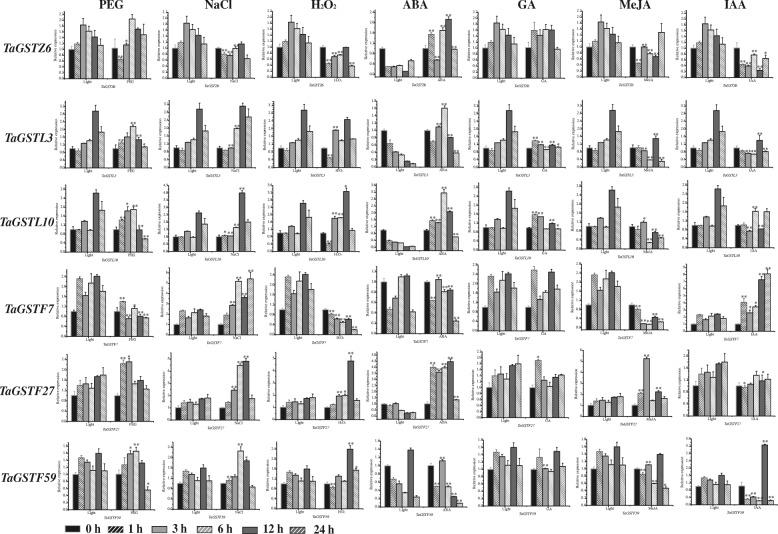
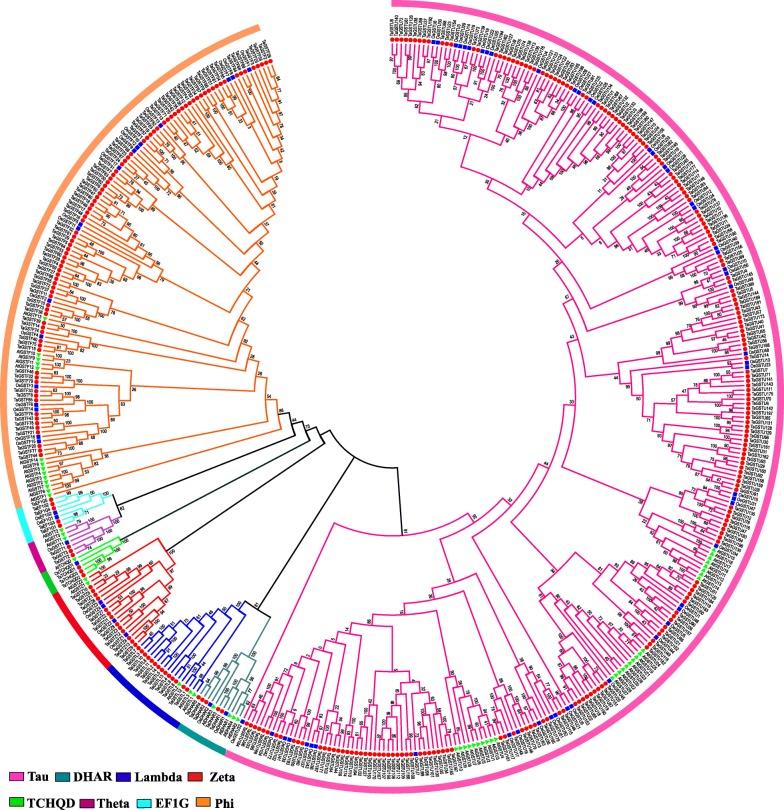
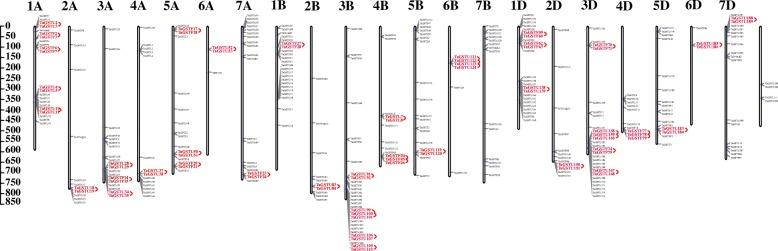
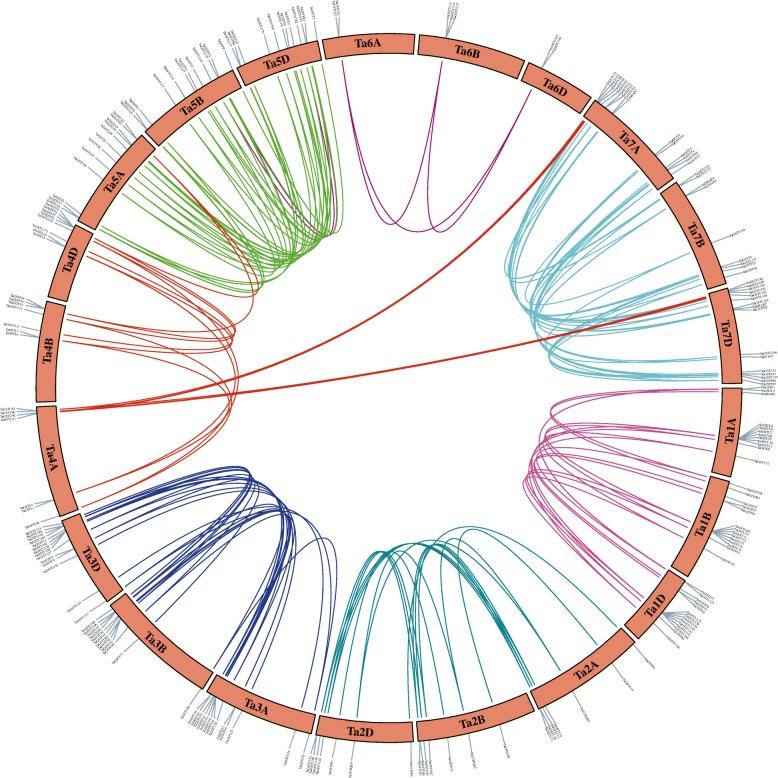
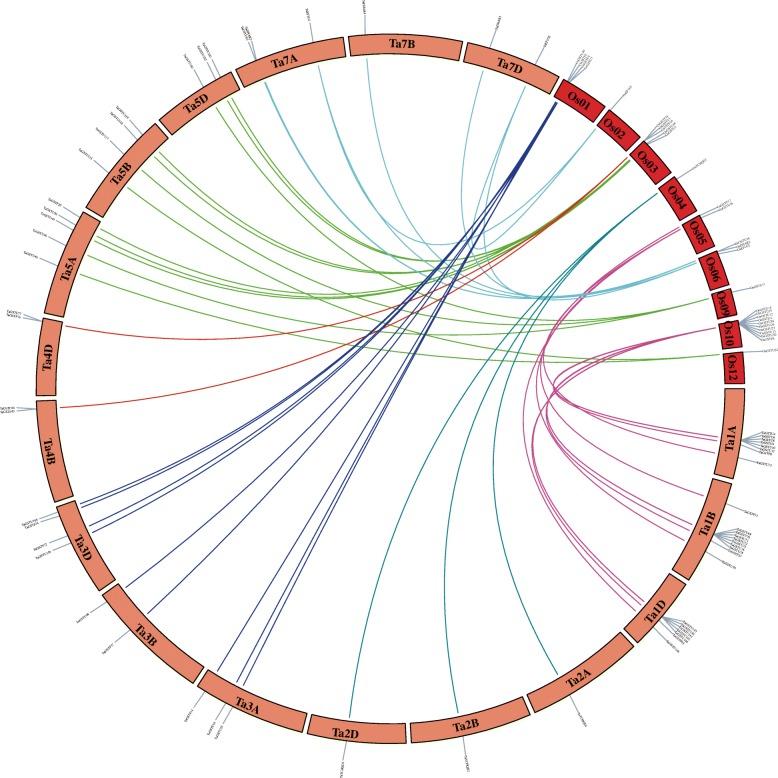
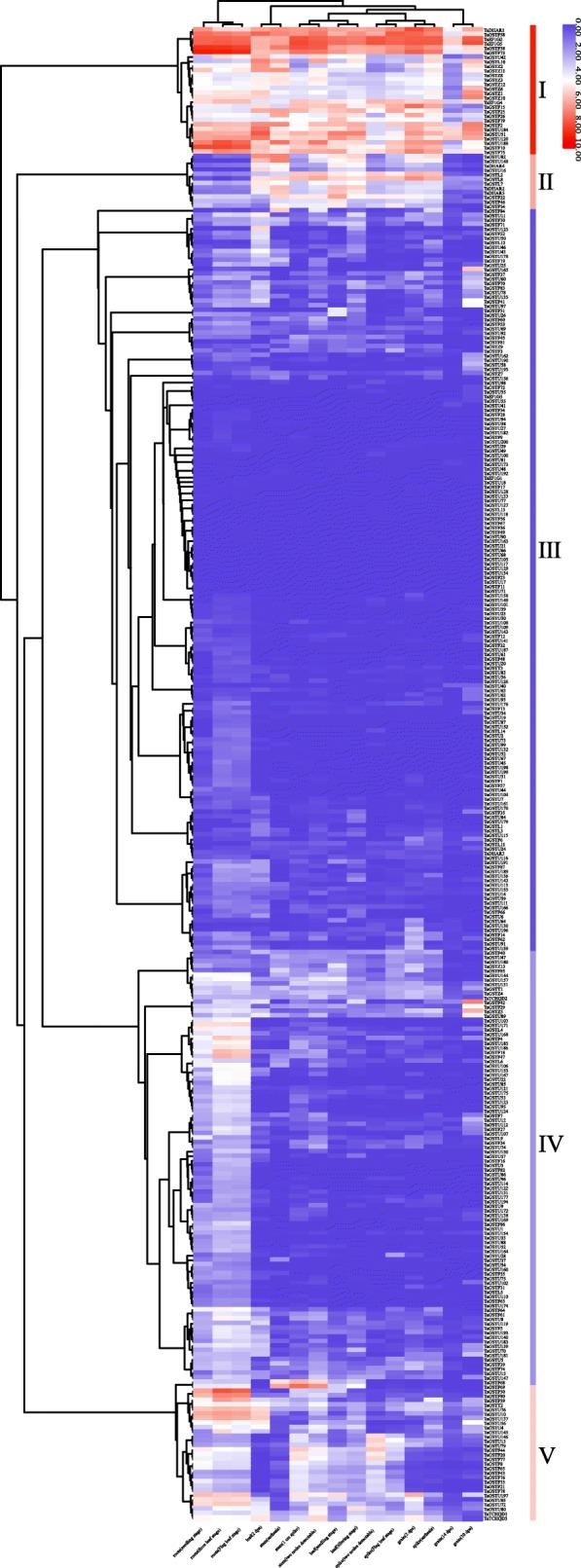
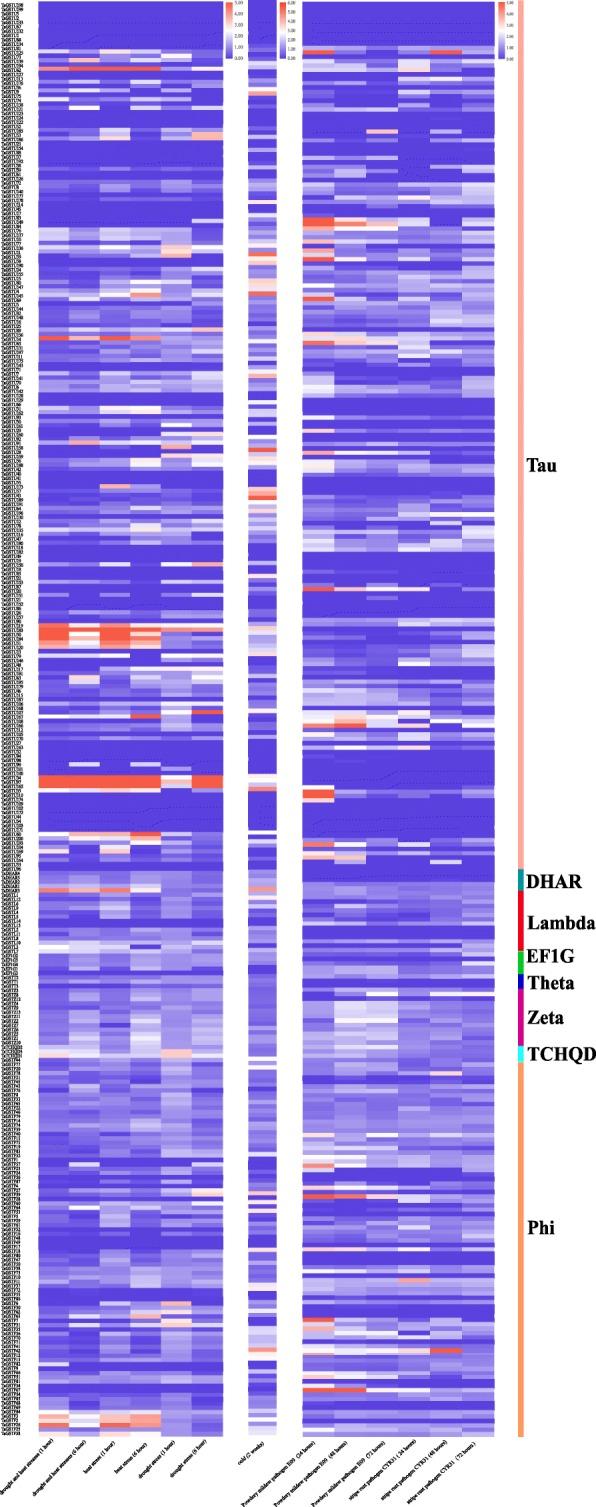
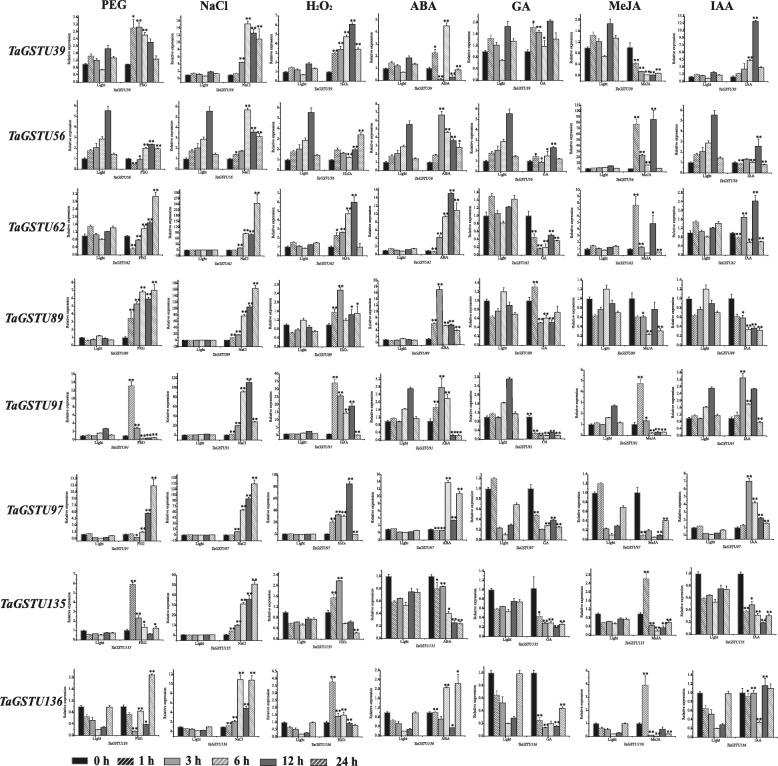
A total of 330 TaGST genes were identified from the wheat genome and named according to the nomenclature of rice and Arabidopsis GST genes. They were classified into eight classes based on the phylogenetic relationship among wheat, rice, and Arabidopsis, and their gene structure and conserved motif were similar in the same phylogenetic class. The 43 and 171 gene pairs were identified as tandem and segmental duplication genes respectively, and the Ka/Ks ratios of tandem and segmental duplication TaGST genes were less than 1 except segmental duplication gene pair TaGSTU24/TaGSTU154. The 59 TaGST genes were identified to have syntenic relationships with 28 OsGST genes. The expression profiling involved in 15 tissues and biotic and abiotic stresses suggested the different expression and response patterns of the TaGST genes. Furthermore, the qRT-PCR data showed that GST could response to abiotic stresses and hormones extensively in wheat.
CONCLUSIONS
In this study, a large GST family with 330 members was identified from the wheat genome. Duplication events containing tandem and segmental duplication contributed to the expansion of TaGST family, and duplication genes might undergo extensive purifying selection. The expression profiling and cis-elements in promoter region of 330 TaGST genes implied their roles in growth and development as well as adaption to stressful environments. The qRT-PCR data of 14 TaGST genes revealed that they could respond to different abiotic stresses and hormones, especially salt stress and abscisic acid. In conclusion, this study contributed to the further functional analysis of GST genes family in wheat.
背景
谷胱甘肽转移酶(GSTs)是古老、普遍存在且多功能的蛋白质,在植物的发育、代谢以及非生物和生物胁迫响应中发挥着重要作用。小麦是最重要的作物之一,但 GST 基因在小麦中的功能研究较少。
结果
从小麦基因组中鉴定出 330 个 TaGST 基因,并根据水稻和拟南芥 GST 基因的命名法进行命名。根据小麦、水稻和拟南芥之间的系统发育关系,将它们分为 8 个类,并且在同一系统发育类中,它们的基因结构和保守基序相似。鉴定出 43 对和 171 对串联和片段复制基因对,除片段复制基因对 TaGSTU24/TaGSTU154 外,串联和片段复制 TaGST 基因的 Ka/Ks 比值均小于 1。鉴定出 59 个 TaGST 基因与 28 个 OsGST 基因具有共线性关系。涉及 15 种组织和生物及非生物胁迫的表达谱分析表明,TaGST 基因的表达和响应模式不同。此外,qRT-PCR 数据表明 GST 可广泛响应小麦中的非生物胁迫和激素。
结论
本研究从小麦基因组中鉴定出一个包含 330 个成员的 GST 大家族。包含串联和片段复制的复制事件导致 TaGST 家族的扩张,并且复制基因可能经历了广泛的纯化选择。330 个 TaGST 基因的表达谱和启动子区顺式元件表明它们在生长发育以及适应胁迫环境中发挥作用。14 个 TaGST 基因的 qRT-PCR 数据表明,它们可以响应不同的非生物胁迫和激素,特别是盐胁迫和脱落酸。总之,本研究有助于进一步分析小麦 GST 基因家族的功能。
 Zotero 插件