
神经炎症作为神经退行性疾病的一个因素:沙利度胺类似物作为治疗方法
Neuroinflammation as a Factor of Neurodegenerative Disease: Thalidomide Analogs as Treatments.
作者信息
Jung Yoo Jin, Tweedie David, Scerba Michael T, Greig Nigel H
机构信息
Drug Design & Development Section, Translational Gerontology Branch, Intramural Research Program, National Institute on Aging, National Institutes of Health, Baltimore, MD, United States.
出版信息
Front Cell Dev Biol. 2019 Dec 4;7:313. doi: 10.3389/fcell.2019.00313. eCollection 2019.
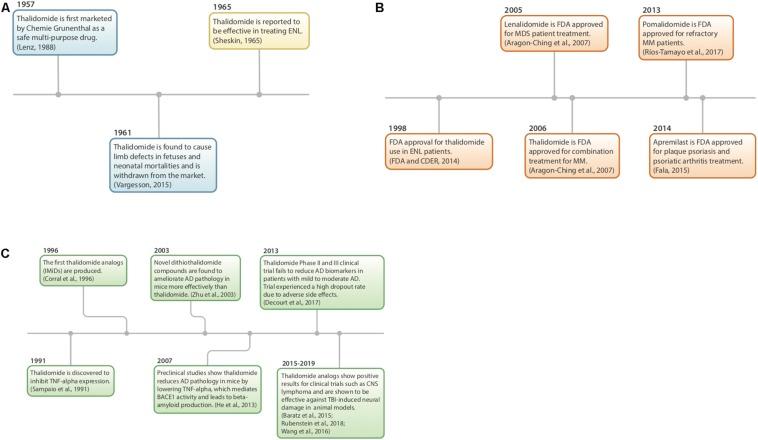
Neuroinflammation is initiated when glial cells, mainly microglia, are activated by threats to the neural environment, such as pathogen infiltration or neuronal injury. Although neuroinflammation serves to combat these threats and reinstate brain homeostasis, chronic inflammation can result in excessive cytokine production and cell death if the cause of inflammation remains. Overexpression of tumor necrosis factor-α (TNF-α), a proinflammatory cytokine with a central role in microglial activation, has been associated with neuronal excitotoxicity, synapse loss, and propagation of the inflammatory state. Thalidomide and its derivatives, termed immunomodulatory imide drugs (IMiDs), are a class of drugs that target the 3'-untranslated region (3'-UTR) of TNF-α mRNA, inhibiting TNF-α production. Due to their multi-potent effects, several IMiDs, including thalidomide, lenalidomide, and pomalidomide, have been repurposed as drug treatments for diseases such as multiple myeloma and psoriatic arthritis. Preclinical studies of currently marketed IMiDs, as well as novel IMiDs such as 3,6'-dithiothalidomide and adamantyl thalidomide derivatives, support the development of IMiDs as therapeutics for neurological disease. IMiDs have a competitive edge compared to similar anti-inflammatory drugs due to their blood-brain barrier permeability and high bioavailability, with the potential to alleviate symptoms of neurodegenerative disease and slow disease progression. In this review, we evaluate the role of neuroinflammation in neurodegenerative diseases, focusing specifically on the role of TNF-α in neuroinflammation, as well as appraise current research on the potential of IMiDs as treatments for neurological disorders.
当神经胶质细胞(主要是小胶质细胞)被神经环境的威胁(如病原体浸润或神经元损伤)激活时,神经炎症就会启动。尽管神经炎症有助于对抗这些威胁并恢复脑内稳态,但如果炎症原因持续存在,慢性炎症会导致细胞因子过度产生和细胞死亡。肿瘤坏死因子-α(TNF-α)是一种在小胶质细胞激活中起核心作用的促炎细胞因子,其过表达与神经元兴奋性毒性、突触丧失以及炎症状态的传播有关。沙利度胺及其衍生物,即免疫调节性酰亚胺药物(IMiDs),是一类靶向TNF-α mRNA的3'-非翻译区(3'-UTR)、抑制TNF-α产生的药物。由于其多效性,包括沙利度胺、来那度胺和泊马度胺在内的几种IMiDs已被重新用作治疗多发性骨髓瘤和银屑病关节炎等疾病的药物。目前市售IMiDs以及新型IMiDs(如3,6'-二硫代沙利度胺和金刚烷基沙利度胺衍生物)的临床前研究支持将IMiDs开发为神经疾病的治疗药物。与类似的抗炎药物相比,IMiDs具有竞争优势,因为它们具有血脑屏障通透性和高生物利用度,有可能缓解神经退行性疾病的症状并减缓疾病进展。在这篇综述中,我们评估神经炎症在神经退行性疾病中的作用,特别关注TNF-α在神经炎症中的作用,并评价目前关于IMiDs作为神经疾病治疗药物潜力的研究。



 Zotero 插件