
转录因子调控模块为酵母中观察到的转录因子之间功能冗余提供了分子机制。
Transcription factor regulatory modules provide the molecular mechanisms for functional redundancy observed among transcription factors in yeast.
机构信息
Department of Information Management, National University of Kaohsiung, 700, Kaohsiung University Rd, Kaohsiung, 81148, Taiwan.
出版信息
BMC Bioinformatics. 2019 Dec 27;20(Suppl 23):630. doi: 10.1186/s12859-019-3212-8.
BACKGROUND
Current technologies for understanding the transcriptional reprogramming in cells include the transcription factor (TF) chromatin immunoprecipitation (ChIP) experiments and the TF knockout experiments. The ChIP experiments show the binding targets of TFs against which the antibody directs while the knockout techniques find the regulatory gene targets of the knocked-out TFs. However, it was shown that these two complementary results contain few common targets. Researchers have used the concept of TF functional redundancy to explain the low overlap between these two techniques. But the detailed molecular mechanisms behind TF functional redundancy remain unknown. Without knowing the possible molecular mechanisms, it is hard for biologists to fully unravel the cause of TF functional redundancy.
RESULTS
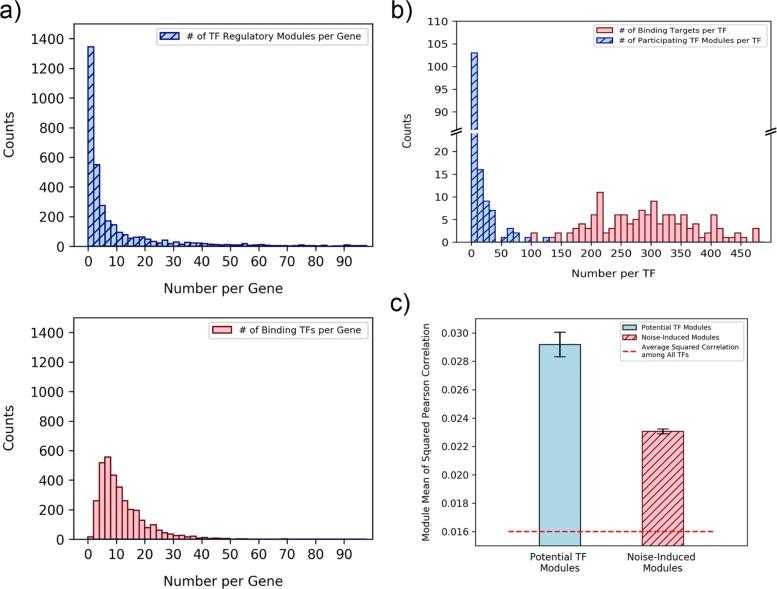
To mine out the molecular mechanisms, a novel algorithm to extract TF regulatory modules that help explain the observed TF functional redundancy effect was devised and proposed in this research. The method first searched for candidate TF sets from the TF binding data. Then based on these candidate sets the method utilized the modified Steiner Tree construction algorithm to construct the possible TF regulatory modules from protein-protein interaction data and finally filtered out the noise-induced results by using confidence tests. The mined-out regulatory modules were shown to correlate to the concept of functional redundancy and provided testable hypotheses of the molecular mechanisms behind functional redundancy. And the biological significance of the mined-out results was demonstrated in three different biological aspects: ontology enrichment, protein interaction prevalence and expression coherence. About 23.5% of the mined-out TF regulatory modules were literature-verified. Finally, the biological applicability of the proposed method was shown in one detailed example of a verified TF regulatory module for pheromone response and filamentous growth in yeast.
CONCLUSION
In this research, a novel method that mined out the potential TF regulatory modules which elucidate the functional redundancy observed among TFs is proposed. The extracted TF regulatory modules not only correlate the molecular mechanisms to the observed functional redundancy among TFs, but also show biological significance in inferring TF functional binding target genes. The results provide testable hypotheses for biologists to further design subsequent research and experiments.
背景
目前用于理解细胞中转录重编程的技术包括转录因子 (TF) 染色质免疫沉淀 (ChIP) 实验和 TF 敲除实验。ChIP 实验显示了针对抗体的 TF 结合靶标,而敲除技术则找到了敲除 TF 的调节基因靶标。然而,研究表明这两种互补的结果包含很少的共同靶标。研究人员使用 TF 功能冗余的概念来解释这两种技术之间的低重叠。但是,TF 功能冗余背后的详细分子机制仍然未知。如果不知道可能的分子机制,生物学家就很难完全揭示 TF 功能冗余的原因。
结果
为了挖掘分子机制,本研究提出并设计了一种从 TF 结合数据中提取有助于解释观察到的 TF 功能冗余效应的 TF 调节模块的新算法。该方法首先从 TF 结合数据中搜索候选 TF 集。然后,基于这些候选集,该方法利用改进的 Steiner 树构建算法,从蛋白质-蛋白质相互作用数据中构建可能的 TF 调节模块,最后通过置信度测试过滤掉噪声诱导的结果。挖掘出的调节模块与功能冗余的概念相关,并为功能冗余背后的分子机制提供了可测试的假设。挖掘结果在三个不同的生物学方面表现出了生物学意义:本体论富集、蛋白质相互作用流行度和表达一致性。挖掘出的约 23.5%的 TF 调节模块得到了文献验证。最后,在酵母中对一个已验证的 TF 调节模块的详细例子的研究中,展示了所提出方法的生物学适用性。
结论
本研究提出了一种新的方法,用于挖掘阐明 TF 之间观察到的功能冗余的潜在 TF 调节模块。提取的 TF 调节模块不仅将分子机制与 TF 之间观察到的功能冗余相关联,而且在推断 TF 功能结合靶基因方面具有生物学意义。这些结果为生物学家提供了可测试的假设,以便进一步设计后续的研究和实验。




 Zotero 插件