
Bcl-2 家族:古老起源、保守结构和多样化机制。
The Bcl-2 Family: Ancient Origins, Conserved Structures, and Divergent Mechanisms.
机构信息
Department of Biochemistry & Genetics, La Trobe Institute for Molecular Science, La Trobe University, Melbourne, VIC 3086, Australia.
Bio21 Molecular Science and Biotechnology Institute, The University of Melbourne, Parkville, VIC 3052, Australia.
出版信息
Biomolecules. 2020 Jan 12;10(1):128. doi: 10.3390/biom10010128.
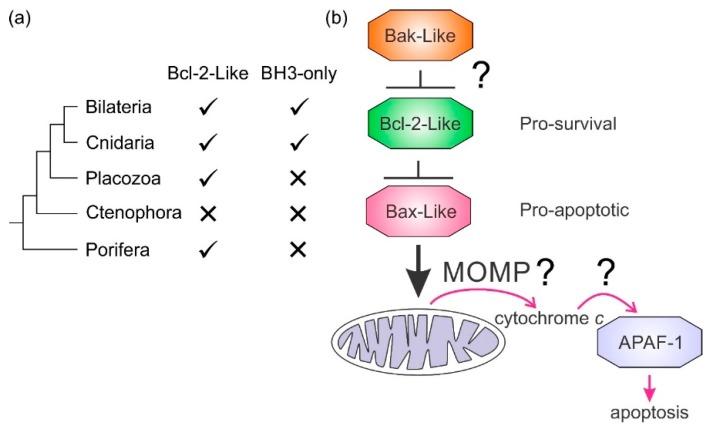
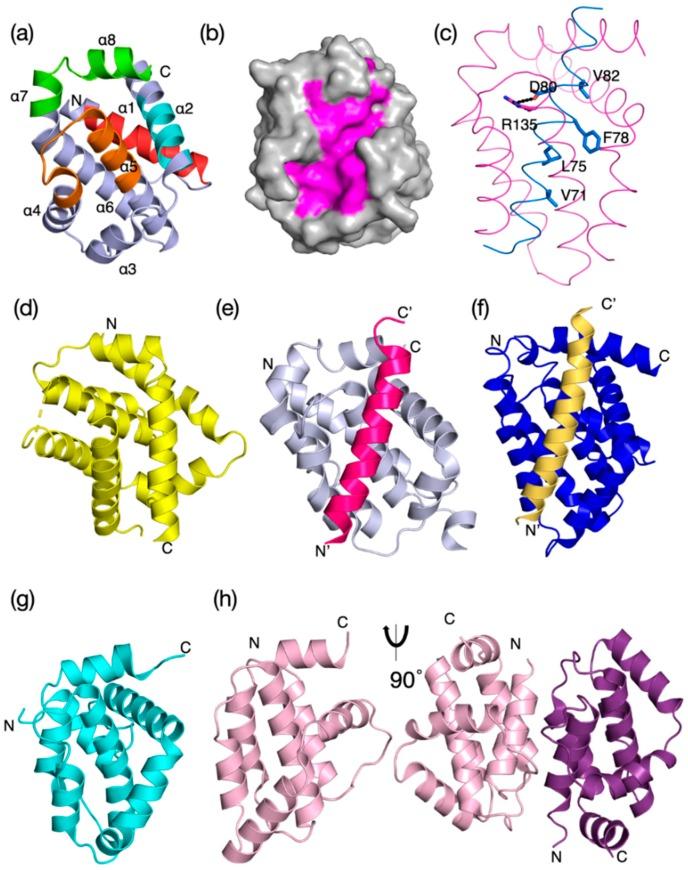
Intrinsic apoptosis, the response to intracellular cell death stimuli, is regulated by the interplay of the B-cell lymphoma 2 (Bcl-2) family and their membrane interactions. Bcl-2 proteins mediate a number of processes including development, homeostasis, autophagy, and innate and adaptive immune responses and their dysregulation underpins a host of diseases including cancer. The Bcl-2 family is characterized by the presence of conserved sequence motifs called Bcl-2 homology motifs, as well as a transmembrane region, which form the interaction sites and intracellular location mechanism, respectively. Bcl-2 proteins have been recognized in the earliest metazoans including Porifera (sponges), Placozoans, and Cnidarians (e.g., Hydra). A number of viruses have gained Bcl-2 homologs and subvert innate immunity and cellular apoptosis for their replication, but they frequently have very different sequences to their host Bcl-2 analogs. Though most mechanisms of apoptosis initiation converge on activation of caspases that destroy the cell from within, the numerous gene insertions, deletions, and duplications during evolution have led to a divergence in mechanisms of intrinsic apoptosis. Currently, the action of the Bcl-2 family is best understood in vertebrates and nematodes but new insights are emerging from evolutionarily earlier organisms. This review focuses on the mechanisms underpinning the activity of Bcl-2 proteins including their structures and interactions, and how they have changed over the course of evolution.
内在凋亡是细胞对内源性死亡刺激的反应,受 B 细胞淋巴瘤 2(Bcl-2)家族及其膜相互作用的调节。Bcl-2 蛋白介导多种过程,包括发育、稳态、自噬、先天和适应性免疫反应,其失调是许多疾病的基础,包括癌症。Bcl-2 家族的特征是存在保守的序列基序,称为 Bcl-2 同源基序,以及跨膜区域,分别形成相互作用位点和细胞内定位机制。Bcl-2 蛋白已在最早的后生动物中被识别,包括多孔动物(海绵)、扁盘动物和刺胞动物(例如,水螅)。许多病毒获得了 Bcl-2 同源物,并为其复制而颠覆先天免疫和细胞凋亡,但它们的序列与宿主 Bcl-2 类似物通常非常不同。尽管凋亡起始的大多数机制都集中在激活细胞内破坏细胞的半胱天冬酶上,但在进化过程中发生的大量基因插入、缺失和重复导致内在凋亡机制的分歧。目前,Bcl-2 家族的作用在脊椎动物和线虫中得到了最好的理解,但从进化早期的生物体中也出现了新的见解。本综述重点介绍了 Bcl-2 蛋白活性的基础机制,包括它们的结构和相互作用,以及它们在进化过程中的变化。


 Zotero 插件