
竞赛中的修改规则对10岁以下青少年网球运动员技术战术动作的影响
Effect of Modification Rules in Competition on Technical-Tactical Action in Young Tennis Players (Under-10).
作者信息
Gimenez-Egido José María, Ortega-Toro Enrique, Palao José M, Verdú-Conesa Isidro, Torres-Luque Gema
机构信息
Department of Physical Activity and Sport, Faculty of Sport Science, University of Murcia, Regional Campus of International Excellence "Campus Mare Nostrum", Murcia, Spain.
Health, Exercise Science, and Sport Management, University of Wisconsin-Parkside, Kenosha, WI, United States.
出版信息
Front Psychol. 2020 Jan 7;10:2789. doi: 10.3389/fpsyg.2019.02789. eCollection 2019.
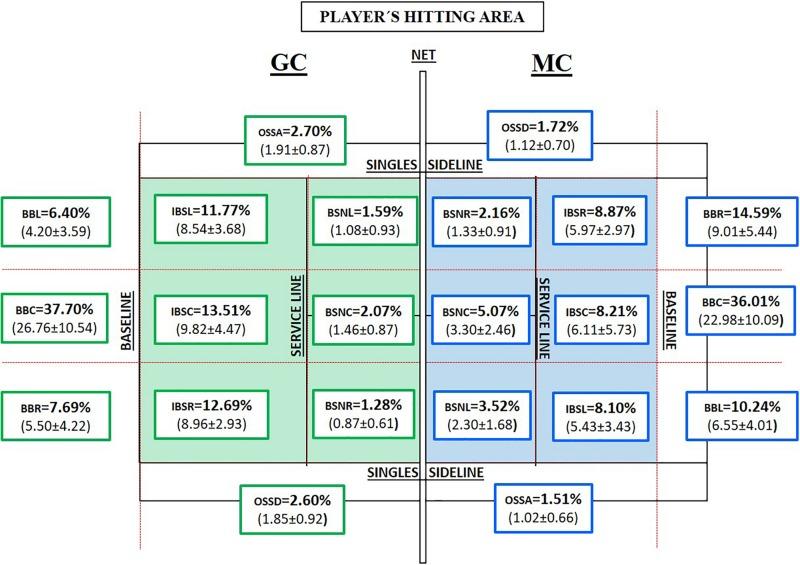
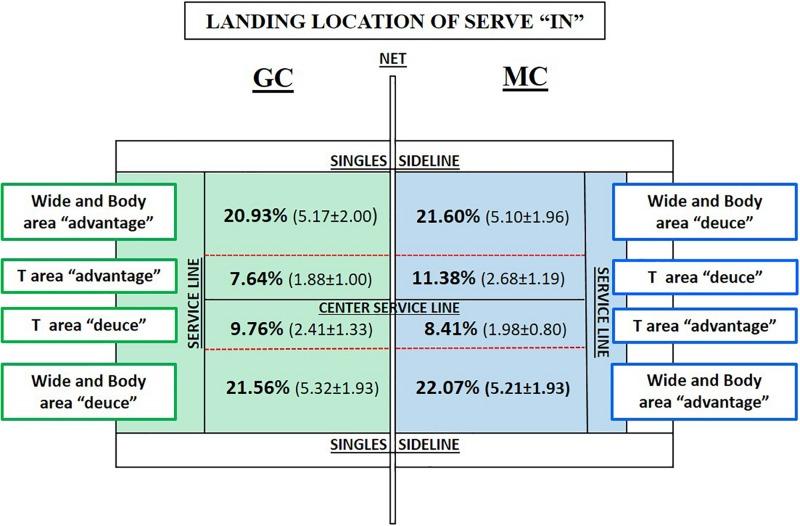
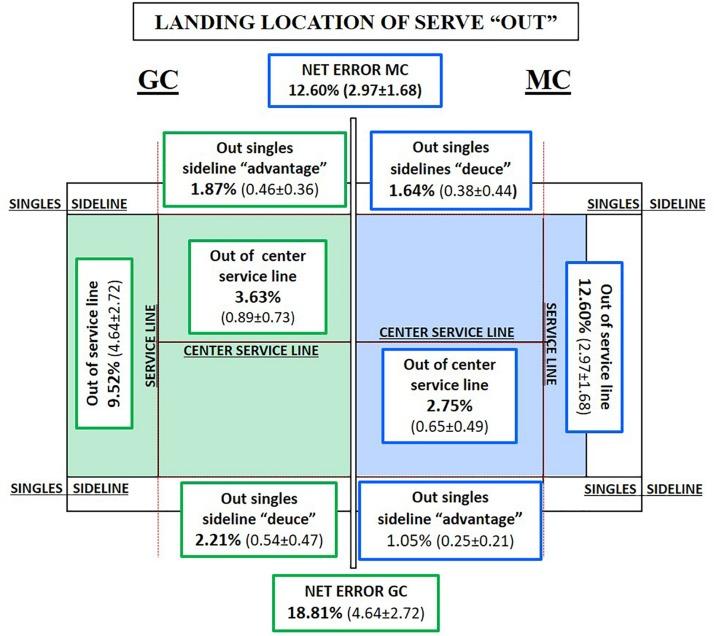
Adapting competitions to young players' characteristics is an important pillar in the optimal teaching-learning process. The objective of the present study is to analyze the effect of modifying net height (from 0.91 to 0.80 m) and court dimensions (from 23.77 × 8.23 m to 18 × 8.23 m) for under-10 (U-10) tennis players on the following: (a) kinds of technical and tactical basic, situational, and special strokes; (b) tennis players' hitting area; (c) landing location of the serve; (d) ball landing location after the serve; (d) stroke effectiveness; and (e) rally length. The study design was quasi-experimental in nature, observing the fluctuation/change in technical-tactical variables of the tennis players when playing a "Tennis 10s Green Competition" (GC) with the current federative rules and a redesigned competition "Modified Competition" (MC) including altered net height and court dimensions based on small-sided games (SSGs) and equipment scaling. Twenty U-10 tennis players were studied (age of players = 9.46 ± 0.66 years, average weekly training in tennis = 2.90 ± 1.07 h, years of experience = 3.65 ± 1.53 years). The results showed that in MC, there was a greater technical-tactical variability compared with the GC in terms of the following: (a) greater service effectiveness; (b) more situational and special strokes; and (c) a more equitable change in the distribution of hitting and ball landing locations. The values of MC showed that the current adaptation rules and equipment in federated U-10 competitions might not be enough to improve the teaching-learning process under the comprehensive approach. The current competition for U-10 tennis players (stage green) should be redesigned, in order to build an optimal process of affordances to develop a multidimensional positive impact during this training stage.
使比赛适应年轻球员的特点是优化教学过程的一个重要支柱。本研究的目的是分析将10岁以下(U-10)网球运动员的球网高度(从0.91米改为0.80米)和场地尺寸(从23.77×8.23米改为18×8.23米)对以下方面的影响:(a)基本技术和战术、情境及特殊击球的种类;(b)网球运动员的击球区域;(c)发球的落点;(d)发球后球的落点;(e)击球效果;以及(f)回合长度。该研究设计本质上为准实验性,观察网球运动员在按照现行联合会规则进行“网球10岁组绿色比赛”(GC)以及基于小型比赛(SSG)和器材缩放重新设计的比赛“改良比赛”(MC,包括改变球网高度和场地尺寸)时技术战术变量的波动/变化。研究了20名U-10网球运动员(球员年龄=9.46±0.66岁,平均每周网球训练时间=2.90±1.07小时,比赛经验=3.65±1.53年)。结果表明,在MC中,与GC相比,在以下方面技术战术变异性更大:(a)发球效果更好;(b)情境及特殊击球更多;(c)击球和球落点分布的变化更均衡。MC的值表明,目前联合会U-10比赛中的适应规则和器材可能不足以在综合方法下改善教学过程。目前针对U-10网球运动员的比赛(绿色阶段)应重新设计,以便构建一个最佳的可供性过程,在此训练阶段产生多维度的积极影响。


 Zotero 插件