
靛基质硫酸盐和对甲酚硫酸盐诱导动脉钙化的分子和细胞机制。
Molecular and Cellular Mechanisms that Induce Arterial Calcification by Indoxyl Sulfate and P-Cresyl Sulfate.
机构信息
Laboratory of Pathophysiology, Department of Biomedical Sciences, University of Antwerp, 2000 Antwerpen, Belgium.
出版信息
Toxins (Basel). 2020 Jan 19;12(1):58. doi: 10.3390/toxins12010058.
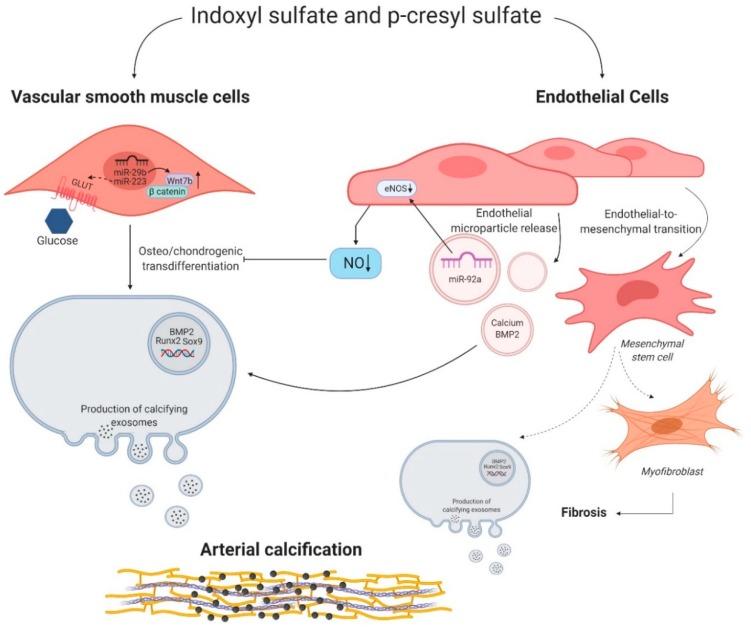
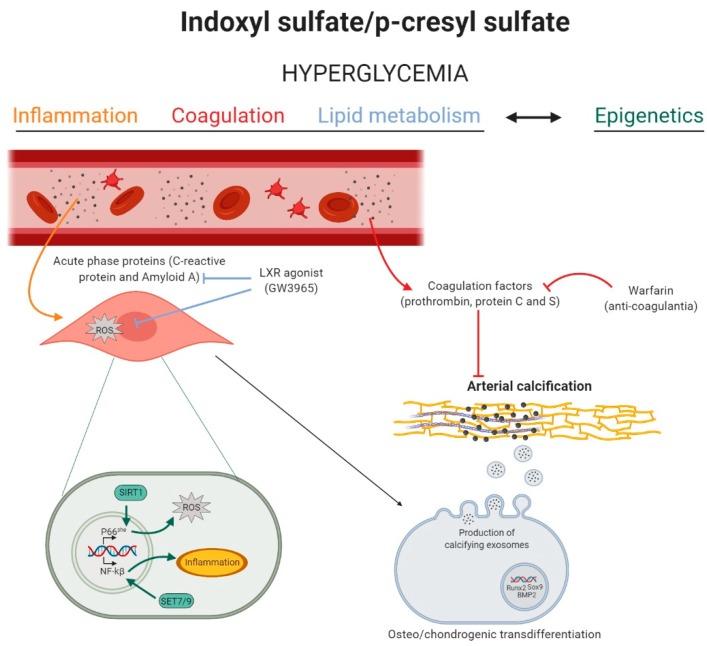
The protein-bound uremic toxins, indoxyl sulfate (IS) and p-cresyl sulfate (PCS), are considered to be harmful vascular toxins. Arterial media calcification, or the deposition of calcium phosphate crystals in the arteries, contributes significantly to cardiovascular complications, including left ventricular hypertrophy, hypertension, and impaired coronary perfusion in the elderly and patients with chronic kidney disease (CKD) and diabetes. Recently, we reported that both IS and PCS trigger moderate to severe calcification in the aorta and peripheral vessels of CKD rats. This review describes the molecular and cellular mechanisms by which these uremic toxins induce arterial media calcification. A complex interplay between inflammation, coagulation, and lipid metabolism pathways, influenced by epigenetic factors, is crucial in IS/PCS-induced arterial media calcification. High levels of glucose are linked to these events, suggesting that a good balance between glucose and lipid levels might be important. On the cellular level, effects on endothelial cells, which act as the primary sensors of circulating pathological triggers, might be as important as those on vascular smooth muscle cells. Endothelial dysfunction, provoked by IS and PCS triggered oxidative stress, may be considered a key event in the onset and development of arterial media calcification. In this review a number of important outstanding questions such as the role of miRNA's, phenotypic switching of both endothelial and vascular smooth muscle cells and new types of programmed cell death in arterial media calcification related to protein-bound uremic toxins are put forward and discussed.
蛋白结合性尿毒症毒素,如吲哚硫酸酯(IS)和对甲酚硫酸酯(PCS),被认为是有害的血管毒素。动脉中层钙化,即钙磷酸盐晶体在动脉中的沉积,是导致心血管并发症的重要原因,包括老年人和慢性肾脏病(CKD)及糖尿病患者的左心室肥厚、高血压和冠状动脉灌注受损。最近,我们报道 IS 和 PCS 均可诱导 CKD 大鼠的主动脉和外周血管发生中重度钙化。本综述描述了这些尿毒症毒素诱导动脉中层钙化的分子和细胞机制。炎症、凝血和脂质代谢途径之间的复杂相互作用受表观遗传因素影响,在 IS/PCS 诱导的动脉中层钙化中至关重要。高水平的葡萄糖与这些事件相关,这表明葡萄糖和脂质水平之间的良好平衡可能很重要。在细胞水平上,对内皮细胞的影响(内皮细胞作为循环病理触发因素的主要传感器)可能与对血管平滑肌细胞的影响同样重要。IS 和 PCS 引发的氧化应激导致的内皮功能障碍,可被视为动脉中层钙化发生和发展的关键事件。在本综述中,提出并讨论了一些重要的悬而未决的问题,如 miRNA 的作用、内皮细胞和血管平滑肌细胞的表型转换,以及与蛋白结合性尿毒症毒素相关的动脉中层钙化中的新型程序性细胞死亡。
 Zotero 插件