
采取“同一健康”方法应对隐孢子虫病。
A One Health Approach to Tackle Cryptosporidiosis.
机构信息
Moredun Research Institute, Pentlands Science Park, Edinburgh EH26 OPZ, UK.
National Cryptosporidium Reference Unit, Public Health Wales, Microbiology and Health Protection, Singleton Hospital, Swansea SA2 8QA, UK; Swansea University Medical School, Singleton Park, Swansea, SA2 8PP, UK.
出版信息
Trends Parasitol. 2020 Mar;36(3):290-303. doi: 10.1016/j.pt.2019.12.016. Epub 2020 Jan 23.
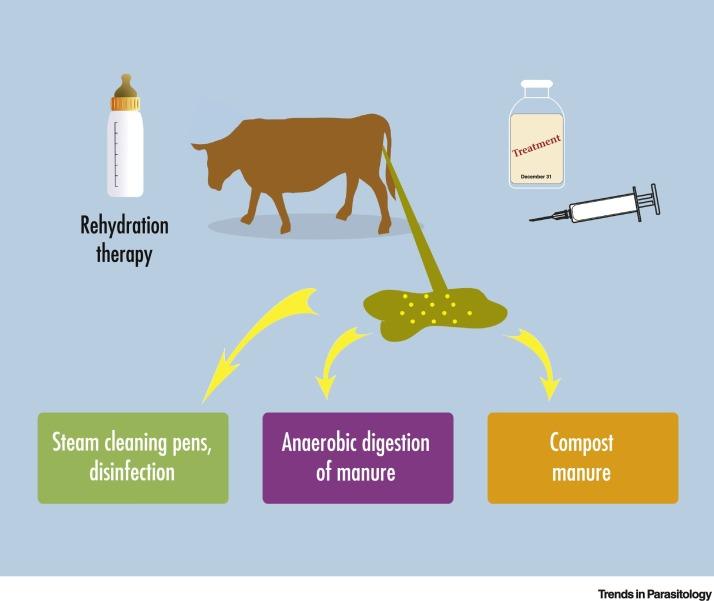
Cryptosporidiosis is a significant diarrhoeal disease in both people and animals across the world and is caused by several species of the protozoan parasite Cryptosporidium. Recent research has highlighted the longer-term consequences of the disease for malnourished children, involving growth stunting and cognitive deficits, and significant growth and production losses for livestock. There are no vaccines currently available to prevent the disease and few treatment options in either humans or animals, which has been a significant limiting factor in disease control to date. A One Health approach to tackle zoonotic cryptosporidiosis looking at new advances in veterinary, public, and environmental health research may offer several advantages and new options to help control the disease.
隐孢子虫病是一种在世界范围内影响人和动物的重要腹泻疾病,由几种原生动物寄生虫隐孢子虫引起。最近的研究强调了这种疾病对营养不良儿童的长期后果,包括生长迟缓和认知缺陷,以及对牲畜的重大生长和生产损失。目前尚无预防这种疾病的疫苗,人类和动物的治疗选择也很少,这一直是迄今为止疾病控制的一个重大限制因素。从兽医、公共和环境卫生研究的新进展出发,采取一种统筹兼顾的方法来应对人畜共患隐孢子虫病,可能会为控制这种疾病提供一些优势和新的选择。

 Zotero 插件