
工程菌利用木糖生产γ-聚谷氨酸的异构酶途径与温伯格途径的比较
Comparison of Isomerase and Weimberg Pathway for γ-PGA Production From Xylose by Engineered .
作者信息
Halmschlag Birthe, Hoffmann Kyra, Hanke René, Putri Sastia P, Fukusaki Eiichiro, Büchs Jochen, Blank Lars M
机构信息
Institute of Applied Microbiology, Aachen Biology and Biotechnology, RWTH Aachen University, Aachen, Germany.
AVT-Biochemical Engineering, RWTH Aachen University, Aachen, Germany.
出版信息
Front Bioeng Biotechnol. 2020 Jan 21;7:476. doi: 10.3389/fbioe.2019.00476. eCollection 2019.
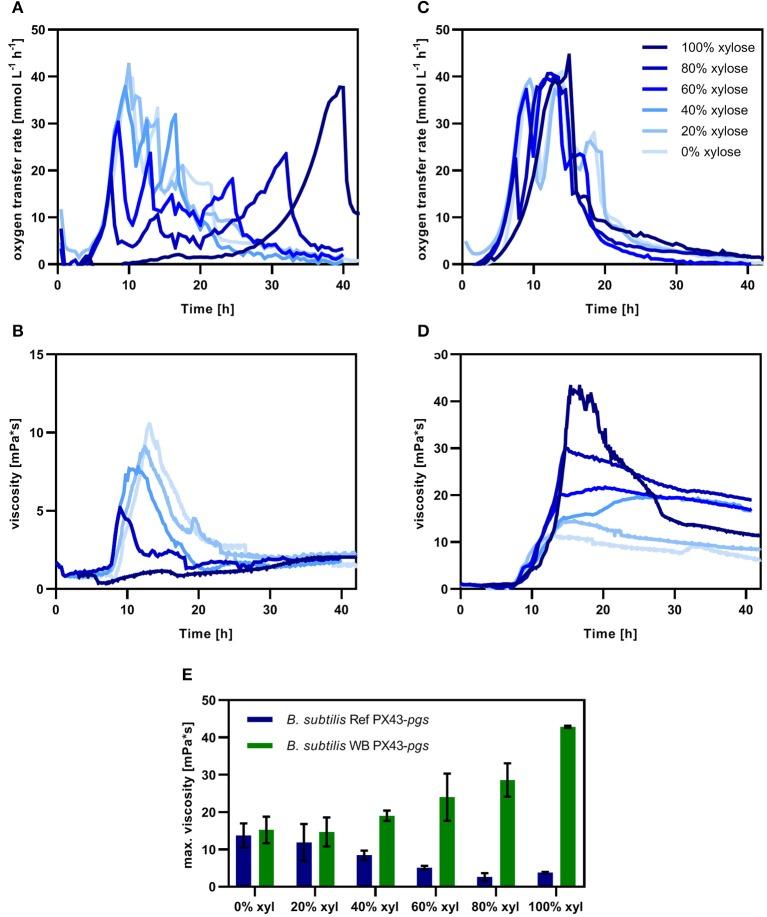
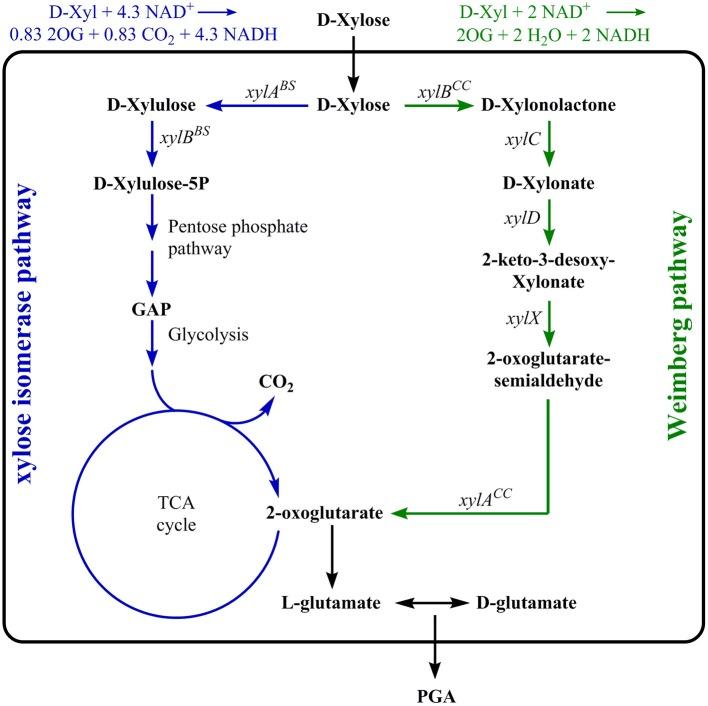
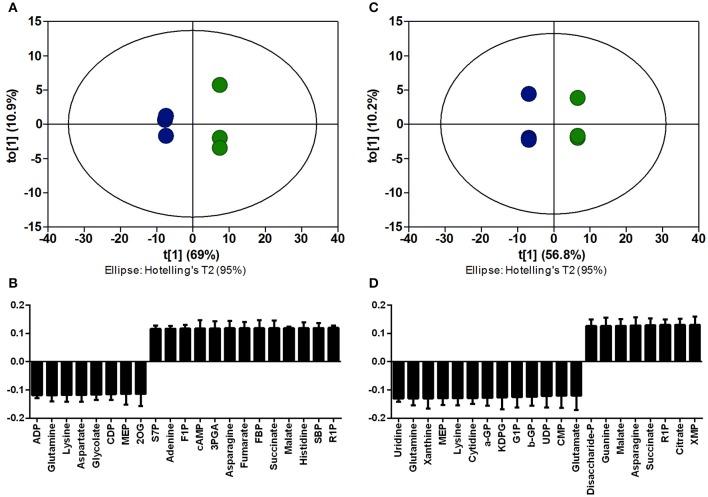
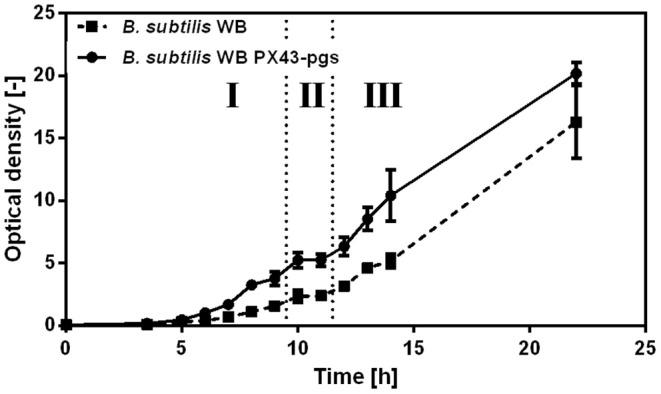
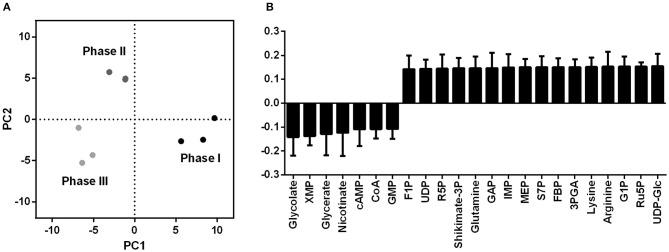
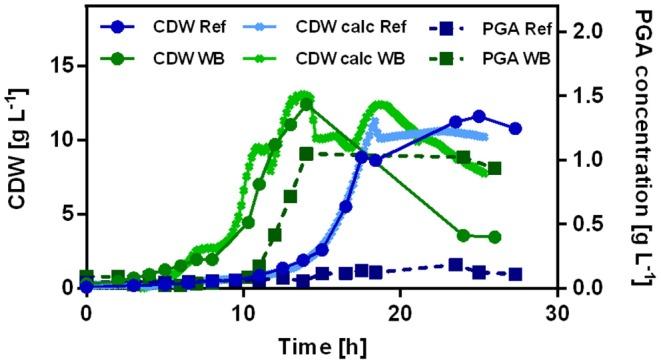
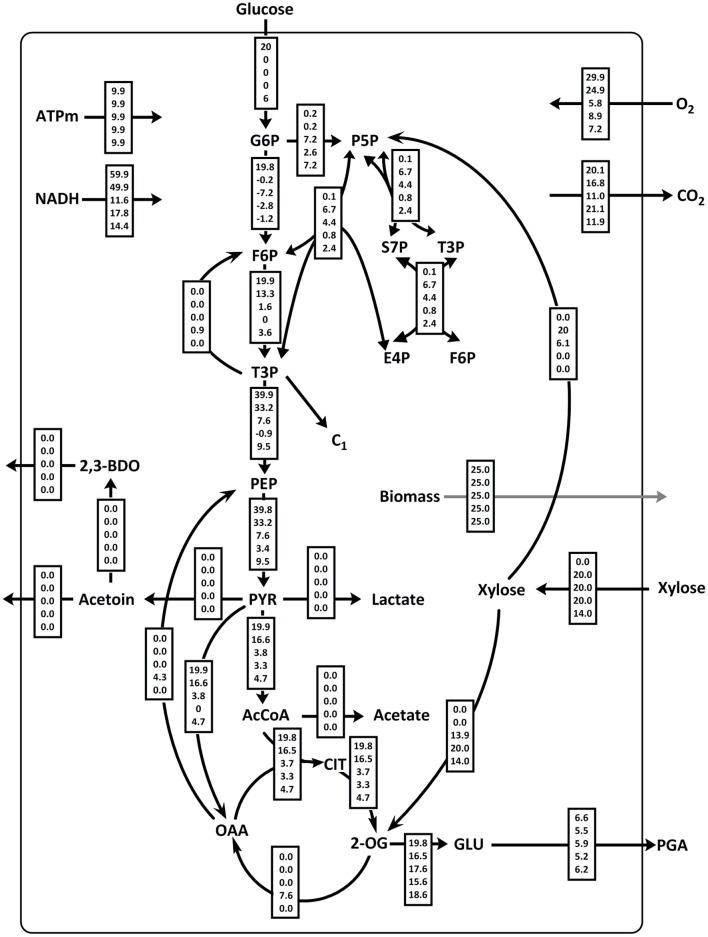
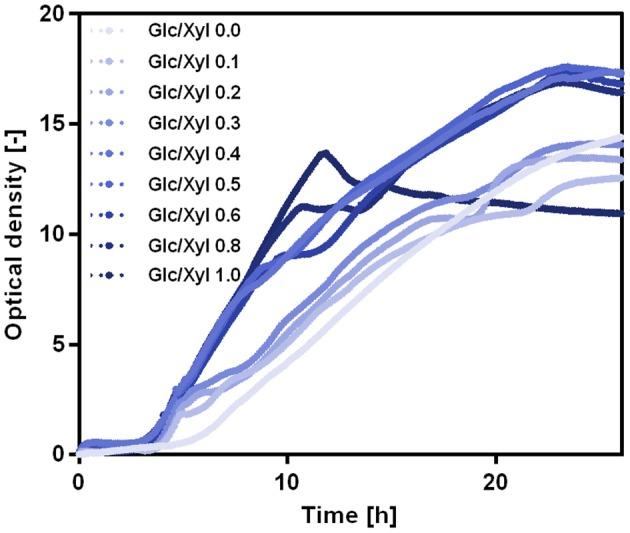
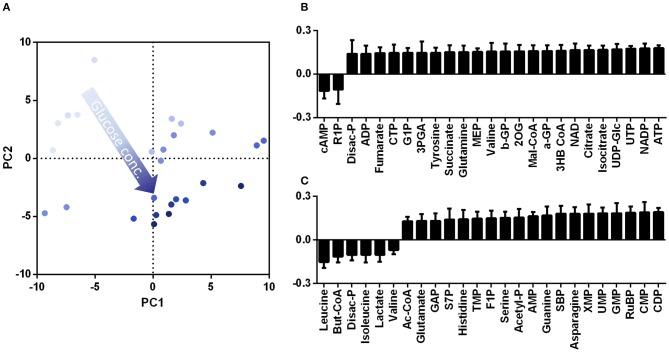
The production of poly-γ-glutamic acid (γ-PGA), a biopolymer consisting of D- and L-glutamic acid monomers, currently relies on L-glutamate, or citrate as carbon substrates. Here we aimed at using plant biomass-derived substrates such as xylose. γ-PGA producing microorganisms including natively metabolize xylose via the isomerase pathway. The Weimberg pathway, a xylose utilization pathway first described for , offers a carbon-efficient alternative converting xylose to 2-oxoglutarate without carbon loss. We engineered a recombinant strain that was able to grow on xylose with a growth rate of 0.43 h using a recombinant Weimberg pathway. Although ion-pair reversed-phase LC/MS/MS metabolome analysis revealed lower concentrations of γ-PGA precursors such as 2-oxoglutarate, the γ-PGA titer was increased 6-fold compared to the native xylose isomerase strain. Further metabolome analysis indicates a metabolic bottleneck in the phosphoenolpyruvate-pyruvate-oxaloacetate node causing bi-phasic (diauxic) growth of the recombinant Weimberg strain. Flux balance analysis (FBA) of the γ-PGA producing indicated that a maximal theoretical γ-PGA yield is achieved on D-xylose/ D-glucose mixtures. The results of the strain harboring the Weimberg pathway on such D-xylose/ D-glucose mixtures demonstrate indeed resource efficient, high yield γ-PGA production from biomass-derived substrates.
聚γ-谷氨酸(γ-PGA)是一种由D-和L-谷氨酸单体组成的生物聚合物,目前其生产依赖于L-谷氨酸或柠檬酸盐作为碳源。在此,我们旨在使用木糖等植物生物质衍生的底物。包括 在内的产γ-PGA微生物天然地通过异构酶途径代谢木糖。魏姆贝格途径是首次为 描述的一种木糖利用途径,它提供了一种碳高效的替代方法,可将木糖转化为2-氧代戊二酸而无碳损失。我们构建了一种重组 菌株,该菌株能够利用重组魏姆贝格途径在木糖上生长,生长速率为0.43 h 。尽管离子对反相LC/MS/MS代谢组分析显示γ-PGA前体如2-氧代戊二酸的浓度较低,但与天然木糖异构酶菌株相比,γ-PGA的产量提高了6倍。进一步的代谢组分析表明,在磷酸烯醇丙酮酸-丙酮酸-草酰乙酸节点存在代谢瓶颈,导致重组魏姆贝格菌株出现双相(二次生长)生长。对产γ-PGA 的通量平衡分析(FBA)表明,在D-木糖/D-葡萄糖混合物上可实现最大理论γ-PGA产量。在这种D-木糖/D-葡萄糖混合物上含有魏姆贝格途径的 菌株的结果确实证明了从生物质衍生底物中高效、高产生产γ-PGA。



 Zotero 插件