
随机试验中产后出血 (PPH) 预防干预措施的发生率以及基础参与者 PPH 风险的影响:一项荟萃分析。
Postpartum haemorrhage (PPH) rates in randomized trials of PPH prophylactic interventions and the effect of underlying participant PPH risk: a meta-analysis.
机构信息
Sanyu Research Unit, Department of Women's and Children's Health, University of Liverpool, Liverpool, UK.
出版信息
BMC Pregnancy Childbirth. 2020 Feb 13;20(1):107. doi: 10.1186/s12884-020-2719-3.
BACKGROUND
Postpartum haemorrhage (PPH) remains a leading cause of maternal mortality. Many trials assessing interventions to prevent PPH base their data on low risk women. It is important to consider the impact data collection methods may have on these results. This review aims to assess trials of PPH prophylaxis by grading trials according to the degree of risk status of the population enrolled in these trials and identify differences in the PPH rates of low risk and high risk populations.
METHODS
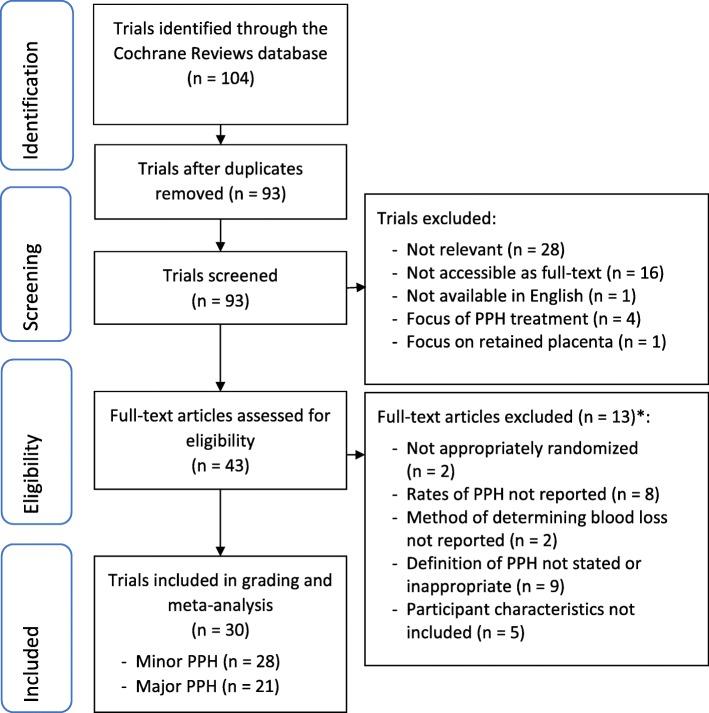
Systematic review and meta-analysis using a random-effects model. Trials were identified through CENTRAL. Trials were assessed for eligibility then graded according to antenatal risk factors and method of birth into five grades. The main outcomes were overall trial rate of minor PPH (blood loss ≥500 ml) and major PPH (> 1000 ml) and method of determining blood loss (estimated/measured).
RESULTS
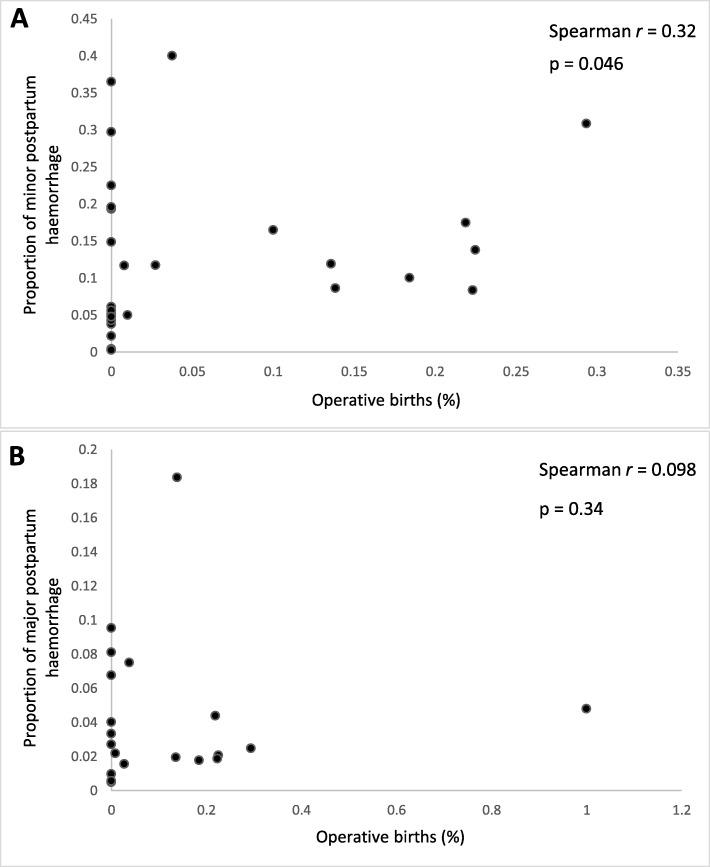
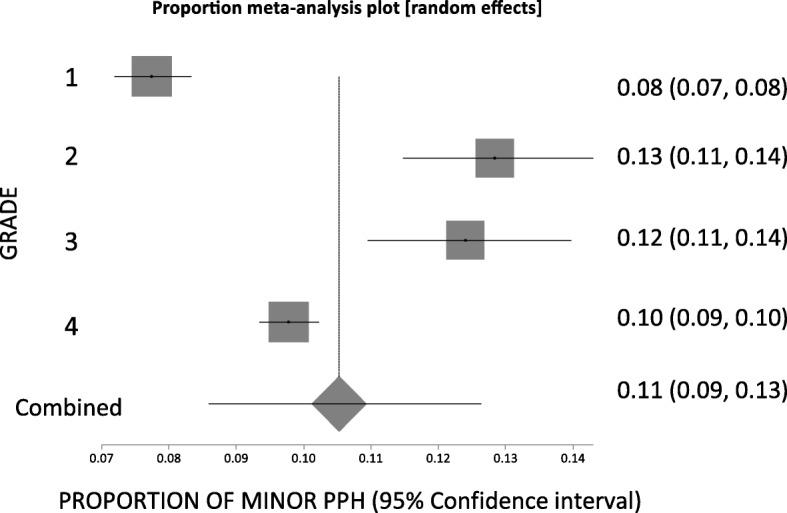
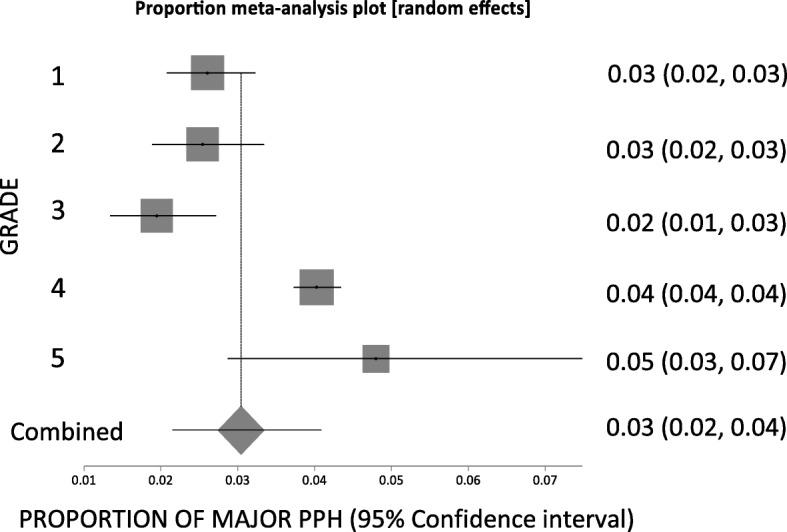
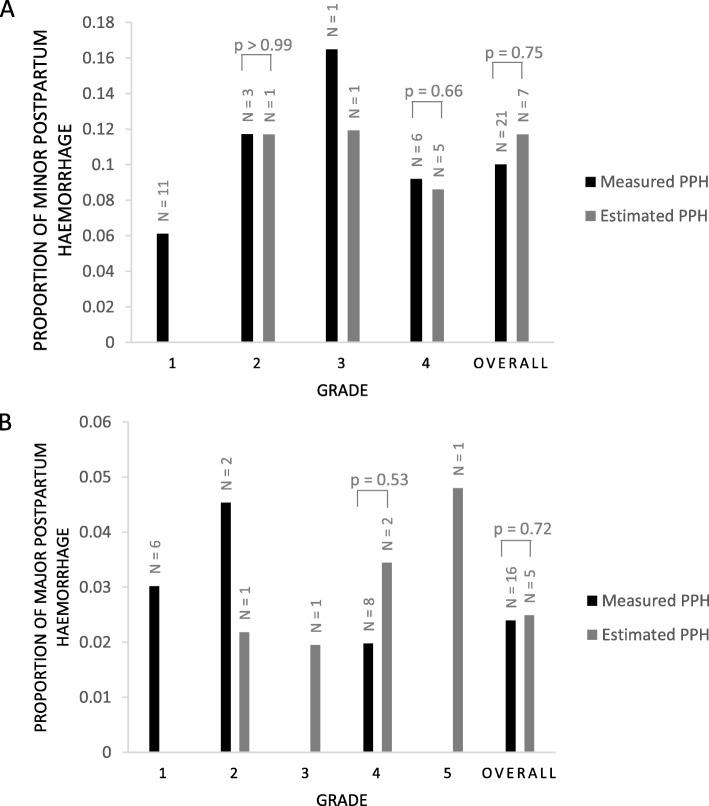
There was no relationship between minor or major PPH rate and risk grade (Kruskal-Wallis: minor - T = 0.92, p = 0.82; major - T = 0.91, p = 0.92). There was no difference in minor or major PPH rates when comparing estimation or measurement methods (Mann-Whitney: minor - U = 67, p = 0.75; major - U = 35, p = 0.72). There was however a correlation between % operative births and minor PPH rate, but not major PPH (Spearman r = 0.32 v. Spearman r = 0.098).
CONCLUSIONS
Using data from trials using low risk women to generalise best practice guidelines might not be appropriate for all births, particularly complex births. Although complex births contribute disproportionately to PPH rates, this review showed they are often underrepresented in trials. Despite this, there was no difference in reported PPH rates between studies conducted in high and low risk groups. Method of birth was shown to be an important risk factor for minor PPH and may be a better predictor of PPH than antenatal risk factors. Women with operative births are often excluded from trials meaning a lack of data supporting interventions in these women. More focus on complex births is needed to ensure the evidence base is relevant to the target population.
背景
产后出血(PPH)仍然是孕产妇死亡的主要原因。许多评估预防 PPH 干预措施的试验都是基于低风险女性的数据。重要的是要考虑数据收集方法可能对这些结果产生的影响。本综述旨在通过根据试验纳入人群的风险状况对 PPH 预防试验进行分级,并确定低风险和高风险人群的 PPH 发生率差异,来评估 PPH 预防试验。
方法
使用随机效应模型进行系统评价和荟萃分析。通过 CENTRAL 确定试验。对试验进行资格评估,然后根据产前危险因素和分娩方式分为五个等级。主要结局是总体试验中轻度 PPH(出血量≥500ml)和重度 PPH(出血量>1000ml)的发生率以及失血量的测定方法(估计/测量)。
结果
轻度或重度 PPH 发生率与风险等级之间无相关性(Kruskal-Wallis:轻度 T=0.92,p=0.82;重度 T=0.91,p=0.92)。比较估计值和测量值方法时,轻度或重度 PPH 发生率无差异(Mann-Whitney:轻度 U=67,p=0.75;重度 U=35,p=0.72)。然而,剖宫产分娩比例与轻度 PPH 发生率呈正相关,但与重度 PPH 发生率无关(Spearman r=0.32 与 Spearman r=0.098)。
结论
使用来自低风险女性试验的数据来推广最佳实践指南可能并不适用于所有分娩,尤其是复杂分娩。尽管复杂分娩对 PPH 发生率的影响不成比例,但本综述显示,这些分娩在试验中往往代表性不足。尽管如此,在高风险组和低风险组中进行的研究报告的 PPH 发生率没有差异。分娩方式是轻度 PPH 的一个重要危险因素,可能比产前危险因素更能预测 PPH。接受剖宫产分娩的女性通常被排除在试验之外,这意味着缺乏支持这些女性干预措施的数据。需要更加关注复杂分娩,以确保证据基础与目标人群相关。
 Zotero 插件