
预期寿命和寿命平等的动态变化。
Dynamics of life expectancy and life span equality.
机构信息
Interdisciplinary Centre on Population Dynamics, University of Southern Denmark, 5000 Odense, Denmark;
Lifespan Inequalities Research Group, Max Planck Institute for Demographic Research, 18057 Rostock, Germany.
出版信息
Proc Natl Acad Sci U S A. 2020 Mar 10;117(10):5250-5259. doi: 10.1073/pnas.1915884117. Epub 2020 Feb 24.
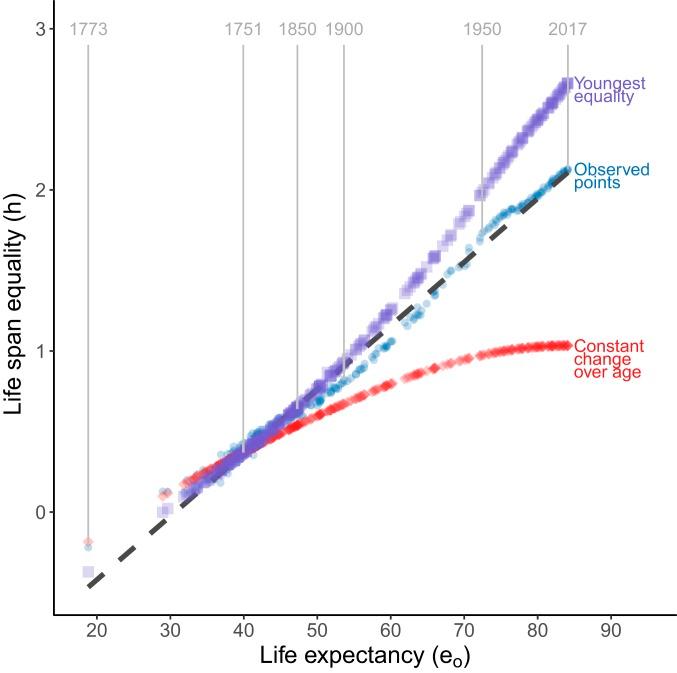
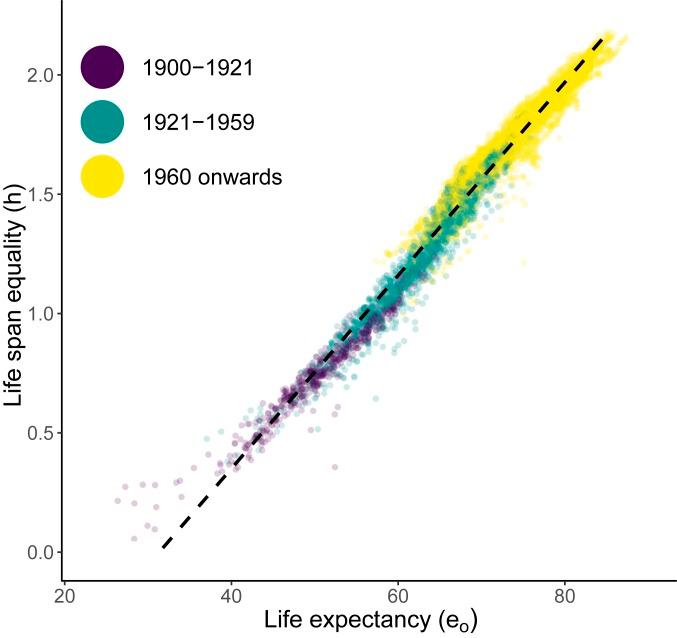
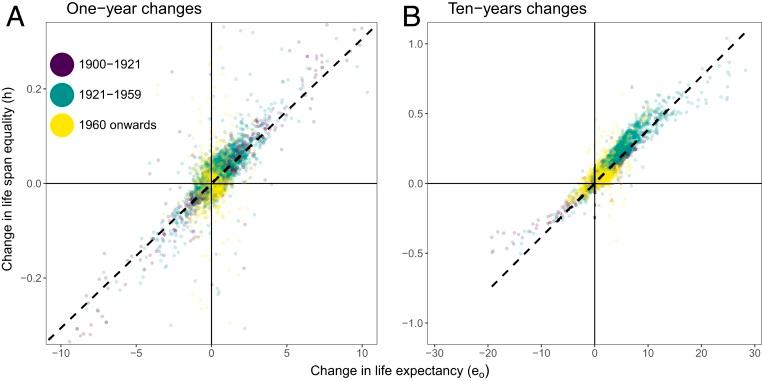
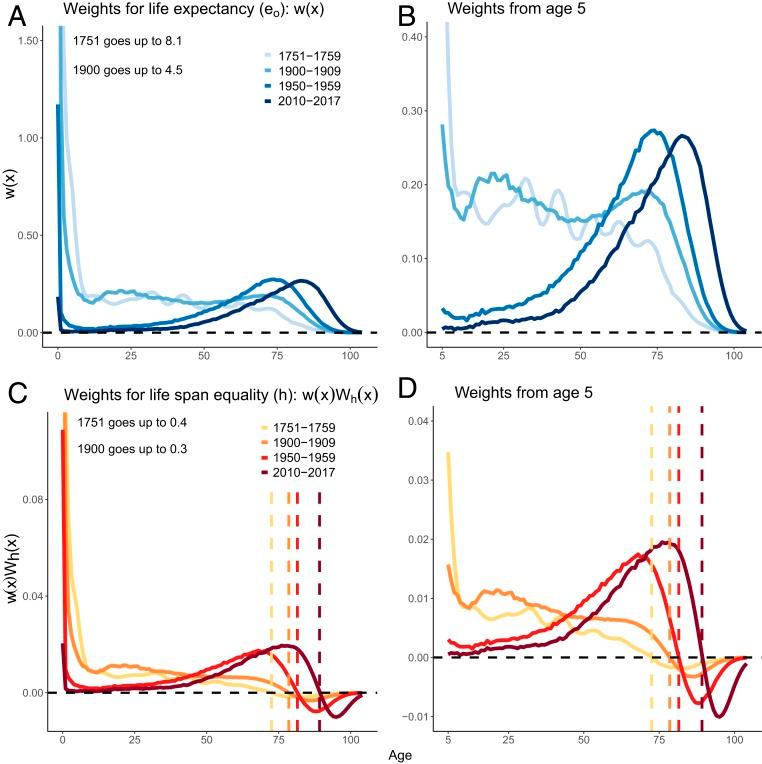
As people live longer, ages at death are becoming more similar. This dual advance over the last two centuries, a central aim of public health policies, is a major achievement of modern civilization. Some recent exceptions to the joint rise of life expectancy and life span equality, however, make it difficult to determine the underlying causes of this relationship. Here, we develop a unifying framework to study life expectancy and life span equality over time, relying on concepts about the pace and shape of aging. We study the dynamic relationship between life expectancy and life span equality with reliable data from the Human Mortality Database for 49 countries and regions with emphasis on the long time series from Sweden. Our results demonstrate that both changes in life expectancy and life span equality are weighted totals of rates of progress in reducing mortality. This finding holds for three different measures of the variability of life spans. The weights evolve over time and indicate the ages at which reductions in mortality increase life expectancy and life span equality: the more progress at the youngest ages, the tighter the relationship. The link between life expectancy and life span equality is especially strong when life expectancy is less than 70 y. In recent decades, life expectancy and life span equality have occasionally moved in opposite directions due to larger improvements in mortality at older ages or a slowdown in declines in midlife mortality. Saving lives at ages below life expectancy is the key to increasing both life expectancy and life span equality.
随着人类寿命的延长,死亡年龄变得越来越相似。在过去两个世纪中,这一双重进步是公共卫生政策的主要目标之一,是现代文明的重大成就。然而,最近一些预期寿命和寿命均等化同时上升的例外情况使得确定这种关系的根本原因变得困难。在这里,我们依靠关于衰老速度和形状的概念,建立了一个统一的框架来研究随时间推移的预期寿命和寿命均等化。我们使用来自 49 个国家和地区的人类死亡率数据库的可靠数据,重点研究了瑞典的长期时间序列,研究了预期寿命和寿命均等化之间的动态关系。我们的研究结果表明,预期寿命和寿命均等化的变化都是降低死亡率的进展率的加权总和。这一发现适用于三种不同的寿命差异衡量标准。权重随时间演变,并表明死亡率降低增加预期寿命和寿命均等化的年龄:在最年轻的年龄取得的进展越大,两者之间的关系就越紧密。当预期寿命小于 70 岁时,预期寿命和寿命均等化之间的联系尤为紧密。在过去几十年中,由于老年死亡率的更大改善或中年死亡率下降的放缓,预期寿命和寿命均等化偶尔会朝着相反的方向发展。在预期寿命以下的年龄拯救生命是提高预期寿命和寿命均等化的关键。

 Zotero 插件