
亚细胞蛋白质组学结合生物能量表型分析揭示了校对缺陷型线粒体聚合酶状态下呼吸功能不全的蛋白质生物标志物。
Subcellular proteomics combined with bioenergetic phenotyping reveals protein biomarkers of respiratory insufficiency in the setting of proofreading-deficient mitochondrial polymerase.
机构信息
Department of Physiology, Brody School of Medicine, East Carolina University, Greenville, NC, 27834, USA.
East Carolina Diabetes and Obesity Institute, East Carolina University, Greenville, NC, 27834, USA.
出版信息
Sci Rep. 2020 Feb 27;10(1):3603. doi: 10.1038/s41598-020-60536-y.
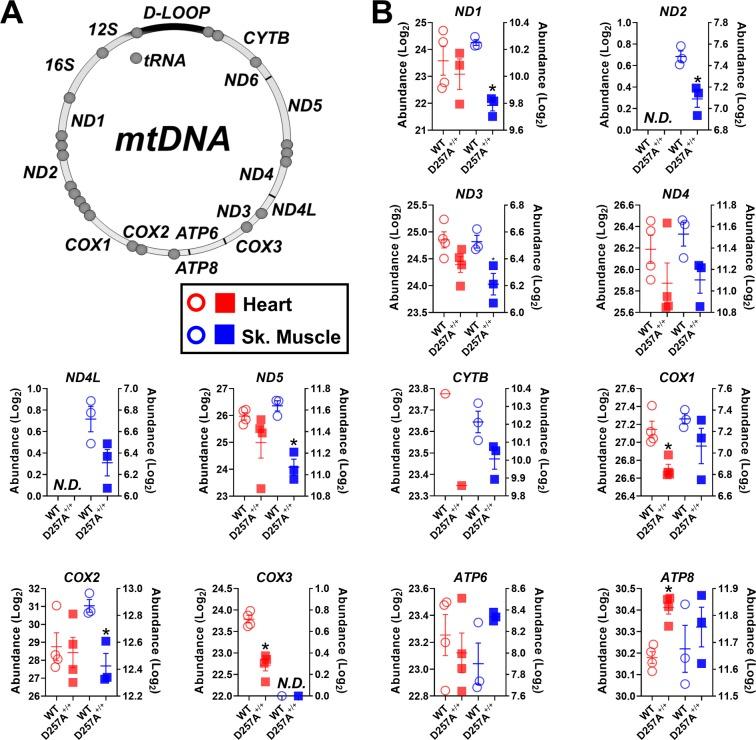
The mitochondrial mutator mouse is a well-established model of premature aging. In addition to accelerated aging, these mice develop hypertrophic cardiomyopathy at ~13 months of age, presumably due to overt mitochondrial dysfunction. Despite evidence of bioenergetic disruption within heart mitochondria, there is little information about the underlying changes to the mitochondrial proteome that either directly underly or predict respiratory insufficiency in mutator mice. Herein, nLC-MS/MS was used to interrogate the mitochondria-enriched proteome of heart and skeletal muscle of aged mutator mice. The mitochondrial proteome from heart tissue was then correlated with respiratory conductance data to identify protein biomarkers of respiratory insufficiency. The majority of downregulated proteins in mutator mitochondria were subunits of respiratory complexes I and IV, including both nuclear and mitochondrial-encoded proteins. Interestingly, the mitochondrial-encoded complex V subunits, were unchanged or upregulated in mutator mitochondria, suggesting a robustness to mtDNA mutation. Finally, the proteins most strongly correlated with respiratory conductance were PPM1K, NDUFB11, and C15orf61. These results suggest that mitochondrial mutator mice undergo a specific loss of mitochondrial complexes I and IV that limit their respiratory function independent of an upregulation of complex V. Additionally, the role of PPM1K in responding to mitochondrial stress warrants further exploration.
线粒体突变鼠是一种成熟的早衰模型。除了加速衰老外,这些老鼠在 13 个月左右时会发展出肥大性心肌病,这可能是由于明显的线粒体功能障碍。尽管有证据表明心脏线粒体中的生物能量中断,但对于直接导致或预测突变鼠呼吸不足的线粒体蛋白质组的潜在变化,知之甚少。在此,nLC-MS/MS 被用于研究老年突变鼠心脏和骨骼肌中富含线粒体的蛋白质组。然后,将心脏组织的线粒体蛋白质组与呼吸电导数据相关联,以鉴定呼吸不足的蛋白质生物标志物。突变体线粒体中下调的大多数蛋白质是呼吸复合物 I 和 IV 的亚基,包括核编码和线粒体编码的蛋白质。有趣的是,线粒体编码的复合物 V 亚基在突变体线粒体中不变或上调,这表明 mtDNA 突变具有稳健性。最后,与呼吸电导最相关的蛋白质是 PPM1K、NDUFB11 和 C15orf61。这些结果表明,线粒体突变鼠经历了特定的线粒体复合物 I 和 IV 的丧失,这限制了它们的呼吸功能,而不依赖于复合物 V 的上调。此外,PPM1K 在应对线粒体应激中的作用值得进一步探索。


 Zotero 插件