
全氟辛烷磺酸(PFOS)和全氟辛酸(PFOA)在体外急性影响人αβγGABA 受体和自发性神经元网络功能。
Perfluorooctane sulfonate (PFOS) and perfluorooctanoate (PFOA) acutely affect human αβγ GABA receptor and spontaneous neuronal network function in vitro.
机构信息
Neurotoxicology Research Group, Toxicology Division, Institute for Risk Assessment Sciences (IRAS), Faculty of Veterinary Medicine, Utrecht University, P.O. Box 80.177, NL-3508, TD, Utrecht, The Netherlands.
出版信息
Sci Rep. 2020 Mar 24;10(1):5311. doi: 10.1038/s41598-020-62152-2.
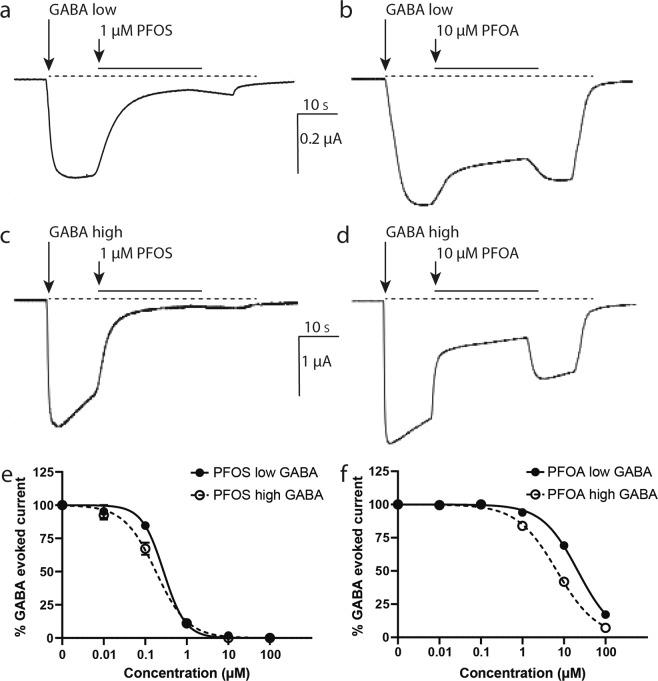
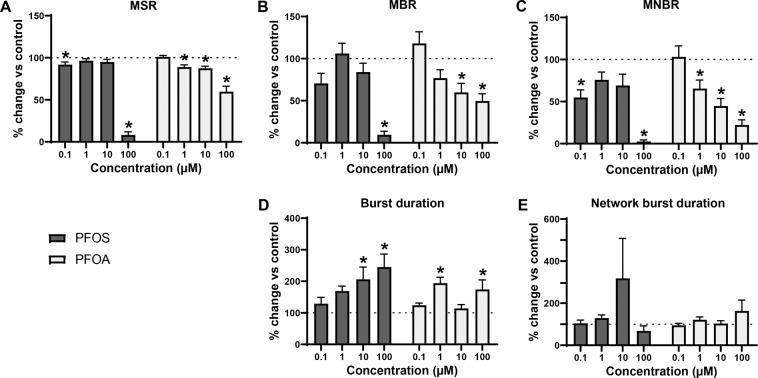
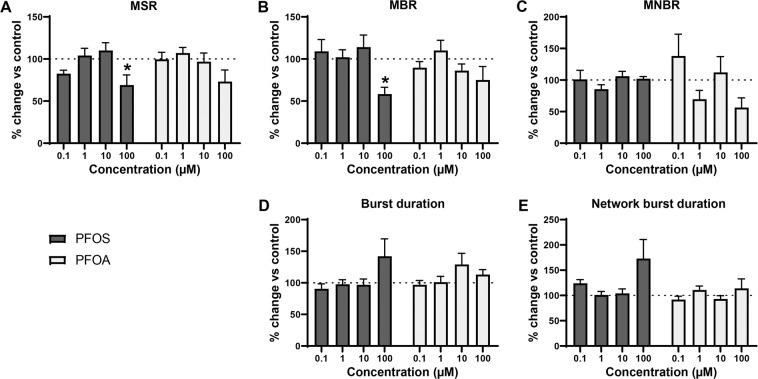
Concerns about the neurotoxic potential of polyfluoroalkyl substances (PFAS) such as perfluorooctane sulfonate (PFOS) and perfluorooctanoic acid (PFOA) increase, although their neurotoxic mechanisms of action remain debated. Considering the importance of the GABA receptor in neuronal function, we investigated acute effects of PFAS on this receptor and on spontaneous neuronal network activity. PFOS (Lowest Observed Effect Concentration (LOEC) 0.1 µM) and PFOA (LOEC 1 µM) inhibited the GABA-evoked current and acted as non-competitive human GABA receptor antagonists. Network activity of rat primary cortical cultures increased following exposure to PFOS (LOEC 100 µM). However, exposure of networks of human induced pluripotent stem cell (hiPSC)-derived neurons decreased neuronal activity. The higher sensitivity of the αβγ GABA receptor for PFAS as compared to neuronal networks suggests that PFAS have additional mechanisms of action, or that compensatory mechanisms are at play. Differences between rodent and hiPSC-derived neuronal networks highlight the importance of proper model composition. LOECs for PFAS on GABA receptor and neuronal activity reported here are within or below the range found in blood levels of occupationally exposed humans. For PFOS, LOECs are even within the range found in human serum and plasma of the general population, suggesting a clear neurotoxic risk.
人们越来越关注全氟烷基物质(PFAS)如全氟辛烷磺酸(PFOS)和全氟辛酸(PFOA)的神经毒性,尽管其神经毒性作用机制仍存在争议。鉴于 GABA 受体在神经元功能中的重要性,我们研究了 PFAS 对该受体和自发神经元网络活动的急性影响。PFOS(最低观察效应浓度(LOEC)0.1μM)和 PFOA(LOEC 1μM)抑制 GABA 诱发电流,并作为非竞争性人类 GABA 受体拮抗剂。大鼠原代皮质培养物暴露于 PFOS(LOEC 100μM)后,网络活性增加。然而,人诱导多能干细胞(hiPSC)衍生神经元网络的暴露降低了神经元活性。与神经元网络相比,αβγ GABA 受体对 PFAS 的更高敏感性表明,PFAS 具有其他作用机制,或者存在代偿机制。啮齿动物和 hiPSC 衍生神经元网络之间的差异突出了适当模型组成的重要性。这里报告的 PFAS 对 GABA 受体和神经元活性的 LOEC 在职业暴露人群血液水平中发现的范围内或以下。对于 PFOS,LOEC 甚至在普通人群的血清和血浆中发现的范围内,表明存在明显的神经毒性风险。



 Zotero 插件