
间充质基质细胞的细胞外泌体通过马模型中的半胱氨酸蛋白酶活性损害耐甲氧西林金黄色葡萄球菌生物膜。
The mesenchymal stromal cell secretome impairs methicillin-resistant Staphylococcus aureus biofilms via cysteine protease activity in the equine model.
机构信息
Baker Institute for Animal Health, College of Veterinary Medicine, Cornell University, Ithaca, New York, USA.
出版信息
Stem Cells Transl Med. 2020 Jul;9(7):746-757. doi: 10.1002/sctm.19-0333. Epub 2020 Mar 26.
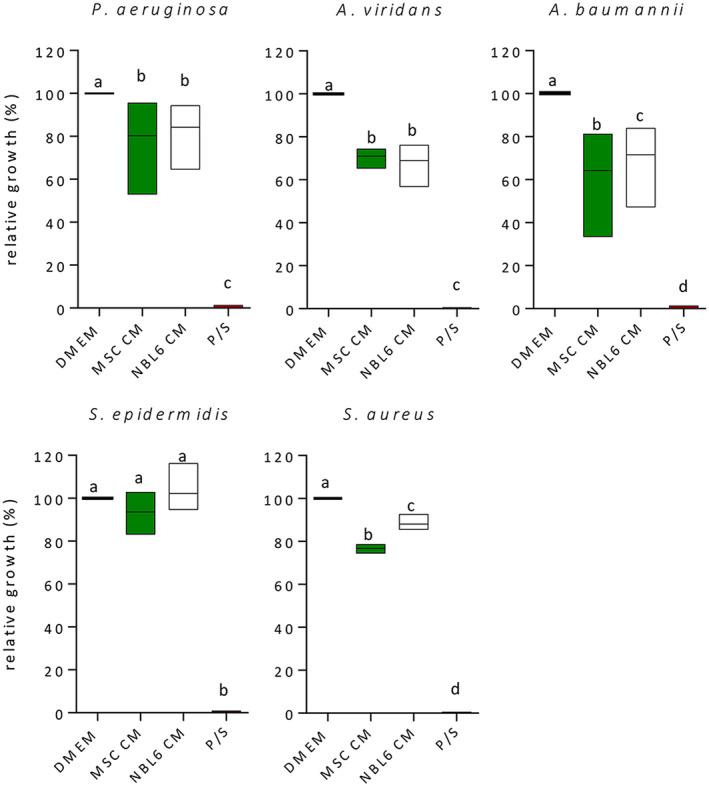
Mesenchymal stromal cells (MSCs) from various species, such as humans, mice, and horses, were recently found to effectively inhibit the growth of various bacteria associated with chronic infections, such as nonhealing cutaneous wounds, via secretion of antimicrobial peptides. These MSC antimicrobial properties have primarily been studied in the context of the planktonic phenotype, and thus, information on the effects on bacteria in biofilms is largely lacking. The objectives of this study were to evaluate the in vitro efficacy of the MSC secretome against various biofilm-forming wound pathogens, including the methicillin-resistant Staphylococcus aureus (MRSA), and to explore the mechanisms that affect bacterial biofilms. To this end, we used equine MSCs, because the horse represents a physiologically relevant model for human wound healing and offers a readily translatable model for MSC therapies in humans. Our salient findings were that the equine MSC secretome inhibits biofilm formation and mature biofilms of various bacteria, such as Pseudomonas aeruginosa, S. aureus, and Staphylococcus epidermidis. Furthermore, we demonstrated that equine MSC secrete cysteine proteases that destabilize MRSA biofilms, thereby increasing the efficacy of antibiotics that were previously tolerated by the biofilms. In light of the rise of antibiotic-resistant bacterial strains as an increasing global health threat, our results provide the rationale for using the MSC secretome as a complementary treatment for bacterial skin infections in both humans and horses.
最近发现,来自不同物种的间充质基质细胞(MSCs),如人类、小鼠和马,通过分泌抗菌肽,可有效抑制与慢性感染相关的各种细菌的生长,例如难以愈合的皮肤伤口。这些 MSC 的抗菌特性主要在浮游表型的背景下进行了研究,因此,关于生物膜中细菌的影响的信息在很大程度上是缺乏的。本研究的目的是评估 MSC 分泌组对各种生物膜形成的伤口病原体的体外疗效,包括耐甲氧西林金黄色葡萄球菌(MRSA),并探索影响细菌生物膜的机制。为此,我们使用马 MSC,因为马代表了一种与人类伤口愈合相关的生理相关模型,并为人类 MSC 治疗提供了一个易于转化的模型。我们的主要发现是,马 MSC 分泌组抑制各种细菌的生物膜形成和成熟生物膜,如铜绿假单胞菌、金黄色葡萄球菌和表皮葡萄球菌。此外,我们证明马 MSC 分泌半胱氨酸蛋白酶,破坏 MRSA 生物膜,从而提高以前被生物膜耐受的抗生素的疗效。鉴于抗生素耐药性细菌菌株作为日益严重的全球健康威胁的出现,我们的研究结果为将 MSC 分泌组作为人类和马的细菌性皮肤感染的辅助治疗提供了依据。



 Zotero 插件