
比较常用的实体瘤靶向基因测序 panel 用于估计肿瘤突变负担,在癌症基因组图谱队列中显示分析和预后一致性。
Comparison of commonly used solid tumor targeted gene sequencing panels for estimating tumor mutation burden shows analytical and prognostic concordance within the cancer genome atlas cohort.
机构信息
Pathology, UC San Diego, La Jolla, California, USA
Pathology, UC San Diego, La Jolla, California, USA.
出版信息
J Immunother Cancer. 2020 Mar;8(1). doi: 10.1136/jitc-2020-000613.
BACKGROUND
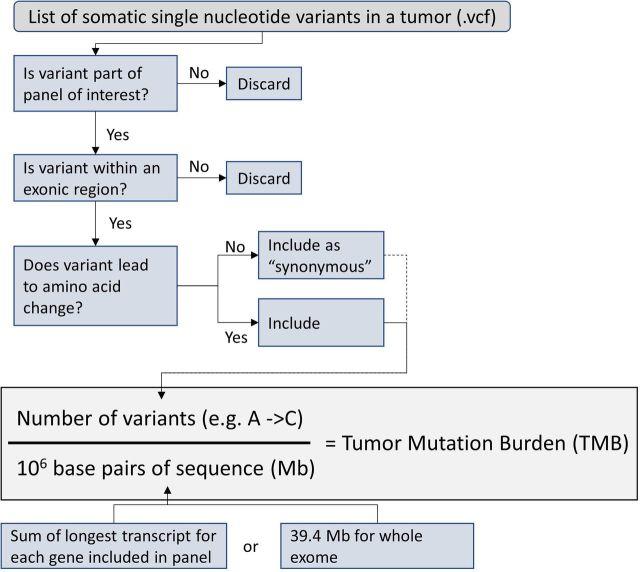
Tumor mutation burden (TMB) is a biomarker frequently reported by clinical laboratories, which is derived by quantifying of the number of single nucleotide or indel variants (mutations) identified by next-generation sequencing of tumors. TMB values can inform prognosis or predict the response of a patient's tumor to immune checkpoint inhibitor therapy. Methods for the calculation of TMB are not standardized between laboratories, with significant variables being the gene content of the panels sequenced and the inclusion or exclusion of synonymous variants in the calculations. The impact of these methodological differences has not been investigated and the concordance of reported TMB values between laboratories is unknown.
METHODS
Sequence variant lists from more than 9000 tumors of various types were downloaded from The Cancer Genome Atlas. Variant lists were filtered to include only appropriate variant types (ie, non-synonymous only or synonymous and non-synonymous variants) within the genes found in five commonly used targeted solid tumor gene panels as well as an in-house gene panel. Calculated TMB was paired with corresponding overall survival (OS) data of each patient.
RESULTS
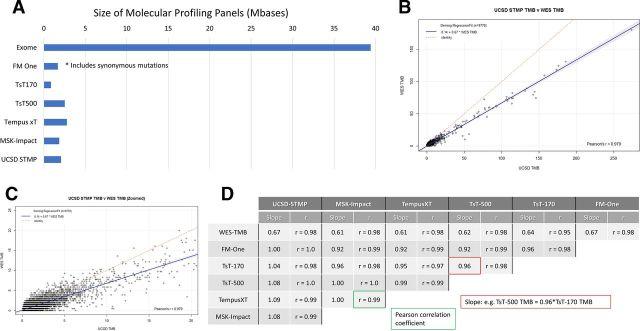
Regression analysis indicates high concordance of TMB as derived from the examined panels. TMB derived from panels was consistently and significantly lower than that derived from a whole exome. TMB, as derived from whole exome or the examined panels, showed a significant correlation with OS in the examined data.
CONCLUSIONS
TMB derived from the examined gene panels was analytically equivalent between panels, but not between panels and whole-exome sequencing. Correlation between TMB and OS is significant if TMB method-specific cut-offs are used. These results suggest that TMB values, as derived from the gene panels examined, are analytically and prognostically equivalent.
背景
肿瘤突变负担(TMB)是临床实验室经常报告的生物标志物,它通过对肿瘤下一代测序中鉴定的单个核苷酸或插入缺失变异(突变)的数量进行定量而得出。TMB 值可用于预测患者肿瘤的预后或对免疫检查点抑制剂治疗的反应。实验室之间 TMB 的计算方法没有标准化,显著的变量是测序面板的基因含量以及计算中是否包含同义变体。这些方法学差异的影响尚未得到研究,并且实验室之间报告的 TMB 值的一致性也未知。
方法
从癌症基因组图谱中下载了超过 9000 个各种类型肿瘤的序列变异列表。对变异列表进行了筛选,仅包括在五个常用的靶向实体瘤基因面板以及内部基因面板中发现的基因内适当的变异类型(即仅非同义或同义和非同义变体)。计算的 TMB 与每个患者的相应总生存期(OS)数据配对。
结果
回归分析表明,源自检查面板的 TMB 具有高度一致性。源自面板的 TMB 始终明显低于源自全外显子的 TMB。源自全外显子或检查面板的 TMB 与检查数据中的 OS 呈显著相关性。
结论
源自检查基因面板的 TMB 在面板之间具有分析等效性,但在面板与全外显子测序之间则不具有等效性。如果使用 TMB 方法特异性截止值,则 TMB 与 OS 之间的相关性具有统计学意义。这些结果表明,源自所检查的基因面板的 TMB 值在分析上和预后上是等效的。



 Zotero 插件