
慢性肾脏病患者心血管疾病的发病机制:一个与加速衰老相关的过程。
Mechanisms of Cardiovascular Disorders in Patients With Chronic Kidney Disease: A Process Related to Accelerated Senescence.
作者信息
Carracedo Julia, Alique Matilde, Vida Carmen, Bodega Guillermo, Ceprián Noemí, Morales Enrique, Praga Manuel, de Sequera Patricia, Ramírez Rafael
机构信息
Departamento de Genética, Fisiología y Microbiología, Universidad Complutense/Instituto de Investigación Sanitaria Hospital 12 de Octubre (imas12), Madrid, Spain.
Departamento Biología de Sistemas, Facultad de Medicina y Ciencias de la Salud (IRYCIS), Universidad de Alcalá, Alcalá de Henares, Madrid, Spain.
出版信息
Front Cell Dev Biol. 2020 Mar 20;8:185. doi: 10.3389/fcell.2020.00185. eCollection 2020.
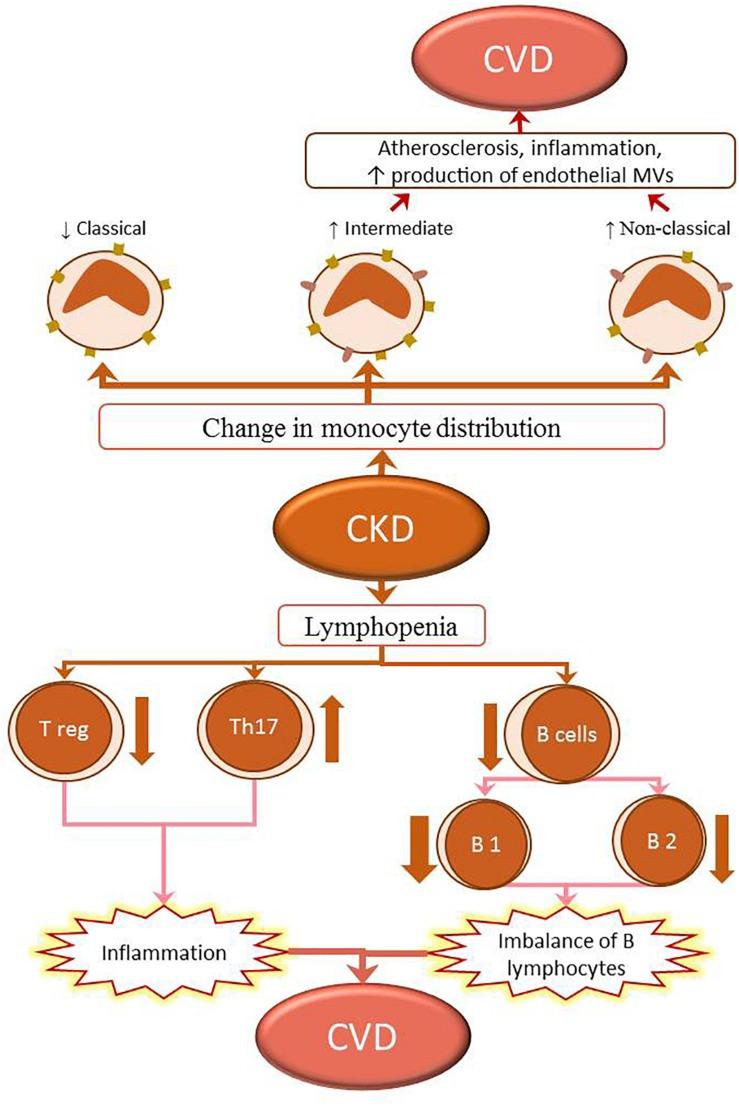
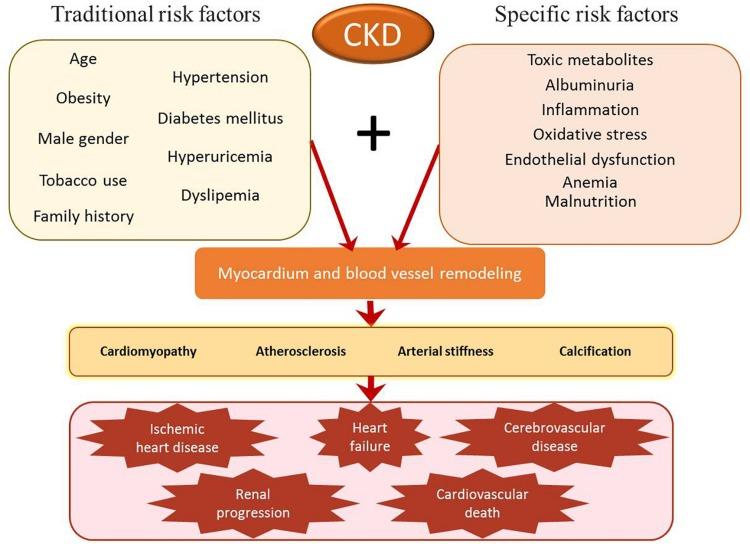
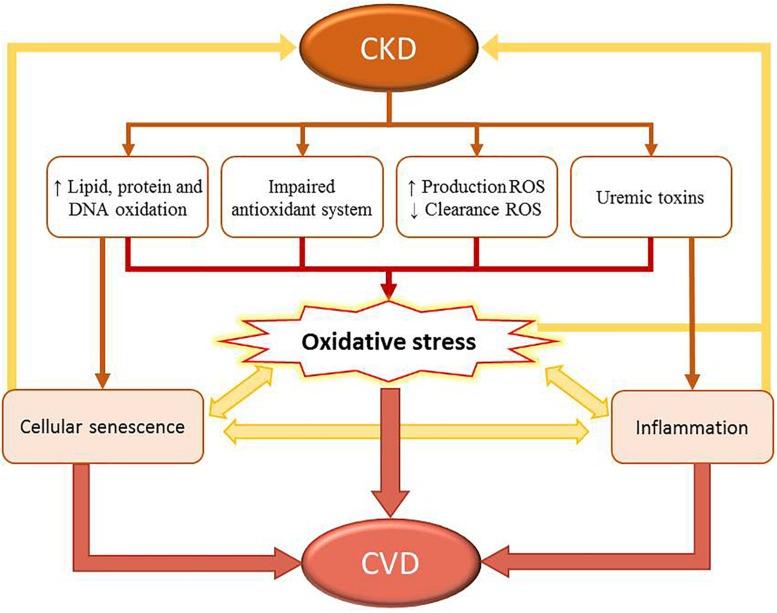
Cardiovascular diseases (CVDs), especially those involving a systemic inflammatory process such as atherosclerosis, remain the leading cause of morbidity and mortality in patients with chronic kidney disease (CKD). CKD is a systemic condition affecting approximately 10% of the general population. The prevalence of CKD has increased over the past decades because of the aging of the population worldwide. Indeed, CVDs in patients with CKD constitute a premature form of CVD observed in the general population. Multiple studies indicate that patients with renal disease undergo accelerated aging, which precipitates the appearance of pathologies, including CVDs, usually associated with advanced age. In this review, we discuss several aspects that characterize CKD-associated CVDs, such as etiopathogenic elements that CKD patients share with the general population, changes in the cellular balance of reactive oxygen species (ROS), and the associated process of cellular senescence. Uremia-associated aging is linked with numerous changes at the cellular and molecular level. These changes are similar to those observed in the normal process of physiologic aging. We also discuss new perspectives in the study of CKD-associated CVDs and epigenetic alterations in intercellular signaling, mediated by microRNAs and/or extracellular vesicles (EVs), which promote vascular damage and subsequent development of CVD. Understanding the processes and factors involved in accelerated senescence and other abnormal intercellular signaling will identify new therapeutic targets and lead to improved methods of diagnosis and monitoring for patients with CKD-associated CVDs.
心血管疾病(CVDs),尤其是那些涉及全身炎症过程的疾病,如动脉粥样硬化,仍然是慢性肾脏病(CKD)患者发病和死亡的主要原因。CKD是一种影响约10%普通人群的全身性疾病。由于全球人口老龄化,过去几十年来CKD的患病率有所上升。事实上,CKD患者的CVDs是普通人群中观察到的一种过早形式的CVD。多项研究表明,肾病患者会加速衰老,这促使包括CVDs在内的通常与老年相关的疾病提早出现。在本综述中,我们讨论了CKD相关CVDs的几个特征方面,例如CKD患者与普通人群共有的病因要素、活性氧(ROS)细胞平衡的变化以及相关的细胞衰老过程。尿毒症相关的衰老与细胞和分子水平的众多变化有关。这些变化与生理衰老正常过程中观察到的变化相似。我们还讨论了CKD相关CVDs研究的新视角以及由微小RNA和/或细胞外囊泡(EVs)介导的细胞间信号传导中的表观遗传改变,这些改变会促进血管损伤及随后CVD的发展。了解加速衰老和其他异常细胞间信号传导所涉及的过程和因素,将有助于确定新的治疗靶点,并为CKD相关CVDs患者带来改进的诊断和监测方法。
 Zotero 插件