
世界卫生组织东地中海区域国家中肥胖、超重与人类发展指数之间的关系
The Relationship Between Obesity, Overweight, and the Human Development Index in World Health Organization Eastern Mediterranean Region Countries.
作者信息
Ataey Amin, Jafarvand Elnaz, Adham Davoud, Moradi-Asl Eslam
机构信息
Meshkin Shahr Health Center, Ardabil University of Medical Sciences, Ardabil, Iran.
Department of Community Nutrition, School of Nutritional Sciences and Dietetics, Tehran University of Medical Sciences, Tehran, Iran.
出版信息
J Prev Med Public Health. 2020 Mar;53(2):98-105. doi: 10.3961/jpmph.19.100. Epub 2020 Mar 31.
OBJECTIVES
Obesity is regarded as one of the most prominent health threats worldwide and a serious risk factor for non-communicable diseases, such as diabetes mellitus type 2, high blood pressure, cardiovascular diseases, and some types of cancer. Given the role that societal development-as reflected by the Human Development Index (HDI)-may play in the prevalence of obesity and overweight, this study aimed to investigate the degree to which the prevalence of obesity and overweight is affected by HDI and its components.
METHODS
In this ecological study, the required data on HDI and its components were gathered from the latest report of the United Nations Development Program, and data on obesity and overweight were acquired from the latest reports published on the World Health Organization website. Statistical analyses were conducted using SPSS version 24.0.
RESULTS
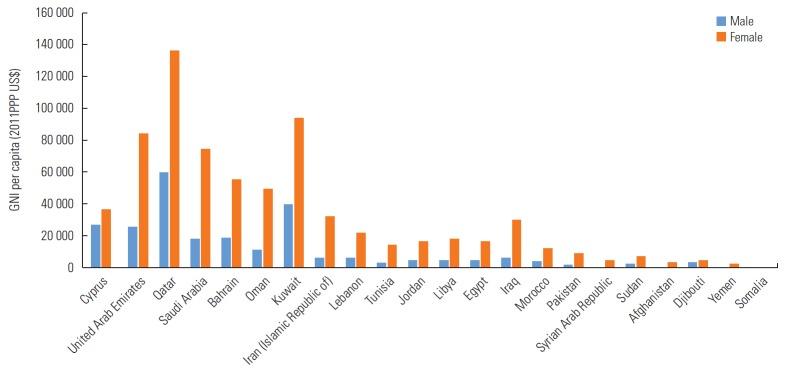
The prevalence of obesity was determined to be significantly higher among females than males, and the gross national index per capita was found to be significantly higher for males than females (p<0.05). Significant positive correlations were found between HDI and its components and sex, as well as indices of obesity and overweight.
CONCLUSIONS
A significant positive correlation exists between HDI and obesity. As policy-makers attempt to improve the general welfare of the people, they should be aware of potential unwanted effects of development on the risk of obesity and overweight among the population.
目标
肥胖被视为全球最突出的健康威胁之一,也是非传染性疾病(如2型糖尿病、高血压、心血管疾病和某些类型癌症)的严重风险因素。鉴于人类发展指数(HDI)所反映的社会发展可能在肥胖和超重患病率中发挥的作用,本研究旨在调查肥胖和超重患病率受HDI及其组成部分影响的程度。
方法
在这项生态学研究中,关于HDI及其组成部分的所需数据来自联合国开发计划署的最新报告,肥胖和超重数据则从世界卫生组织网站上发布的最新报告中获取。使用SPSS 24.0版进行统计分析。
结果
确定女性肥胖患病率显著高于男性,男性人均国民指数显著高于女性(p<0.05)。发现HDI及其组成部分与性别以及肥胖和超重指数之间存在显著正相关。
结论
HDI与肥胖之间存在显著正相关。在政策制定者试图改善民众总体福利时,应意识到发展对人群肥胖和超重风险可能产生的不良影响。


 Zotero 插件