
与腓骨肌萎缩症 2 型相关的基因失活会导致秀丽隐杆线虫出现常见的行为、细胞和分子缺陷。
Disruption of genes associated with Charcot-Marie-Tooth type 2 lead to common behavioural, cellular and molecular defects in Caenorhabditis elegans.
机构信息
Neuroscience Program, Monash Biomedicine Discovery Institute and Department of Anatomy and Developmental Biology, Monash University, Melbourne, VIC, Australia.
出版信息
PLoS One. 2020 Apr 15;15(4):e0231600. doi: 10.1371/journal.pone.0231600. eCollection 2020.
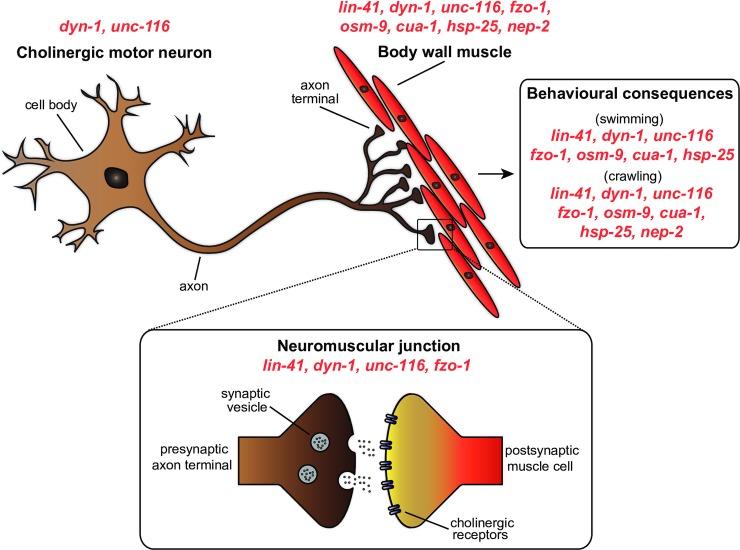
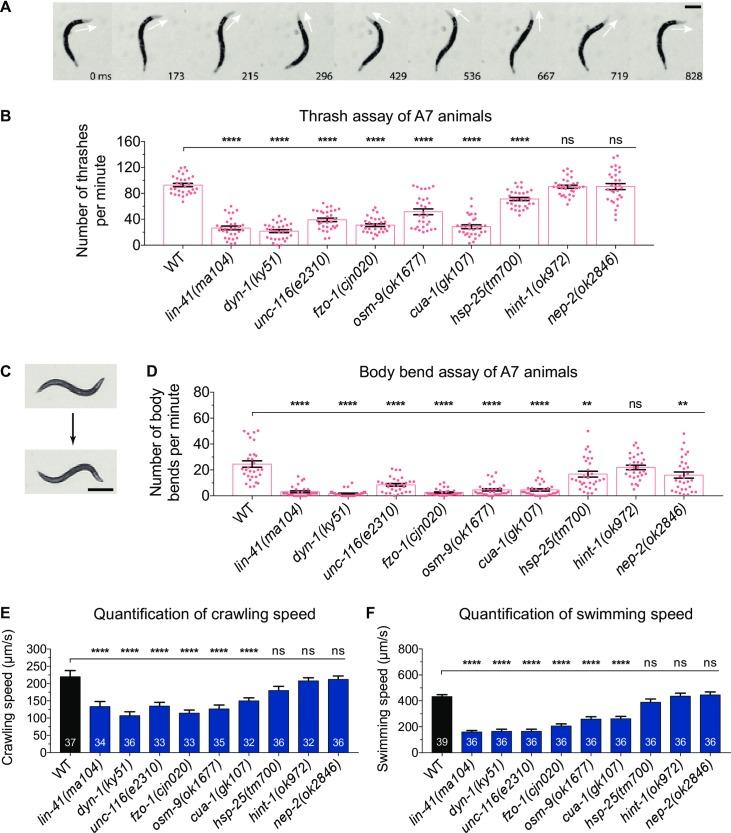
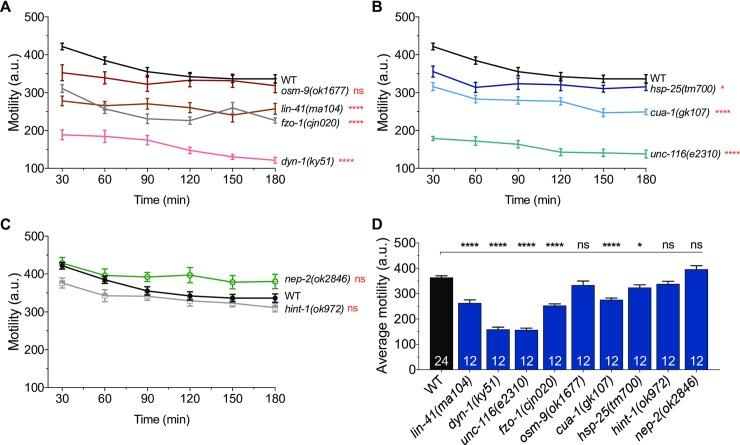
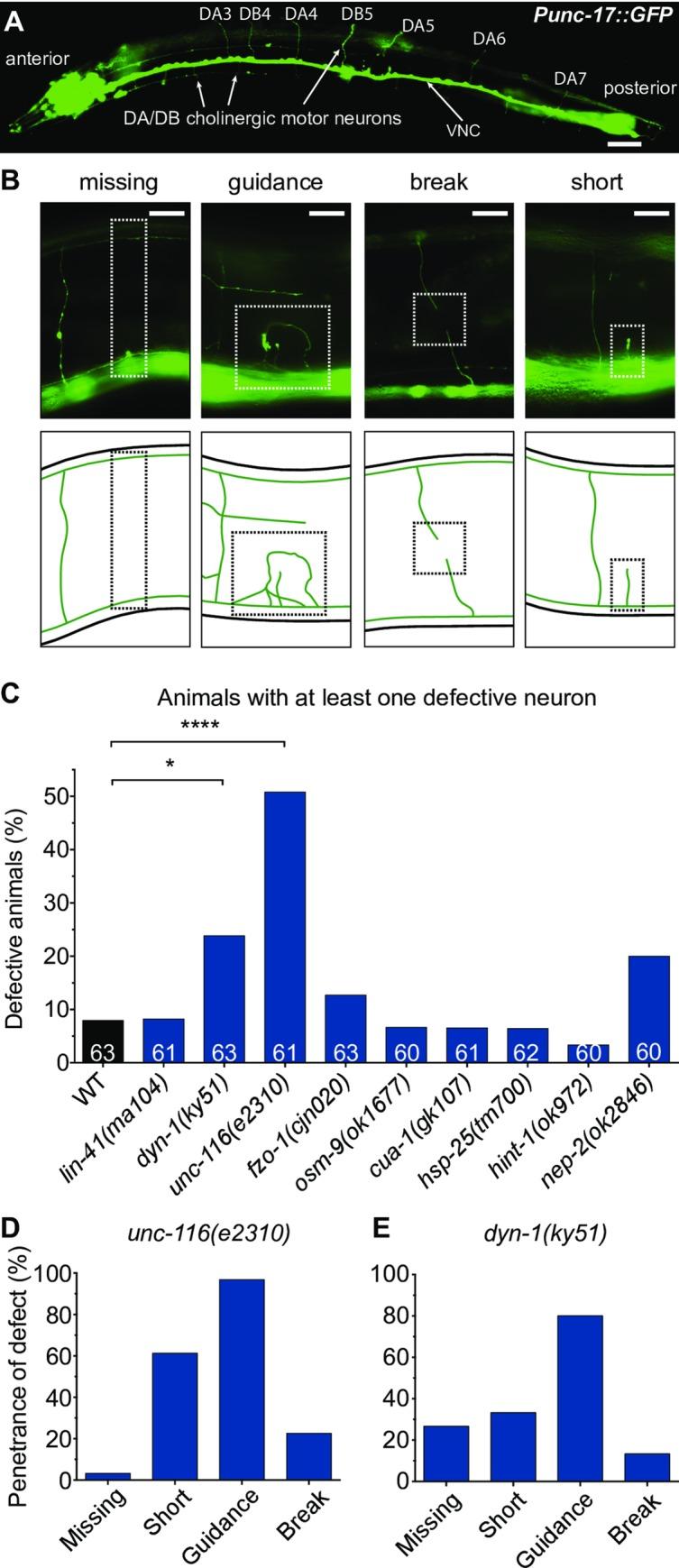
Charcot-Marie-Tooth (CMT) disease is an inherited peripheral motor and sensory neuropathy. The disease is divided into demyelinating (CMT1) and axonal (CMT2) neuropathies, and although we have gained molecular information into the details of CMT1 pathology, much less is known about CMT2. Due to its clinical and genetic heterogeneity, coupled with a lack of animal models, common underlying mechanisms remain elusive. In order to gain an understanding of the normal function of genes associated with CMT2, and to draw direct comparisons between them, we have studied the behavioural, cellular and molecular consequences of mutating nine different genes in the nematode Caenorhabditis elegans (lin-41/TRIM2, dyn-1/DNM2, unc-116/KIF5A, fzo-1/MFN2, osm-9/TRPV4, cua-1/ATP7A, hsp-25/HSPB1, hint-1/HINT1, nep-2/MME). We show that C. elegans defective for these genes display debilitated movement in crawling and swimming assays. Severe morphological defects in cholinergic motors neurons are also evident in two of the mutants (dyn-1 and unc-116). Furthermore, we establish methods for quantifying muscle morphology and use these to demonstrate that loss of muscle structure occurs in the majority of mutants studied. Finally, using electrophysiological recordings of neuromuscular junction (NMJ) activity, we uncover reductions in spontaneous postsynaptic current frequency in lin-41, dyn-1, unc-116 and fzo-1 mutants. By comparing the consequences of mutating numerous CMT2-related genes, this study reveals common deficits in muscle structure and function, as well as NMJ signalling when these genes are disrupted.
腓骨肌萎缩症(CMT)是一种遗传性周围运动和感觉神经病。该疾病分为脱髓鞘(CMT1)和轴索性(CMT2)神经病,尽管我们已经获得了有关 CMT1 病理学的分子信息,但对 CMT2 的了解要少得多。由于其临床和遗传异质性,加上缺乏动物模型,共同的潜在机制仍难以捉摸。为了了解与 CMT2 相关的基因的正常功能,并对它们进行直接比较,我们研究了线虫秀丽隐杆线虫中九个不同基因(lin-41/TRIM2、dyn-1/DNM2、unc-116/KIF5A、fzo-1/MFN2、osm-9/TRPV4、cua-1/ATP7A、hsp-25/HSPB1、hint-1/HINT1、nep-2/MME)突变的行为、细胞和分子后果。我们表明,这些基因有缺陷的秀丽隐杆线虫在爬行和游泳实验中运动能力减弱。在两种突变体(dyn-1 和 unc-116)中也明显存在胆碱能运动神经元的严重形态缺陷。此外,我们建立了量化肌肉形态的方法,并使用这些方法证明大多数研究的突变体中都存在肌肉结构丧失。最后,通过对神经肌肉接头(NMJ)活性的电生理记录,我们发现 lin-41、dyn-1、unc-116 和 fzo-1 突变体中的自发性突触后电流频率降低。通过比较许多 CMT2 相关基因的突变后果,本研究揭示了当这些基因被破坏时肌肉结构和功能以及 NMJ 信号的常见缺陷。


 Zotero 插件