
2020 年 3 月 1 日至 30 日,14 个州住院的经实验室确诊的 2019 冠状病毒病患者的住院率和特征 - COVID-NET。
Hospitalization Rates and Characteristics of Patients Hospitalized with Laboratory-Confirmed Coronavirus Disease 2019 - COVID-NET, 14 States, March 1-30, 2020.
出版信息
MMWR Morb Mortal Wkly Rep. 2020 Apr 17;69(15):458-464. doi: 10.15585/mmwr.mm6915e3.
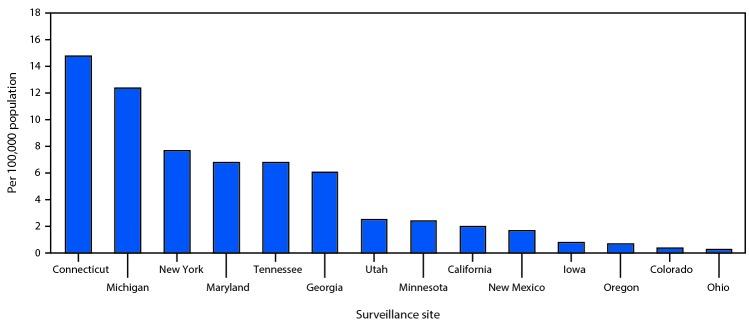
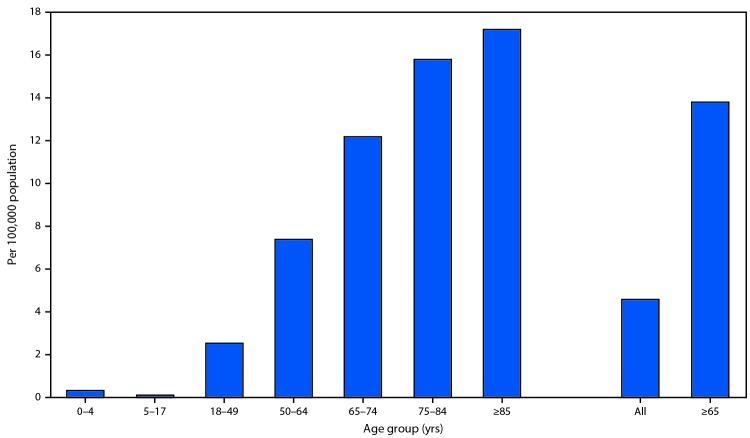
Since SARS-CoV-2, the novel coronavirus that causes coronavirus disease 2019 (COVID-19), was first detected in December 2019 (1), approximately 1.3 million cases have been reported worldwide (2), including approximately 330,000 in the United States (3). To conduct population-based surveillance for laboratory-confirmed COVID-19-associated hospitalizations in the United States, the COVID-19-Associated Hospitalization Surveillance Network (COVID-NET) was created using the existing infrastructure of the Influenza Hospitalization Surveillance Network (FluSurv-NET) (4) and the Respiratory Syncytial Virus Hospitalization Surveillance Network (RSV-NET). This report presents age-stratified COVID-19-associated hospitalization rates for patients admitted during March 1-28, 2020, and clinical data on patients admitted during March 1-30, 2020, the first month of U.S. surveillance. Among 1,482 patients hospitalized with COVID-19, 74.5% were aged ≥50 years, and 54.4% were male. The hospitalization rate among patients identified through COVID-NET during this 4-week period was 4.6 per 100,000 population. Rates were highest (13.8) among adults aged ≥65 years. Among 178 (12%) adult patients with data on underlying conditions as of March 30, 2020, 89.3% had one or more underlying conditions; the most common were hypertension (49.7%), obesity (48.3%), chronic lung disease (34.6%), diabetes mellitus (28.3%), and cardiovascular disease (27.8%). These findings suggest that older adults have elevated rates of COVID-19-associated hospitalization and the majority of persons hospitalized with COVID-19 have underlying medical conditions. These findings underscore the importance of preventive measures (e.g., social distancing, respiratory hygiene, and wearing face coverings in public settings where social distancing measures are difficult to maintain) to protect older adults and persons with underlying medical conditions, as well as the general public. In addition, older adults and persons with serious underlying medical conditions should avoid contact with persons who are ill and immediately contact their health care provider(s) if they have symptoms consistent with COVID-19 (https://www.cdc.gov/coronavirus/2019-ncov/symptoms-testing/symptoms.html) (5). Ongoing monitoring of hospitalization rates, clinical characteristics, and outcomes of hospitalized patients will be important to better understand the evolving epidemiology of COVID-19 in the United States and the clinical spectrum of disease, and to help guide planning and prioritization of health care system resources.
自 2019 年 12 月首次发现导致 2019 年冠状病毒病(COVID-19)的新型冠状病毒(SARS-CoV-2)以来(1),全球已报告约 130 万例病例(2),其中包括美国约 33 万例(3)。为了对美国的 COVID-19 相关住院病例进行基于人群的监测,使用现有的流感住院监测网络(FluSurv-NET)(4)和呼吸道合胞病毒住院监测网络(RSV-NET)创建了 COVID-19 相关住院监测网络(COVID-NET)。本报告介绍了 2020 年 3 月 1 日至 28 日期间因 COVID-19 住院的患者的年龄分层 COVID-19 相关住院率,以及 2020 年 3 月 1 日至 30 日期间因 COVID-19 住院的患者的临床数据,这是美国监测的第一个月。在因 COVID-19 住院的 1482 名患者中,74.5%的年龄≥50 岁,54.4%的为男性。在此 4 周期间,通过 COVID-NET 发现的患者住院率为每 10 万人中 4.6 例。年龄≥65 岁的成年人的发病率最高(13.8)。截至 2020 年 3 月 30 日,178 名(12%)成年患者有基础疾病数据,其中 89.3%有一个或多个基础疾病;最常见的是高血压(49.7%)、肥胖症(48.3%)、慢性肺部疾病(34.6%)、糖尿病(28.3%)和心血管疾病(27.8%)。这些发现表明,老年人的 COVID-19 相关住院率较高,大多数因 COVID-19 住院的患者都有基础疾病。这些发现强调了预防措施(例如,保持社交距离、呼吸卫生和在难以保持社交距离措施的公共场所佩戴口罩)的重要性,以保护老年人和有基础疾病的人,以及普通公众。此外,老年人和有严重基础疾病的人应避免与患病者接触,如果他们出现与 COVID-19 一致的症状,应立即联系他们的医疗保健提供者(https://www.cdc.gov/coronavirus/2019-ncov/symptoms-testing/symptoms.html)(5)。对住院率、临床特征和住院患者结果的持续监测,对于更好地了解 COVID-19 在美州的演变流行病学以及疾病的临床谱,并帮助指导医疗保健系统资源的规划和优先排序非常重要。
 Zotero 插件