
人类白细胞抗原易感性图谱与严重急性呼吸综合征冠状病毒 2。
Human Leukocyte Antigen Susceptibility Map for Severe Acute Respiratory Syndrome Coronavirus 2.
机构信息
Computational Biology Program, Oregon Health & Science University, Portland, Oregon, USA.
Department of Biomedical Engineering, Oregon Health & Science University, Portland, Oregon, USA.
出版信息
J Virol. 2020 Jun 16;94(13). doi: 10.1128/JVI.00510-20.
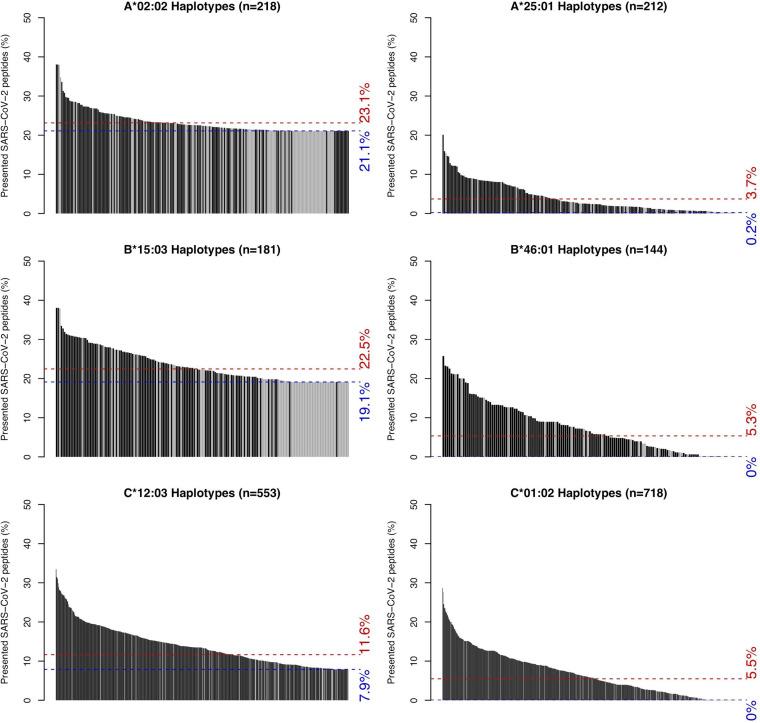
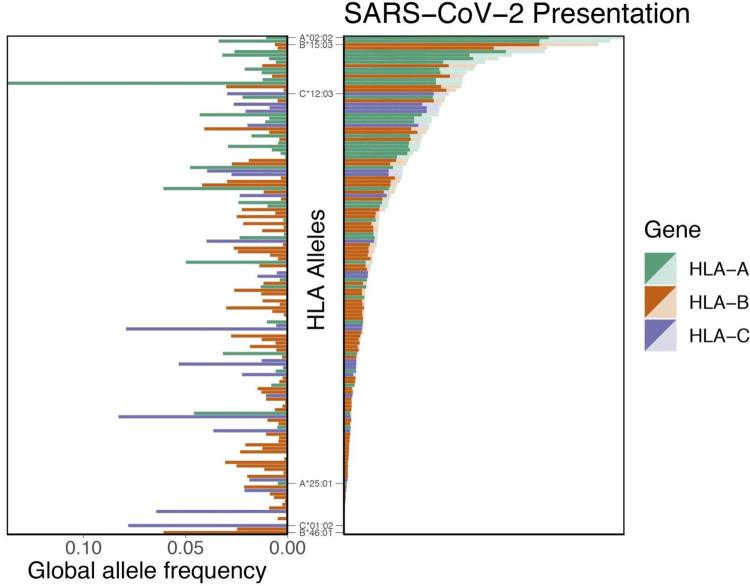
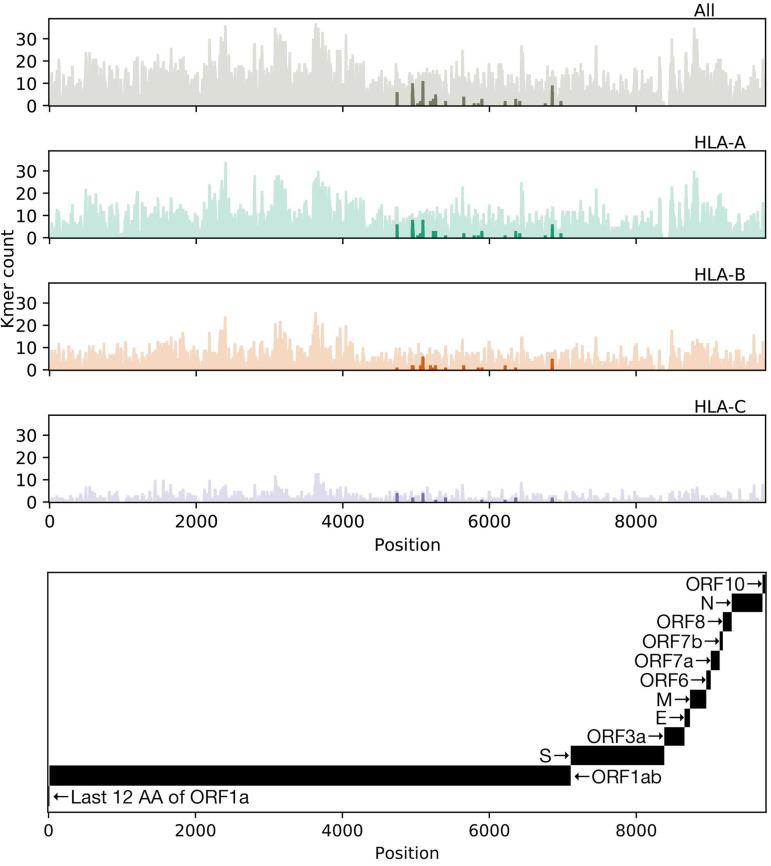
Genetic variability across the three major histocompatibility complex (MHC) class I genes (human leukocyte antigen A [HLA-A], -B, and -C genes) may affect susceptibility to and severity of the disease caused by severe acute respiratory syndrome coronavirus 2 (SARS-CoV-2), the virus responsible for coronavirus disease 2019 (COVID-19). We performed a comprehensive analysis of viral peptide-MHC class I binding affinity across 145 HLA-A, -B, and -C genotypes for all SARS-CoV-2 peptides. We further explored the potential for cross-protective immunity conferred by prior exposure to four common human coronaviruses. The SARS-CoV-2 proteome was successfully sampled and was represented by a diversity of HLA alleles. However, we found that HLA-B46:01 had the fewest predicted binding peptides for SARS-CoV-2, suggesting that individuals with this allele may be particularly vulnerable to COVID-19, as they were previously shown to be for SARS (M. Lin, H.-T. Tseng, J. A. Trejaut, H.-L. Lee, et al., BMC Med Genet 4:9, 2003, https://bmcmedgenet.biomedcentral.com/articles/10.1186/1471-2350-4-9). Conversely, we found that HLA-B15:03 showed the greatest capacity to present highly conserved SARS-CoV-2 peptides that are shared among common human coronaviruses, suggesting that it could enable cross-protective T-cell-based immunity. Finally, we reported global distributions of HLA types with potential epidemiological ramifications in the setting of the current pandemic. Individual genetic variation may help to explain different immune responses to a virus across a population. In particular, understanding how variation in HLA may affect the course of COVID-19 could help identify individuals at higher risk from the disease. HLA typing can be fast and inexpensive. Pairing HLA typing with COVID-19 testing where feasible could improve assessment of severity of viral disease in the population. Following the development of a vaccine against SARS-CoV-2, the virus that causes COVID-19, individuals with high-risk HLA types could be prioritized for vaccination.
主要组织相容性复合体 (MHC) 三类基因(人类白细胞抗原 A [HLA-A]、-B 和 -C 基因)的遗传变异性可能影响严重急性呼吸系统综合征冠状病毒 2(SARS-CoV-2)的易感性和疾病的严重程度,该病毒是导致 2019 年冠状病毒病 (COVID-19) 的原因。我们对 145 种 HLA-A、-B 和 -C 基因型的所有 SARS-CoV-2 肽的病毒肽-MHC 类 I 结合亲和力进行了全面分析。我们进一步探索了先前接触四种常见人类冠状病毒所赋予的交叉保护免疫的潜力。SARS-CoV-2 蛋白质组成功被采样,并由多种 HLA 等位基因代表。然而,我们发现 HLA-B46:01 对 SARS-CoV-2 的预测结合肽最少,这表明具有该等位基因的个体可能特别容易感染 COVID-19,因为先前已证明他们对 SARS 特别易感(M. Lin, H.-T. Tseng, J. A. Trejaut, H.-L. Lee, et al., BMC Med Genet 4:9, 2003, https://bmcmedgenet.biomedcentral.com/articles/10.1186/1471-2350-4-9)。相反,我们发现 HLA-B15:03 表现出呈现高度保守的 SARS-CoV-2 肽的最大能力,这些肽在常见的人类冠状病毒中共享,这表明它可以实现基于 T 细胞的交叉保护免疫。最后,我们报告了在当前大流行背景下具有潜在流行病学意义的 HLA 类型的全球分布。个体遗传变异可能有助于解释人群对病毒的不同免疫反应。特别是,了解 HLA 变异如何影响 COVID-19 的病程有助于识别疾病风险较高的个体。HLA 分型可以快速且廉价。在可行的情况下,将 HLA 分型与 COVID-19 检测相结合,可以改善对人群中病毒疾病严重程度的评估。在针对导致 COVID-19 的 SARS-CoV-2 病毒的疫苗开发之后,具有高风险 HLA 类型的个体可以优先接种疫苗。



 Zotero 插件