
采用 GnRH 拮抗剂方案控制性卵巢刺激在年轻乳腺癌女性中进行紧急生育力保存的疗效和安全性:一项前瞻性全国性瑞典多中心研究。
Efficacy and safety of controlled ovarian stimulation using GnRH antagonist protocols for emergency fertility preservation in young women with breast cancer-a prospective nationwide Swedish multicenter study.
机构信息
Department of Oncology-Pathology, Karolinska Institutet, Stockholm, Sweden.
Department of Obstetrics and Gynecology, Södersjukhuset, Stockholm, Sweden.
出版信息
Hum Reprod. 2020 Apr 28;35(4):929-938. doi: 10.1093/humrep/deaa029.
STUDY QUESTION
How efficacious and safe are the current approaches to controlled ovarian stimulation (COS) aimed at fertility preservation (FP) in women with breast cancer (BC)?
SUMMARY ANSWER
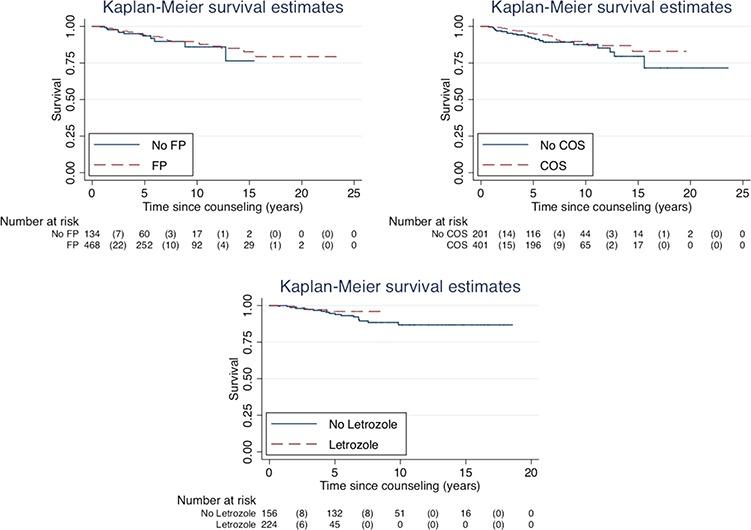
In women with BC undergoing COS aiming at egg/embryo cryopreservation, letrozole-based protocols and those randomly started were equally effective compared with conventional COS, and the overall survival was similar between the women that proceeded to FP and those who did not.
WHAT IS KNOWN ALREADY
Cryopreservation of oocytes and embryos is an established method for FP in women with BC. Recent improvements to COS protocols include concomitant use of letrozole, random-cycle start day of stimulation and the use of GnRHa for the egg maturation trigger. To date, limited sample size of the available studies has not allowed investigation of differences in the efficacy of the different approaches to COS for FP in this patient population.
STUDY DESIGN, SIZE, DURATION: A prospective multicenter study with national coverage including 610 women with BC counseled between 1 January 1995 and 30 June 2017 at six Swedish FP regional programs.
PARTICIPANTS/MATERIALS, SETTING, METHODS: After counseling, 401 women elected to undergo COS. Treatments differed in the use or not of concomitant letrozole, a conventional or random-cycle day COS initiation and the use of hCG versus GnRHa trigger for oocyte maturation. Numbers of cryopreserved oocytes and embryos were defined as primary outcome. Pregnancy attempts, reproductive outcomes and long-term survival, investigated by the linking of individuals of the cohort to the total population register of the Swedish Tax Agency (up to 25 November 2018), were evaluated.
MAIN RESULTS AND THE ROLE OF CHANCE
Using letrozole or not resulted in similar numbers of oocytes and embryos cryopreserved (meanoocytes = 9.7 versus 10 and meanembryos 4.0 versus 5.3, respectively), similar to COS with random versus conventional start (meanoocytes 9.0 versus 10.6 and meanembryos 4.8 versus 4.8). In COS with letrozole, a GnRHa trigger was associated with a higher number of oocytes retrieved (P < 0.05) and embryos cryopreserved (P < 0.005), compared with conventional hCG trigger. Of 99 women who returned to fertility clinics after cancer treatment, 32 proceeded to thawing of oocytes or embryos and 10 of them had live births. The all-cause survival between the women that underwent COS and those who did not was similar and did not differ between the two groups.
LIMITATIONS, REASONS FOR CAUTION: Data on tumor characteristics and estrogen receptor (ER) status were not known for all women at the time of FP counseling and planning of COS, thus protocols with letrozole have been used for both estrogen-sensitive and non-estrogen-sensitive BC. For the same reason, subsequent adjustment for ERs in the BC or tumor characteristics as potential confounders were not performed as these parameters were not available and did not influence the provision of FP through COS.
WIDER IMPLICATIONS OF THE FINDINGS
The results of our study support the premise that recently introduced potential improvements to COS protocols for FP in women with BC are efficacious and safe.
STUDY FUNDING/COMPETING INTEREST(S): This study was supported by research grants from the Swedish Cancer Society, the Stockholm County Council, the Percy Falk Stiftelsen, Radiumhemmets Forskningsfonder, The Swedish Breast Cancer Association and Karolinska Institutet to K.A.R.W. J.B. reports grants from Amgen, AstraZeneca, Pfizer, Roche, Sanofi-Aventis and Merck, outside the submitted work, and payment from UpToDate to Asklepios Medicine HB for a chapter on BC prediction and prognostication. All the other authors have no competing interests to report.
研究问题
在接受乳腺癌(BC)治疗的女性中,目前针对生育保护(FP)的控制性卵巢刺激(COS)方法的疗效和安全性如何?
总结答案
在接受旨在进行卵母细胞/胚胎冷冻保存的 COS 的 BC 女性中,与传统的 COS 相比,来曲唑为基础的方案和随机开始的方案同样有效,并且在继续进行 FP 和未进行 FP 的女性之间,总生存率相似。
已知情况
卵母细胞和胚胎的冷冻保存是 BC 女性 FP 的一种既定方法。最近,COS 方案的改进包括同时使用来曲唑、刺激日的随机周期开始和使用 GnRH 激动剂进行卵母细胞成熟触发。迄今为止,现有研究的有限样本量不允许调查在这种患者人群中,不同的 FP 方法对 COS 疗效的差异。
研究设计、大小和持续时间:一项具有全国覆盖范围的前瞻性多中心研究,包括在 6 个瑞典 FP 区域计划中于 1995 年 1 月 1 日至 2017 年 6 月 30 日期间接受咨询的 610 名 BC 女性。
参与者/材料、设置、方法:在咨询后,401 名女性选择接受 COS。治疗方法在是否同时使用来曲唑、常规或随机周期日 COS 开始以及使用 hCG 与 GnRH 激动剂触发卵母细胞成熟方面存在差异。冷冻保存的卵母细胞和胚胎数量被定义为主要结局。通过将队列中的个体与瑞典税务署的总人口登记(截至 2018 年 11 月 25 日)相链接,评估了妊娠尝试、生殖结局和长期生存情况。
主要结果及其偶然性的作用
使用来曲唑或不使用来曲唑导致冷冻保存的卵母细胞和胚胎数量相似(卵母细胞中位数分别为 9.7 对 10 和胚胎中位数分别为 4.0 对 5.3),与随机与常规开始的 COS 相似(卵母细胞中位数分别为 9.0 对 10.6 和胚胎中位数分别为 4.8 对 4.8)。在使用来曲唑的 COS 中,与常规 hCG 触发相比,使用 GnRH 激动剂与获得更多的卵母细胞(P<0.05)和冷冻保存的胚胎(P<0.005)相关。在癌症治疗后返回生育诊所的 99 名女性中,有 32 名进行了卵母细胞或胚胎的解冻,其中 10 名有活产。接受 COS 和未接受 COS 的女性的全因生存率相似,两组之间没有差异。
局限性、谨慎的原因:在 FP 咨询和 COS 计划时,并非所有女性的肿瘤特征和雌激素受体(ER)状态都不知道,因此来曲唑方案已用于雌激素敏感和非雌激素敏感的 BC。出于同样的原因,随后没有根据 ER 或 BC 或肿瘤特征作为潜在混杂因素进行调整,因为这些参数不可用,并且不会影响通过 COS 提供 FP。
研究结果的更广泛意义
我们的研究结果支持这样的前提,即最近引入的针对 BC 女性 FP 的 COS 方案的潜在改进是有效和安全的。
研究资助/利益冲突:这项研究得到了瑞典癌症协会、斯德哥尔摩郡议会、Percy Falk 基金会、Radiumhemmets Forskningsfonder、瑞典乳腺癌协会和卡罗林斯卡研究所的研究资助,K.A.R.W. 获得 Amgen、AstraZeneca、Pfizer、Roche、Sanofi-Aventis 和 Merck 的资助,不在提交的工作范围内,Asklepios Medicine HB 为 BC 预测和预后的一章支付给 J.B.的报酬。所有其他作者均无利益冲突申报。


 Zotero 插件