
鹦鹉热衣原体所致重症肺炎的宏基因组二代测序诊断
Metagenomic next-generation sequencing in the diagnosis of severe pneumonias caused by Chlamydia psittaci.
机构信息
Department of Critical Care Medicine, Nanjing Drum Tower Hospital, The Affiliated Hospital of Nanjing University Medical School, No. 321 Zhongshan Road, Nanjing, 210008, Jiangsu Province, China.
Department of Rheumatology and Immunology, Nanjing Drum Tower Hospital, The Affiliated Hospital of Nanjing University Medical School, Nanjing, China.
出版信息
Infection. 2020 Aug;48(4):535-542. doi: 10.1007/s15010-020-01429-0. Epub 2020 Apr 20.
PURPOSE
Chlamydia psittaci infection in humans can lead to serious clinical manifestations, including severe pneumonia, adult respiratory distress syndrome, and, rarely, death. Implementation of metagenomic next-generation sequencing (mNGS) gives a promising new tool for diagnosis. The clinical spectrum of severe psittacosis pneumonia is described to provide physicians with a better understanding and to highlight the rarity and severity of severe psittacosis pneumonia.
METHODS
Nine cases of severe psittacosis pneumonia were diagnosed using mNGS. Retrospective analysis of the data on disease progression, new diagnosis tool, treatments, and outcomes, and the findings were summarised.
RESULTS
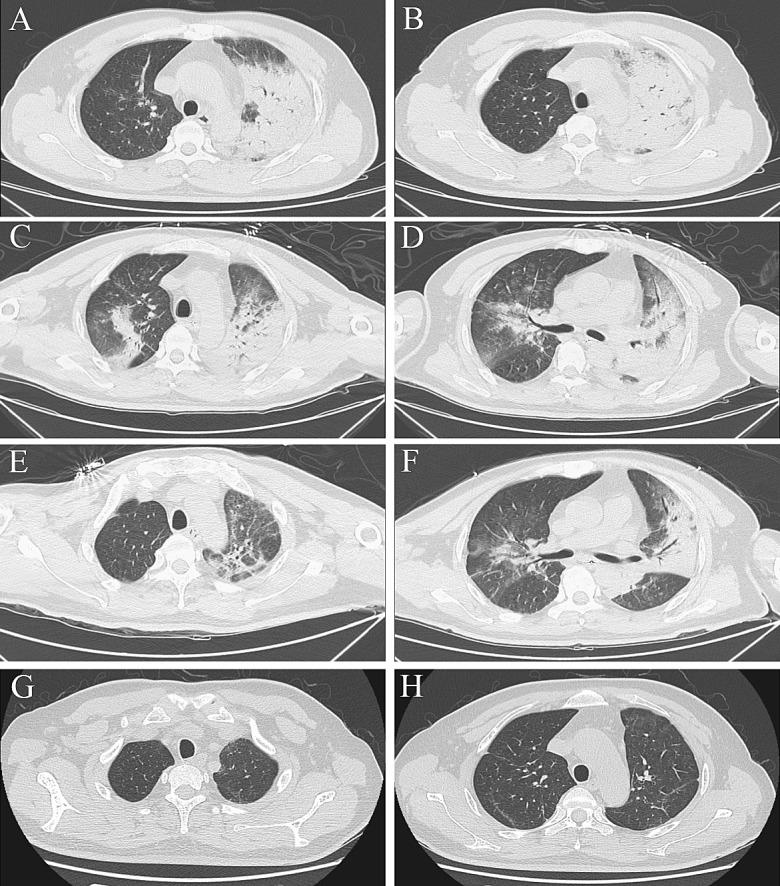
Frequent symptoms included chills and remittent fever (100%), cough and hypodynamia (100%), and headache and myalgia (77.8%). All patients were severe psittacosis pneumonia developed respiratory failure, accompanied by sepsis in 6/9 patients. mNGS takes 48-72 h to provide the results, and help to identify diagnosis of psittacosis. Laboratory data showed normal or slightly increased leucocytes, neutrophils, and procalcitonin but high C-reactive protein levels. Computed tomography revealed air-space consolidation and ground-glass opacity, which began in the upper lobe of one lung, and spread to both lungs, along with miliary, nodular, or consolidated shadows. One patient died because of secondary infection with Klebsiella pneumoniae, while the other eight patients experienced complete recoveries.
CONCLUSIONS
The use of mNGS can improve accuracy and reduce the delay in diagnosis of psittacosis. Severe psittacosis pneumonia responds well to the timely use of appropriate antibiotics.
目的
鹦鹉热衣原体感染可导致严重的临床症状,包括重症肺炎、成人呼吸窘迫综合征,偶可导致死亡。宏基因组下一代测序(mNGS)的应用为诊断提供了一种很有前途的新工具。本文描述了严重鹦鹉热肺炎的临床谱,旨在帮助医生更好地理解该病,并强调严重鹦鹉热肺炎的罕见性和严重性。
方法
通过 mNGS 诊断了 9 例严重鹦鹉热肺炎。对疾病进展、新诊断工具、治疗和结局的数据进行回顾性分析,并对这些发现进行总结。
结果
常见症状包括寒战和间歇热(100%)、咳嗽和乏力(100%)以及头痛和肌痛(77.8%)。所有患者均为严重鹦鹉热肺炎导致呼吸衰竭,其中 6/9 例患者伴有脓毒症。mNGS 需要 48-72 小时才能提供结果,并有助于明确鹦鹉热的诊断。实验室数据显示白细胞、中性粒细胞和降钙素原正常或略有增加,但 C 反应蛋白水平较高。计算机断层扫描显示气腔实变和磨玻璃影,始于一肺上叶,然后蔓延至双肺,并伴有粟粒状、结节状或实变阴影。1 例患者因感染肺炎克雷伯菌而死亡,而其他 8 例患者完全康复。
结论
使用 mNGS 可以提高鹦鹉热诊断的准确性并减少诊断延误。及时使用适当的抗生素治疗严重鹦鹉热肺炎效果良好。

 Zotero 插件