
螺旋形、粗糙及机加工表面种植体上形成的口腔生物膜去污方法的评估:一项体外研究。
Evaluation of decontamination methods of oral biofilms formed on screw-shaped, rough and machined surface implants: an ex vivo study.
作者信息
Otsuki Motohiro, Wada Masahiro, Yamaguchi Masaya, Kawabata Shigetada, Maeda Yoshinobu, Ikebe Kazunori
机构信息
Department of Prosthodontics, Gerodontology and Oral Rehabilitation, Osaka University Graduate School of Dentistry, 1-8 Yamadaoka, Suita, Osaka, 565-0871, Japan.
Department of Oral and Molecular Microbiology, Osaka University Graduate School of Dentistry, Osaka, Japan.
出版信息
Int J Implant Dent. 2020 Apr 22;6(1):18. doi: 10.1186/s40729-020-00212-y.
BACKGROUND
To evaluate the effect of several representative decontamination methods of oral biofilms on different implant surfaces.
MATERIAL AND METHODS
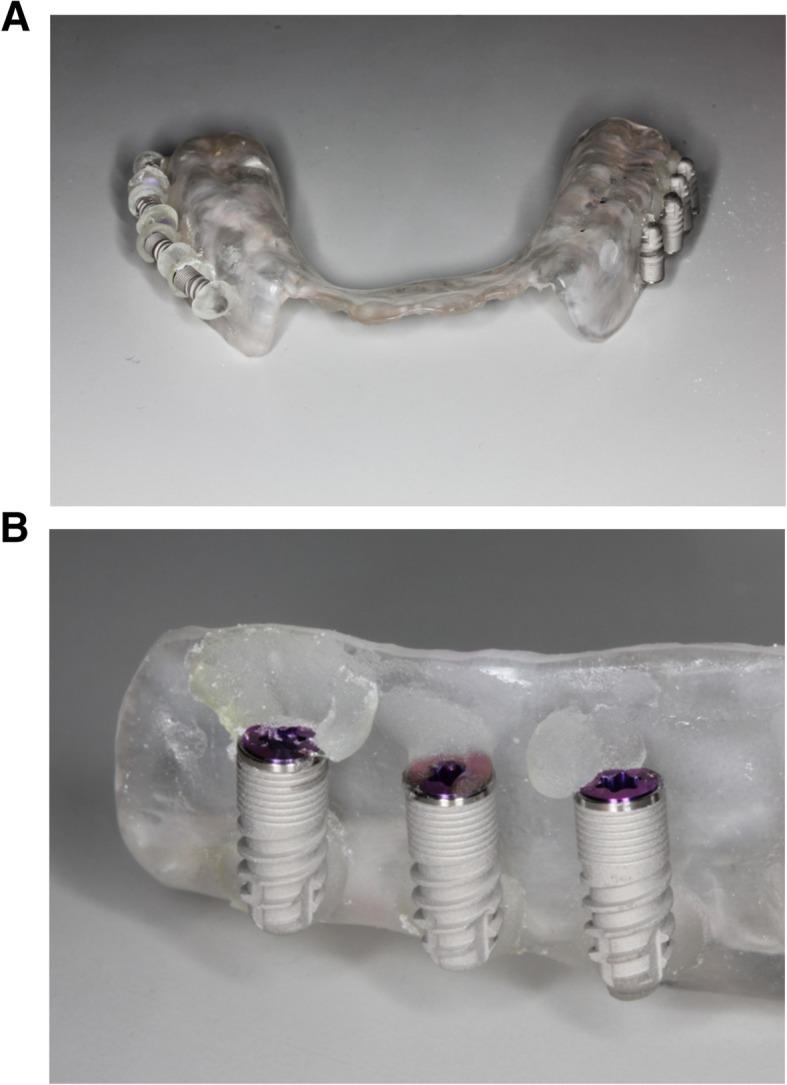
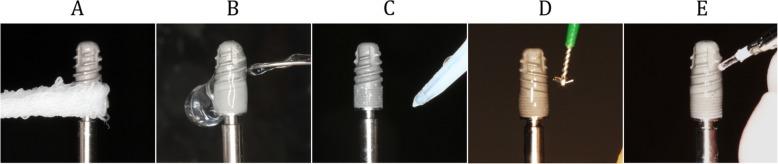
Eleven participants wore a hard resin splint carrying 6 rough (GC Aadva® implant; 3.3-mm diameter, 8-mm length) or machined (not commercially available) surface implants for 4 days to accumulate dental plaque naturally on the titanium surfaces of the implants. Apart from surface roughness, the morphology of all implants was identical. After detaching the implants from the splints, the ability of the following decontamination methods-gauze soaked in saline (G), ultrasonic scaler (US), air abrasive (Air), rotary stainless steel instrument (Rot), and Er:YAG laser (Las)-to cleanse the contaminated implant surface for 1 min extra-orally was tested. The control (Cont) group did not receive any decontamination. Scanning electron microscopic (SEM) investigation of one participant's samples was employed to examine the post-instrumented implant surface for qualitative analysis, and bacterial culture of the remaining 10 participants' samples was performed to count the number of colony-forming units (CFU) for quantitative analysis. The experimental sequence was initially performed for the rough surface implants and then similarly repeated for the machined surface implants. Bacterial CFU counts among the six groups were analyzed using the Steel-Dwass test, and differences between rough and machined surface implants were determined using the Mann-Whitney U test.
RESULTS
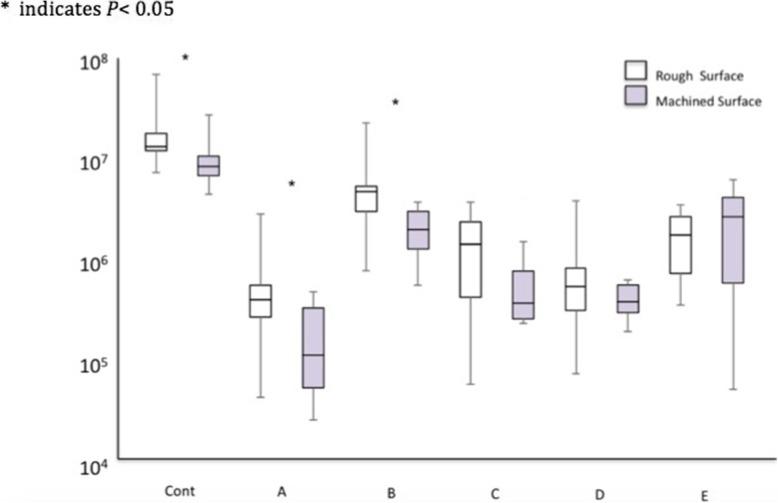
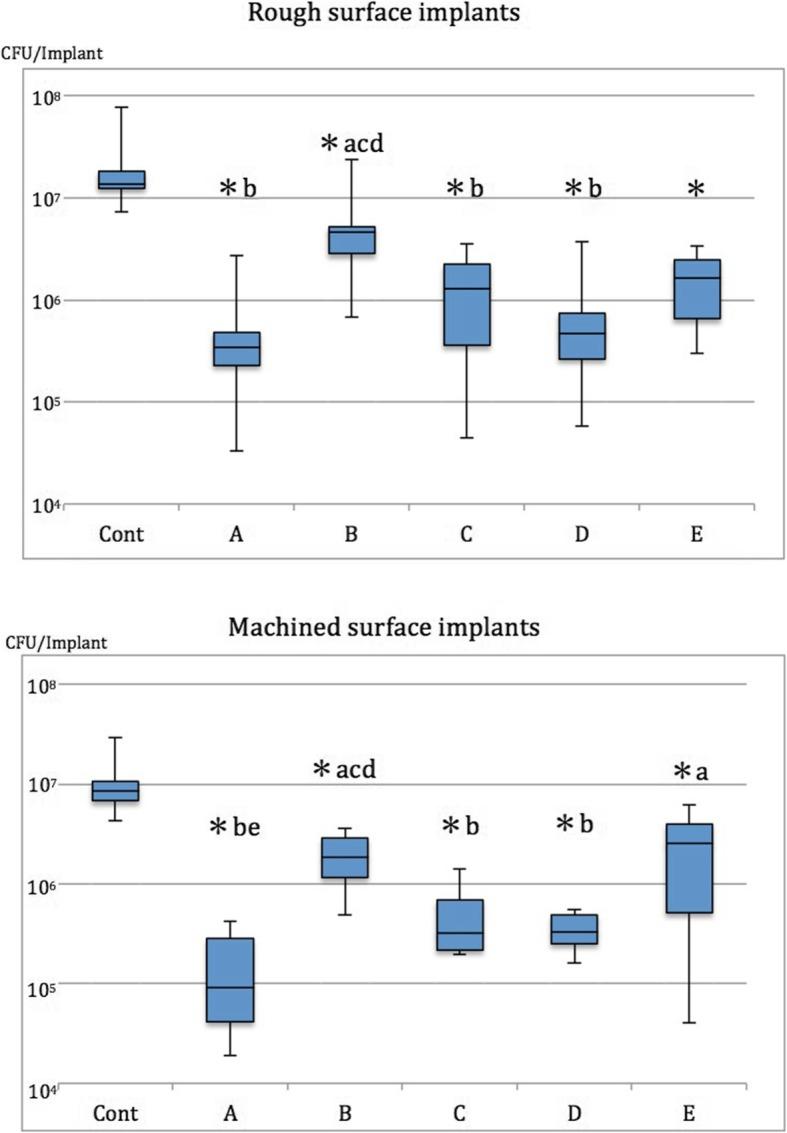
G and Rot eliminated most biofilms on machined surface implants according to SEM analysis. G, Air, and Rot removed significantly more of the biofilms on rough and machined surface implants compared with US according to CFU counts. Moreover, G significantly reduced more biofilms than Las on machined surface implants. The analysis between rough and machined surface implants showed that Cont, G, and US were better able to cleanse biofilms on machined surface implants compared with rough surface implants.
CONCLUSIONS
Gauze soaked in saline and rotary stainless steel instruments may be advantageous for cleansing contaminated implant surfaces based on the qualitative and quantitative analyses. In contrast, air abrasives were not shown to be preferable in the qualitative analyses. Additionally, apart from the Er:YAG laser, the reduction of biofilms assessed in both qualitative and quantitative analyses demonstrated that all decontamination methods were better at cleansing machined surface implants compared with rough surface implants.
背景
评估几种具有代表性的口腔生物膜去污方法对不同种植体表面的影响。
材料与方法
11名参与者佩戴一个硬树脂夹板,夹板上带有6颗粗糙表面(GC Aadva®种植体;直径3.3毫米,长度8毫米)或机加工表面(无市售产品)的种植体,佩戴4天,以使牙菌斑自然积聚在种植体的钛表面。除表面粗糙度外,所有种植体的形态均相同。将种植体从夹板上取下后,测试以下去污方法——浸有生理盐水的纱布(G)、超声洁牙器(US)、空气喷砂(Air)、旋转不锈钢器械(Rot)和铒钇铝石榴石激光(Las)——在口外对污染的种植体表面进行1分钟清洁的能力。对照组(Cont)不进行任何去污处理。对一名参与者的样本进行扫描电子显微镜(SEM)检查,以检查器械处理后的种植体表面进行定性分析,并对其余10名参与者的样本进行细菌培养,以计算菌落形成单位(CFU)的数量进行定量分析。实验顺序首先对粗糙表面种植体进行,然后对机加工表面种植体进行类似的重复操作。使用Steel-Dwass检验分析六组之间的细菌CFU计数,并使用Mann-Whitney U检验确定粗糙表面和机加工表面种植体之间的差异。
结果
根据SEM分析,G和Rot消除了机加工表面种植体上的大部分生物膜。根据CFU计数,与US相比,G、Air和Rot去除粗糙表面和机加工表面种植体上的生物膜明显更多。此外,在机加工表面种植体上,G比Las显著减少更多的生物膜。粗糙表面和机加工表面种植体之间的分析表明,与粗糙表面种植体相比,Cont、G和US在清洁机加工表面种植体上的生物膜方面表现更好。
结论
基于定性和定量分析,浸有生理盐水的纱布和旋转不锈钢器械可能有利于清洁受污染的种植体表面。相比之下,在定性分析中空气喷砂并非更优选择。此外,除了铒钇铝石榴石激光外,定性和定量分析中评估的生物膜减少情况表明,与粗糙表面种植体相比,所有去污方法在清洁机加工表面种植体方面表现更好。


 Zotero 插件