
MnTiO纳米颗粒在阳光照射下对水溶液中亚甲基蓝染料的光催化降解
Photocatalytic degradation of methylene blue dye in aqueous solution by MnTiO nanoparticles under sunlight irradiation.
作者信息
Alkaykh Suhila, Mbarek Aïcha, Ali-Shattle Elbashir E
机构信息
Chemistry Department, School of Basic Sciences, Libyan Academy Tripoli-Libya, Libya.
Laboratory of Advanced Materials, National School of Engineers of Sfax, University of Sfax, Tunisia.
出版信息
Heliyon. 2020 Apr 17;6(4):e03663. doi: 10.1016/j.heliyon.2020.e03663. eCollection 2020 Apr.
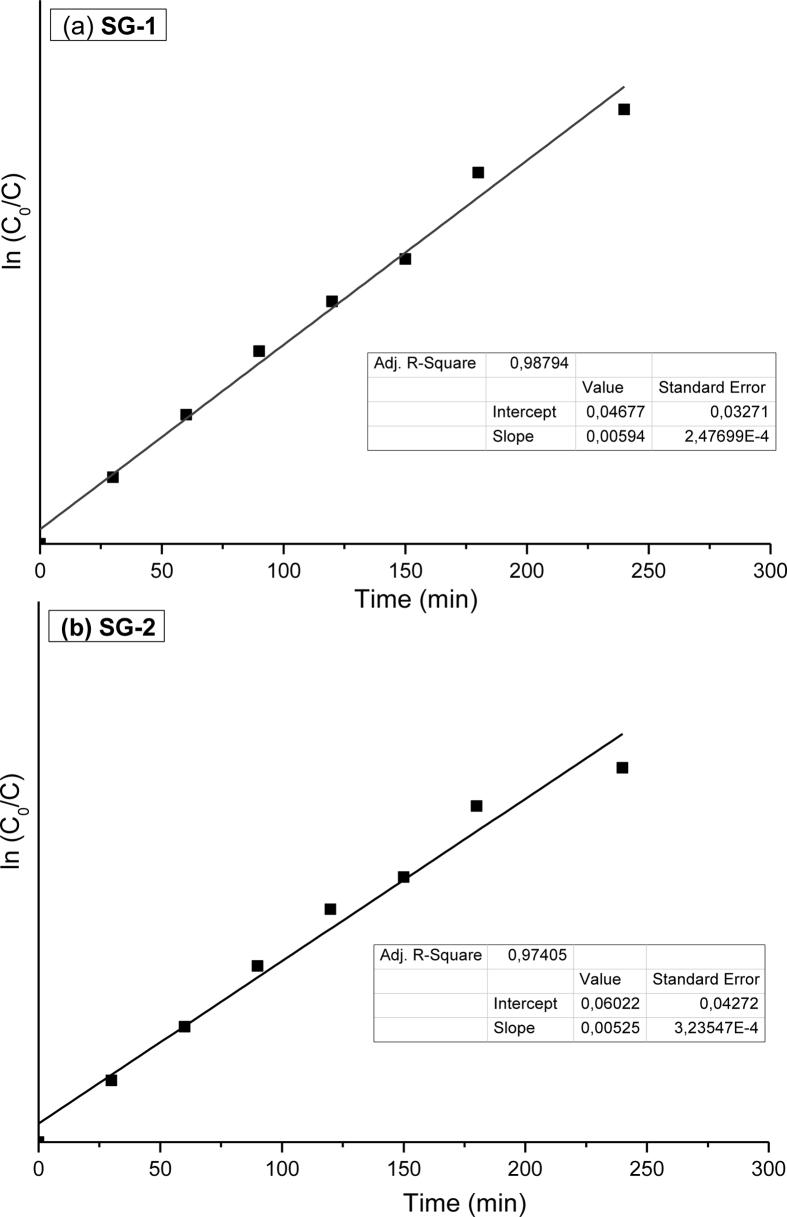
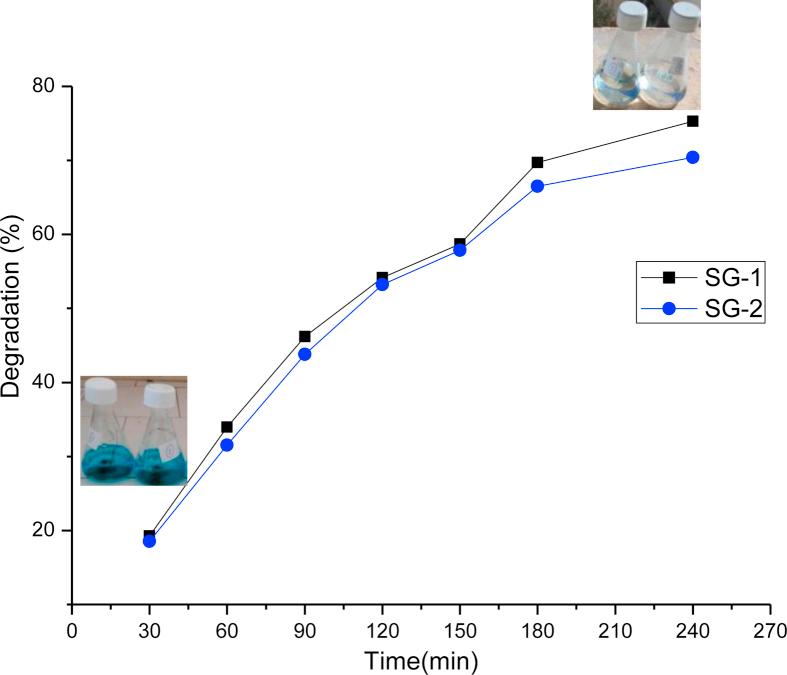
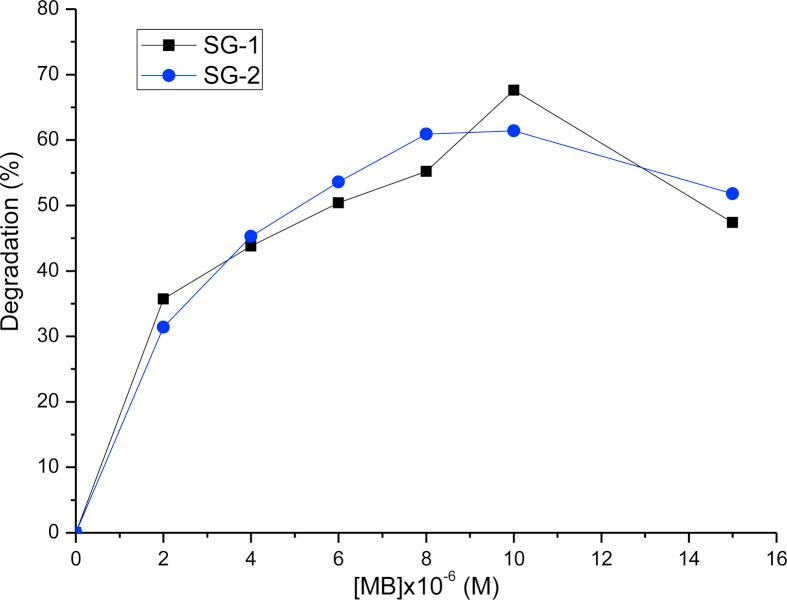
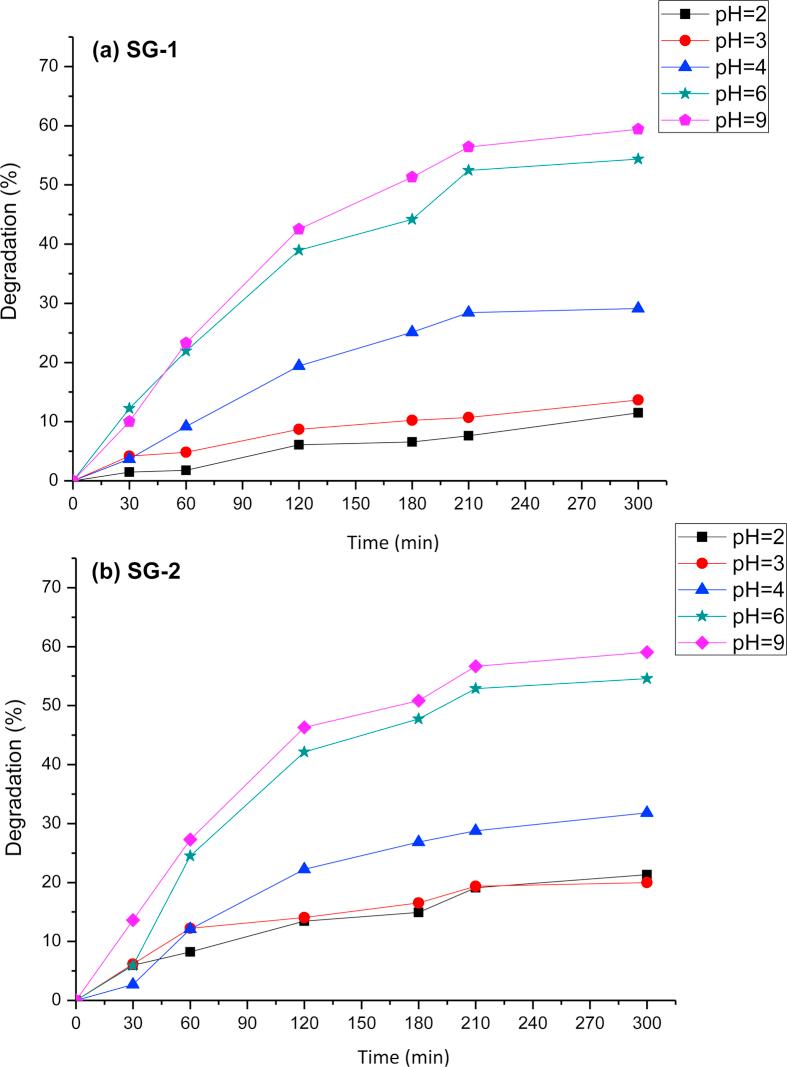
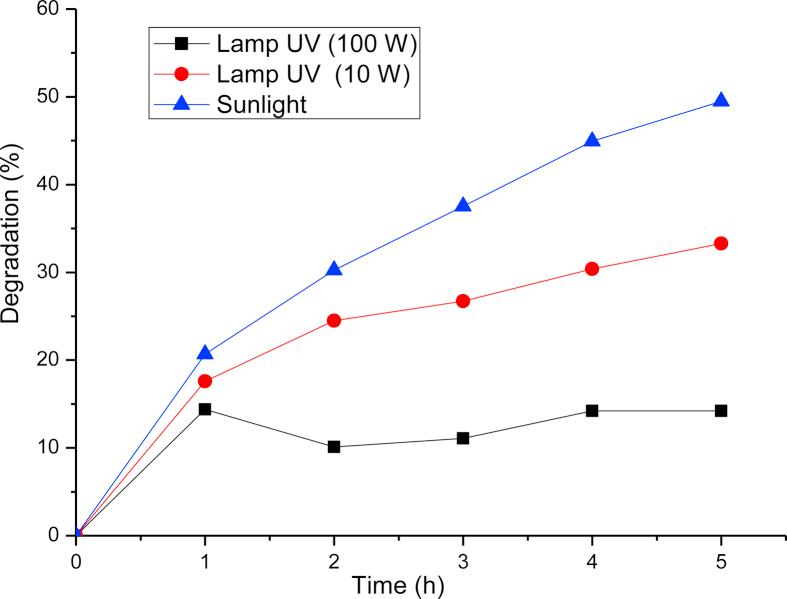
Nanophotocatalyst MnTiO powders were synthesized by sol-gel technique and characterized by means of X-ray diffraction (XRD), Fourier transform infrared spectroscopy (FTIR), as well as their thermal behavior has been studied by differential thermal and thermogravimetric analyses (DTA/TGA). Powders morphology was analyzed by means of Transmission electron microscopy (TEM). Effect of various process parameters like amount of photocatalyst, dye concentration, solution pH and irradiation time on the extent of removal of dye were studied in detail. The photo-degradation was relatively higher using lower amount (0.005 g) of semiconductor, reached rate of 75% and 70% after 240 min for mixed MnTiO/TiO and pure MnTiO nanocatalysts. The kinetic model of photocatalytic degradation of MB follows pseudo-first-order kinetic with a high correlation coefficient values (R > 0.95). These results underline the use of effective, low-cost and easily available MnTiO photocatalyst for the decomposition of pollutants to water under natural sunlight.
采用溶胶-凝胶技术合成了纳米光催化剂MnTiO粉末,并通过X射线衍射(XRD)、傅里叶变换红外光谱(FTIR)对其进行了表征,同时通过差示热分析和热重分析(DTA/TGA)研究了其热行为。通过透射电子显微镜(TEM)分析了粉末的形貌。详细研究了各种工艺参数,如光催化剂用量、染料浓度、溶液pH值和辐照时间对染料去除程度的影响。使用较低量(0.005 g)的半导体时,光降解率相对较高,混合MnTiO/TiO和纯MnTiO纳米催化剂在240分钟后达到了75%和70%的去除率。亚甲基蓝光催化降解的动力学模型遵循伪一级动力学,相关系数值较高(R>0.95)。这些结果强调了使用有效、低成本且易于获得的MnTiO光催化剂在自然阳光下将污染物分解为水的应用。



 Zotero 插件