
音猬因子/胶质瘤相关癌基因1信号通路通过诱导胃癌上皮-间质转化调控细胞迁移和侵袭。
Sonic Hedgehog/Gli1 Signaling Pathway Regulates Cell Migration and Invasion via Induction of Epithelial-to-mesenchymal Transition in Gastric Cancer.
作者信息
Ke Bin, Wang Xiao-Na, Liu Ning, Li Bin, Wang Xue-Jun, Zhang Ru-Peng, Liang Han
机构信息
Department of Gastric Cancer, Tianjin Medical University Cancer Institute and Hospital, National Clinical Research Center for Cancer, Tianjin's Clinical Research Center for Cancer, Key Laboratory of Cancer Prevention and Therapy of Tianjin, Tianjin, 300060, P.R. China.
出版信息
J Cancer. 2020 Apr 6;11(13):3932-3943. doi: 10.7150/jca.42900. eCollection 2020.
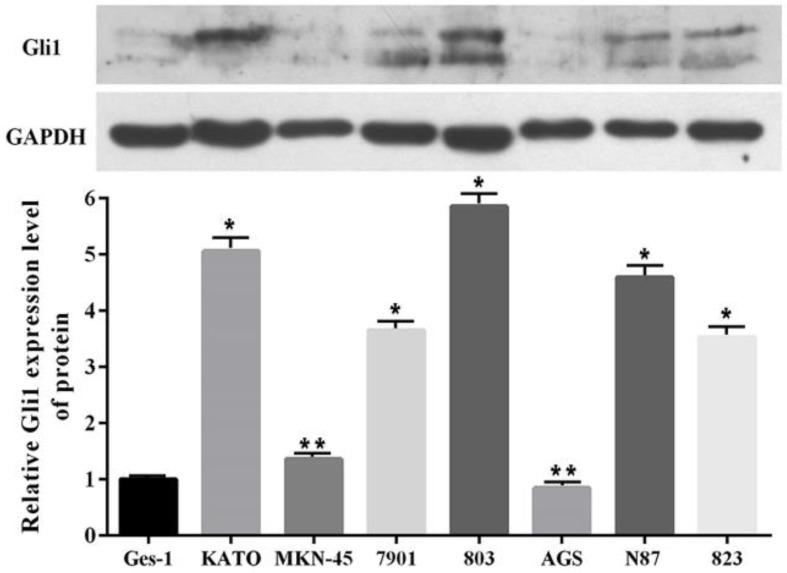
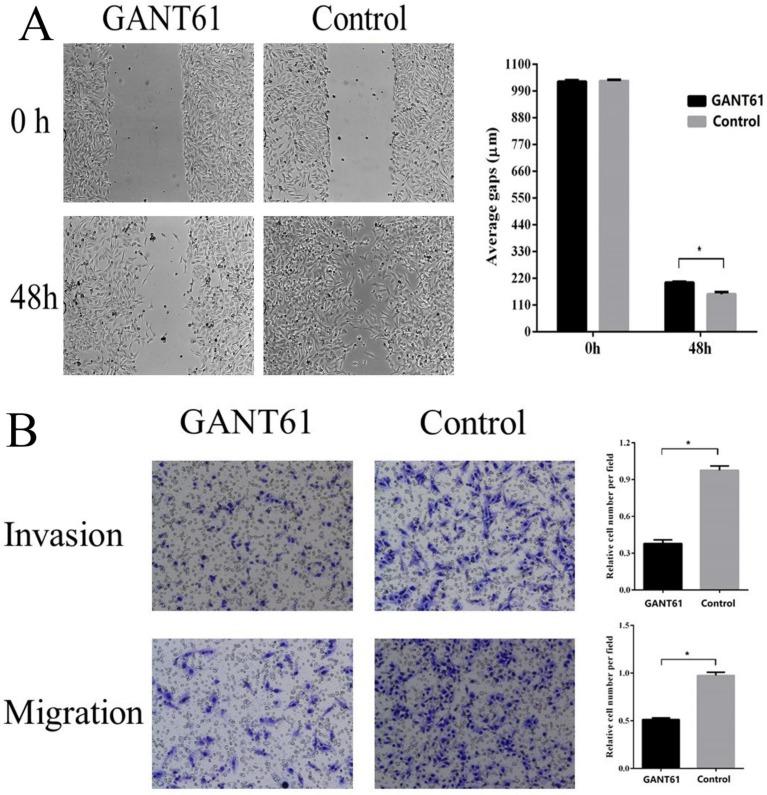
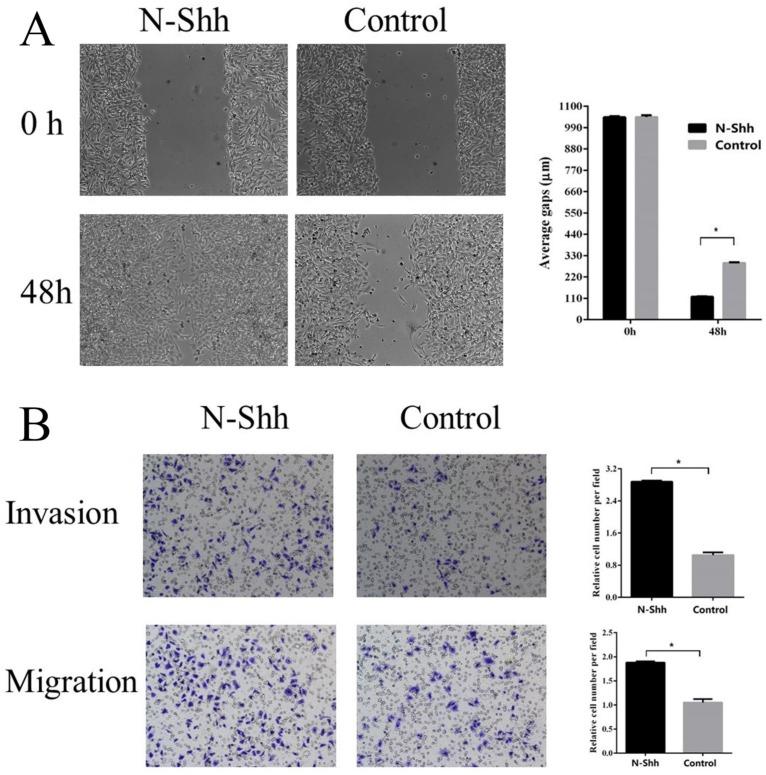
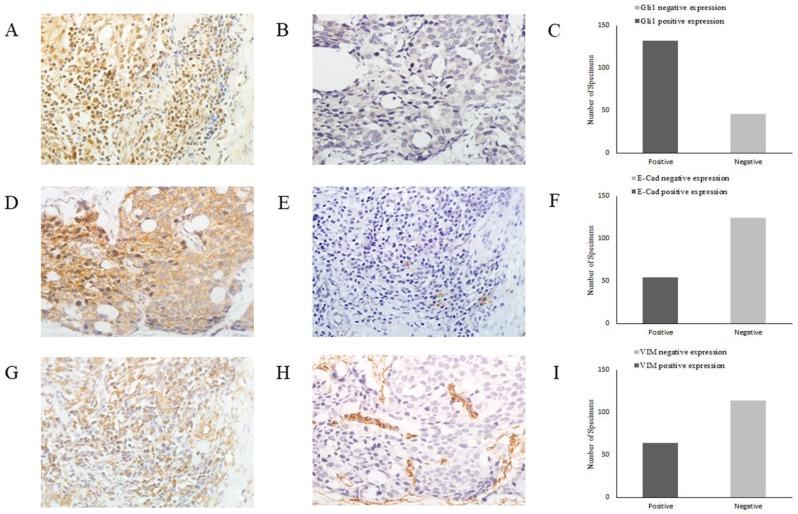
: The aberrant activation of the Sonic hedgehog (Shh) signaling pathway is involved in progression of several types of cancer, including gastric cancer (GC). However, it remains uncertain whether it also plays a critical role in promoting cancer initiation and progression by inducing epithelial-to-mesenchymal transition (EMT) in GC. Thus, the aim of the present study was to determine whether the Shh pathway is involved in GC, and to investigate the function of the Shh pathway in the induction of EMT in GC. : The expression levels of Shh pathway members and EMT markers were examined in GC tissues by immunohistochemistry. The association between these factors and patient clinicopathological characteristics was analyzed. In addition, Gli-antagonist 61 (GANT61) was used to block Shh/Gli1 pathway activity, and recombinant Shh proteins (N-Shh) were used to activate the Shh pathway in GC cells. Wound healing and Transwell invasion and migration assays were performed to assess the effects of the Shh pathway on the migration and invasion of GC cells . Furthermore, western blot analysis was used to examine the changes in protein expression. : The results demonstrated that these Shh/Gli1 pathway members were upregulated in GC tissues, and that Gli1 upregulation was associated with tumor progression and a poor prognosis. Gli1 expression was negatively associated with E-cadherin (E-Cad) expression, and positively with Vimentin (VIM) expression in GC specimens. Further analysis revealed that when the Shh/Gli1 pathway was activated, the migratory and invasive abilities of GC cells were enhanced, and the expression levels of Gli1 and VIM were increased, while E-Cad expression was decreased. Opposite results were observed when the Shh/Gli1 pathway was blocked by GANT61. : The present study indicated that the Shh/Gli1 pathway exhibits an abnormal activation pattern in GC with possible predictive and prognostic significance. The Shh/Gli1 pathway may promote the migratory and invasive potential of GC cells by inducing EMT. The Shh/Gli1 pathway can thus be considered as a potential therapeutic target for GC.
音猬因子(Shh)信号通路的异常激活参与了包括胃癌(GC)在内的多种癌症的进展。然而,Shh信号通路是否通过诱导胃癌上皮-间质转化(EMT)在促进癌症起始和进展中发挥关键作用仍不确定。因此,本研究的目的是确定Shh信号通路是否参与胃癌,并研究Shh信号通路在诱导胃癌EMT中的作用。
通过免疫组织化学检测胃癌组织中Shh信号通路成员和EMT标志物的表达水平。分析这些因素与患者临床病理特征之间的关联。此外,使用Gli拮抗剂61(GANT61)阻断Shh/Gli1信号通路活性,并使用重组Shh蛋白(N-Shh)激活胃癌细胞中的Shh信号通路。进行伤口愈合实验以及Transwell侵袭和迁移实验,以评估Shh信号通路对胃癌细胞迁移和侵袭的影响。此外,采用蛋白质印迹分析检测蛋白质表达的变化。
结果表明,这些Shh/Gli1信号通路成员在胃癌组织中上调,Gli1上调与肿瘤进展和不良预后相关。在胃癌标本中,Gli1表达与E-钙黏蛋白(E-Cad)表达呈负相关,与波形蛋白(VIM)表达呈正相关。进一步分析显示,当Shh/Gli1信号通路被激活时,胃癌细胞的迁移和侵袭能力增强,Gli1和VIM表达水平增加,而E-Cad表达降低。当Shh/Gli1信号通路被GANT61阻断时,观察到相反的结果。
本研究表明,Shh/Gli1信号通路在胃癌中呈现异常激活模式,可能具有预测和预后意义。Shh/Gli1信号通路可能通过诱导EMT促进胃癌细胞的迁移和侵袭潜能。因此,Shh/Gli1信号通路可被视为胃癌的潜在治疗靶点。


 Zotero 插件