
脑源性神经营养因子在抑郁症神经可塑性中的作用
The Role of BDNF on Neural Plasticity in Depression.
作者信息
Yang Tao, Nie Zheng, Shu Haifeng, Kuang Yongqin, Chen Xin, Cheng Jingmin, Yu Sixun, Liu Huiying
机构信息
Department of Neurosurgery, The General Hospital of Western Theater Command, Chengdu, China.
Department of Anatomy and Histology and Embryology, Regeneration Key Lab of Sichuan Province, Chengdu Medical College, Chengdu, China.
出版信息
Front Cell Neurosci. 2020 Apr 15;14:82. doi: 10.3389/fncel.2020.00082. eCollection 2020.
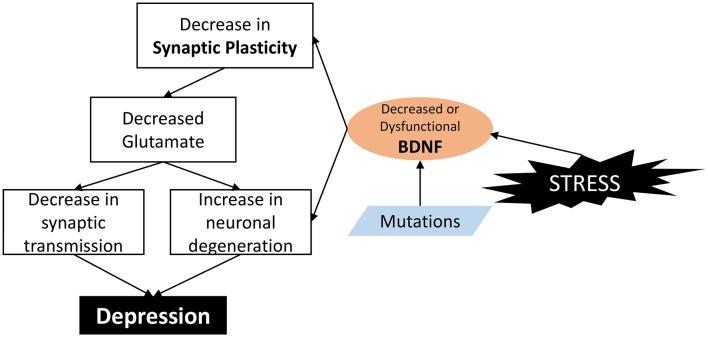
Using behavioral, pharmacological, and molecular methods, lots of studies reveal that depression is closely related to the abnormal neural plasticity processes occurring in the prefrontal cortex and limbic system such as the hippocampus and amygdala. Meanwhile, functions of the brain-derived neurotrophic factor (BDNF) and the other neurotrophins in the pathogenesis of depression are well known. The maladaptive neuroplastic in depression may be related to alterations in the levels of neurotrophic factors, which play a central role in plasticity. Enhancement of neurotrophic factors signaling has great potential in therapy for depression. This review highlights the relevance of neurotrophic factors mediated neural plasticity and pathophysiology of depression. These studies reviewed here may suggest new possible targets for antidepressant drugs such as neurotrophins, their receptors, and relevant signaling pathways, and agents facilitating the activation of gene expression and increasing the transcription of neurotrophic factors in the brain.
运用行为学、药理学及分子学方法,大量研究表明,抑郁症与前额叶皮质以及边缘系统(如海马体和杏仁核)中发生的异常神经可塑性过程密切相关。同时,脑源性神经营养因子(BDNF)及其他神经营养因子在抑郁症发病机制中的作用已为人熟知。抑郁症中适应不良的神经可塑性可能与神经营养因子水平的改变有关,而神经营养因子在可塑性中起着核心作用。增强神经营养因子信号传导在抑郁症治疗中具有巨大潜力。本综述强调了神经营养因子介导的神经可塑性与抑郁症病理生理学之间的相关性。此处综述的这些研究可能为抗抑郁药物提示新的潜在靶点,如神经营养因子、其受体及相关信号通路,以及促进基因表达激活和增加脑中神经营养因子转录的药物。

 Zotero 插件