
SARS-CoV-2 能有效地感染人类肠道肠细胞。
SARS-CoV-2 productively infects human gut enterocytes.
机构信息
Viroscience Department, Erasmus Medical Center, Rotterdam, Netherlands.
Oncode Institute, Hubrecht Institute, Royal Netherlands Academy of Arts and Sciences and University Medical Center, Utrecht, Netherlands.
出版信息
Science. 2020 Jul 3;369(6499):50-54. doi: 10.1126/science.abc1669. Epub 2020 May 1.
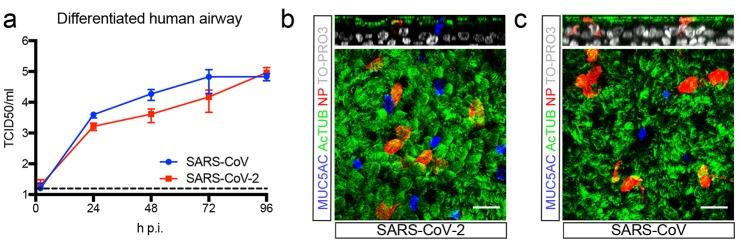
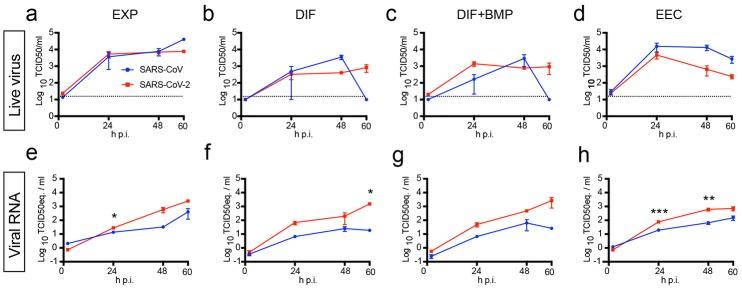
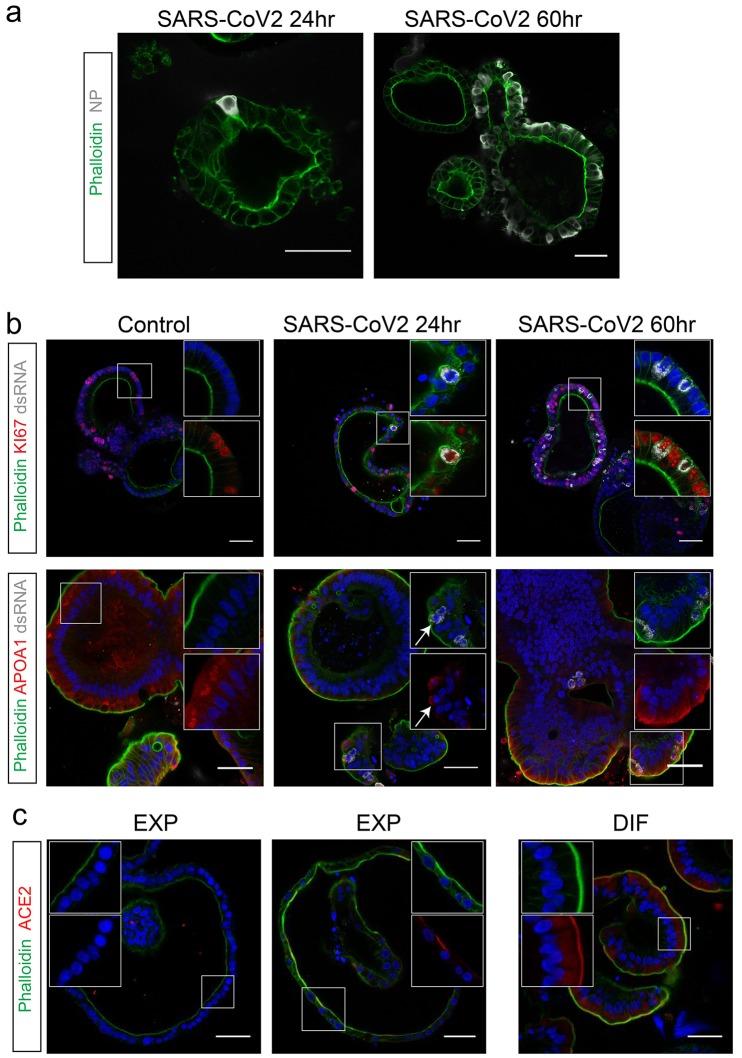
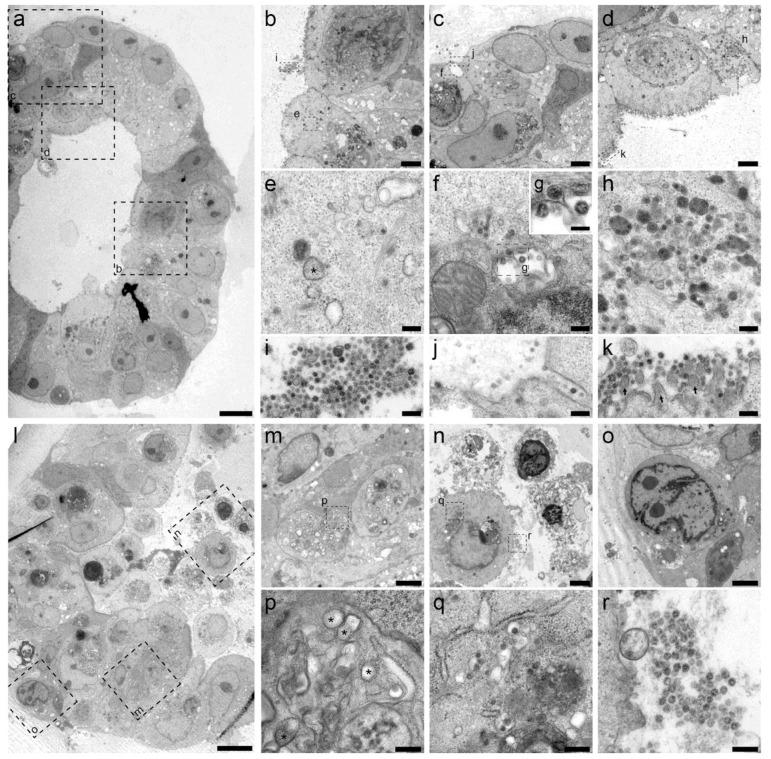
Severe acute respiratory syndrome coronavirus 2 (SARS-CoV-2) can cause coronavirus disease 2019 (COVID-19), an influenza-like disease that is primarily thought to infect the lungs with transmission through the respiratory route. However, clinical evidence suggests that the intestine may present another viral target organ. Indeed, the SARS-CoV-2 receptor angiotensin-converting enzyme 2 (ACE2) is highly expressed on differentiated enterocytes. In human small intestinal organoids (hSIOs), enterocytes were readily infected by SARS-CoV and SARS-CoV-2, as demonstrated by confocal and electron microscopy. Enterocytes produced infectious viral particles, whereas messenger RNA expression analysis of hSIOs revealed induction of a generic viral response program. Therefore, the intestinal epithelium supports SARS-CoV-2 replication, and hSIOs serve as an experimental model for coronavirus infection and biology.
严重急性呼吸综合征冠状病毒 2(SARS-CoV-2)可引起 2019 年冠状病毒病(COVID-19),这是一种类似于流感的疾病,主要被认为通过呼吸道感染肺部。然而,临床证据表明,肠道可能是另一个病毒靶器官。事实上,SARS-CoV-2 的受体血管紧张素转换酶 2(ACE2)在分化的肠细胞上高度表达。在人类小肠类器官(hSIOs)中,肠细胞很容易被 SARS-CoV 和 SARS-CoV-2 感染,这一点通过共聚焦和电子显微镜得到了证实。肠细胞产生了感染性的病毒颗粒,而 hSIOs 的信使 RNA 表达分析显示诱导了一种通用的病毒反应程序。因此,肠道上皮支持 SARS-CoV-2 的复制,hSIOs 可作为冠状病毒感染和生物学的实验模型。

 Zotero 插件