
数学评估非药物干预措施对遏制 2019 年新型冠状病毒的影响。
Mathematical assessment of the impact of non-pharmaceutical interventions on curtailing the 2019 novel Coronavirus.
机构信息
Department of Mathematics, University of Florida, Gainesville, FL 32611, USA.
School of Mathematical and Statistical Sciences, Arizona State University, Tempe, AZ, 85287, USA.
出版信息
Math Biosci. 2020 Jul;325:108364. doi: 10.1016/j.mbs.2020.108364. Epub 2020 May 1.
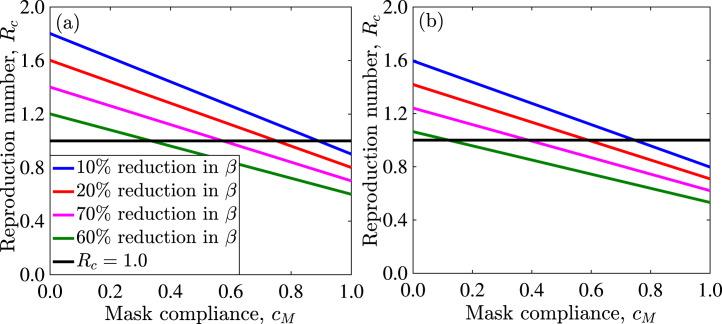
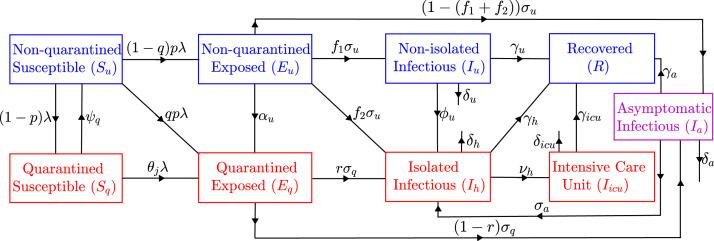
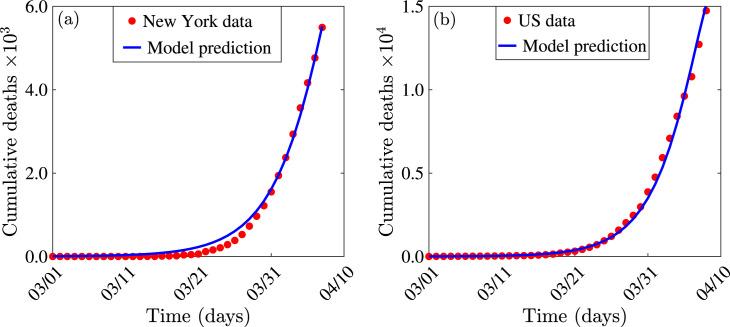
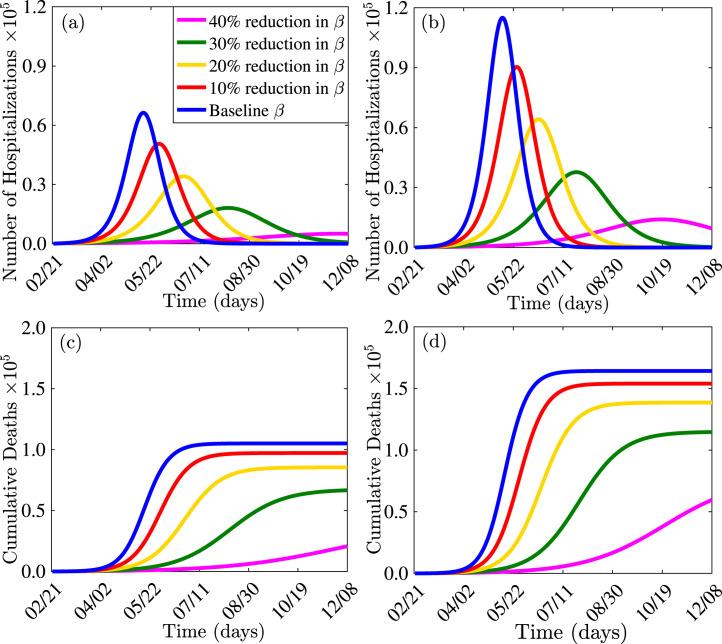
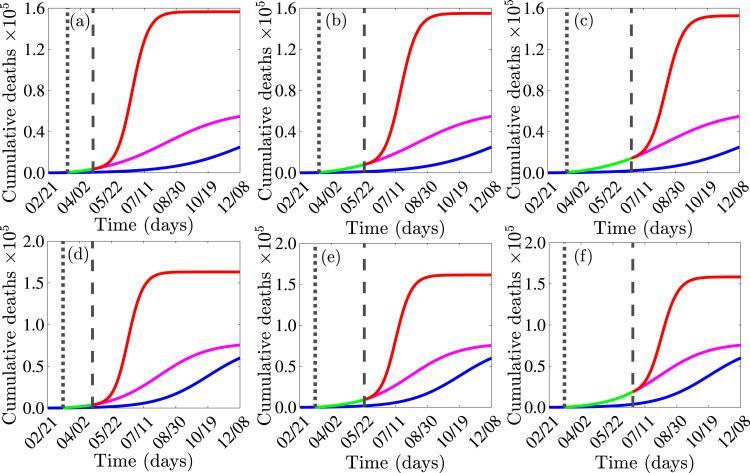
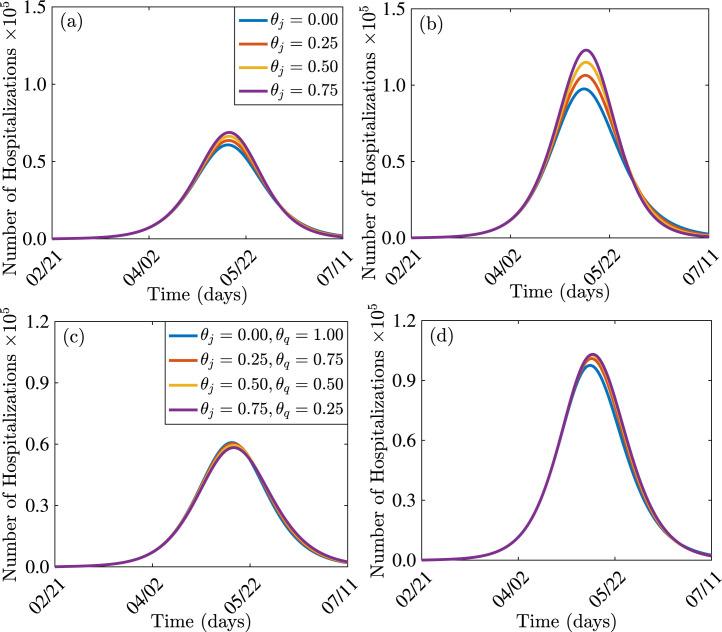
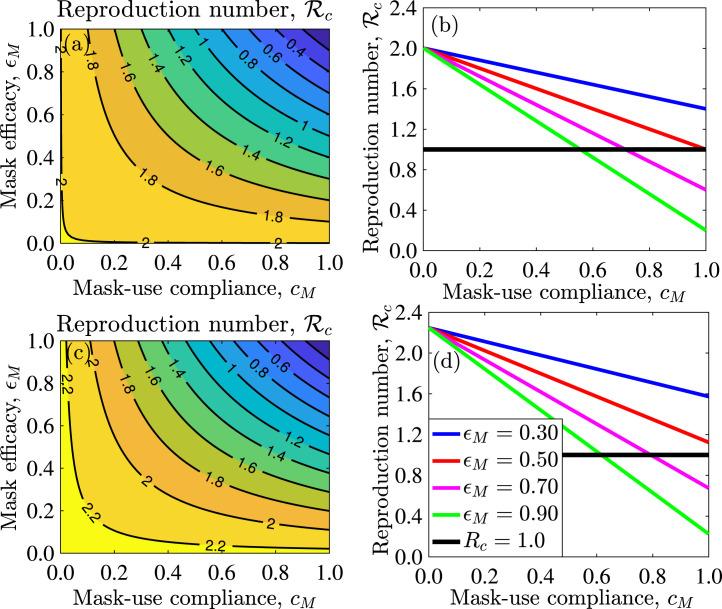
A pandemic of a novel Coronavirus emerged in December of 2019 (COVID-19), causing devastating public health impact across the world. In the absence of a safe and effective vaccine or antivirals, strategies for controlling and mitigating the burden of the pandemic are focused on non-pharmaceutical interventions, such as social-distancing, contact-tracing, quarantine, isolation, and the use of face-masks in public. We develop a new mathematical model for assessing the population-level impact of the aforementioned control and mitigation strategies. Rigorous analysis of the model shows that the disease-free equilibrium is locally-asymptotically stable if a certain epidemiological threshold, known as the reproduction number (denoted by ℛ), is less than unity. Simulations of the model, using data relevant to COVID-19 transmission dynamics in the US state of New York and the entire US, show that the pandemic burden will peak in mid and late April, respectively. The worst-case scenario projections for cumulative mortality (based on the baseline levels of anti-COVID non-pharmaceutical interventions considered in the study) decrease dramatically by 80% and 64%, respectively, if the strict social-distancing measures implemented are maintained until the end of May or June, 2020. The duration and timing of the relaxation or termination of the strict social-distancing measures are crucially-important in determining the future trajectory of the COVID-19 pandemic. This study shows that early termination of the strict social-distancing measures could trigger a devastating second wave with burden similar to those projected before the onset of the strict social-distancing measures were implemented. The use of efficacious face-masks (such as surgical masks, with estimated efficacy ≥ 70%) in public could lead to the elimination of the pandemic if at least 70% of the residents of New York state use such masks in public consistently (nationwide, a compliance of at least 80% will be required using such masks). The use of low efficacy masks, such as cloth masks (of estimated efficacy less than 30%), could also lead to significant reduction of COVID-19 burden (albeit, they are not able to lead to elimination). Combining low efficacy masks with improved levels of the other anti-COVID-19 intervention strategies can lead to the elimination of the pandemic. This study emphasizes the important role social-distancing plays in curtailing the burden of COVID-19. Increases in the adherence level of social-distancing protocols result in dramatic reduction of the burden of the pandemic, and the timely implementation of social-distancing measures in numerous states of the US may have averted a catastrophic outcome with respect to the burden of COVID-19. Using face-masks in public (including the low efficacy cloth masks) is very useful in minimizing community transmission and burden of COVID-19, provided their coverage level is high. The masks coverage needed to eliminate COVID-19 decreases if the masks-based intervention is combined with the strict social-distancing strategy.
一种新型冠状病毒引发的大流行于 2019 年 12 月出现(COVID-19),在全球范围内造成了毁灭性的公共卫生影响。在没有安全有效的疫苗或抗病毒药物的情况下,控制和减轻大流行负担的策略集中在非药物干预措施上,如社交距离、接触追踪、隔离、检疫和在公共场所使用口罩。我们开发了一种新的数学模型来评估上述控制和缓解策略对人群的影响。严格的模型分析表明,如果疾病传播的一个特定的流行病学阈值(称为繁殖数(用 ℛ 表示))小于 1,则无病平衡点在局部上是渐近稳定的。使用与 COVID-19 在纽约州和美国的传播动力学相关的数据对模型进行模拟,结果表明大流行负担将分别在 4 月中旬和下旬达到峰值。如果在 2020 年 5 月底或 6 月底之前保持实施的严格社会隔离措施,则基于研究中考虑的 COVID-19 非药物干预措施的基线水平的累积死亡率的最坏情况预测分别显著下降 80%和 64%。放松或终止严格社会隔离措施的持续时间和时机对确定 COVID-19 大流行的未来轨迹至关重要。本研究表明,早期终止严格的社会隔离措施可能会引发第二波毁灭性疫情,其负担与实施严格社会隔离措施之前的预测相似。在公共场所使用有效的口罩(例如估计功效≥70%的外科口罩)可以消除大流行,如果纽约州至少有 70%的居民在公共场所持续使用此类口罩(在全国范围内,至少需要 80%的人使用此类口罩)。使用低功效口罩,如布制口罩(估计功效小于 30%),也可以显著降低 COVID-19 的负担(尽管它们不能消除大流行)。结合低功效口罩和改进的其他 COVID-19 干预策略可以消除大流行。本研究强调了社交距离在减轻 COVID-19 负担方面的重要作用。社会隔离协议遵守水平的提高会导致大流行负担的急剧减少,而美国众多州及时实施社会隔离措施可能避免了 COVID-19 负担方面的灾难性后果。在公共场所使用口罩(包括低功效的布制口罩)非常有助于最大限度地减少 COVID-19 的社区传播和负担,前提是其覆盖率水平较高。如果将口罩干预措施与严格的社会隔离策略相结合,消除 COVID-19 所需的口罩覆盖率将会降低。


 Zotero 插件