
一种高致病性 GI-19 谱系传染性支气管炎病毒起源于广泛组织嗜性的多次重组事件。
A highly pathogenic GI-19 lineage infectious bronchitis virus originated from multiple recombination events with broad tissue tropism.
机构信息
Division of Avian Infectious Diseases, State Key Laboratory of Veterinary Biotechnology, Harbin Veterinary Research Institute, the Chinese Academy of Agricultural Sciences, Harbin 150001, People's Republic of China.
Division of Avian Infectious Diseases, State Key Laboratory of Veterinary Biotechnology, Harbin Veterinary Research Institute, the Chinese Academy of Agricultural Sciences, Harbin 150001, People's Republic of China.
出版信息
Virus Res. 2020 Aug;285:198002. doi: 10.1016/j.virusres.2020.198002. Epub 2020 May 4.
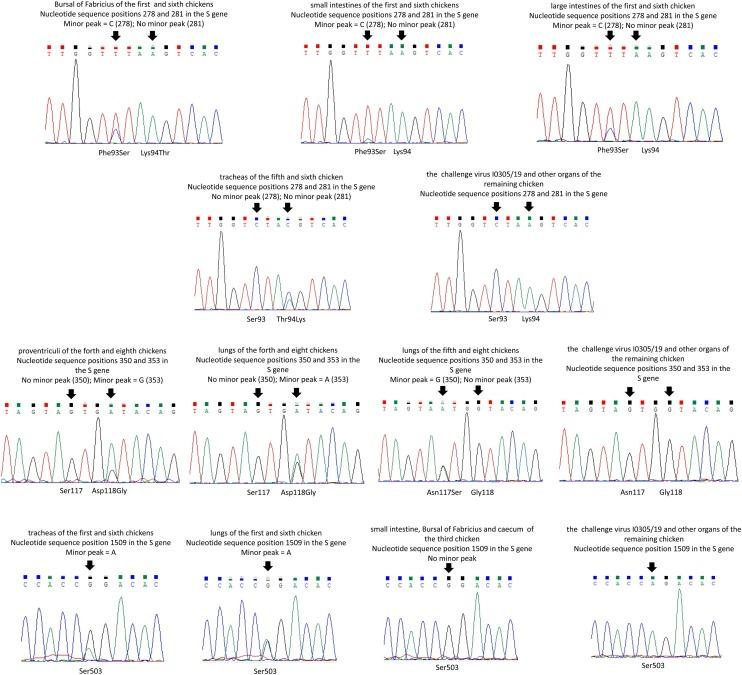
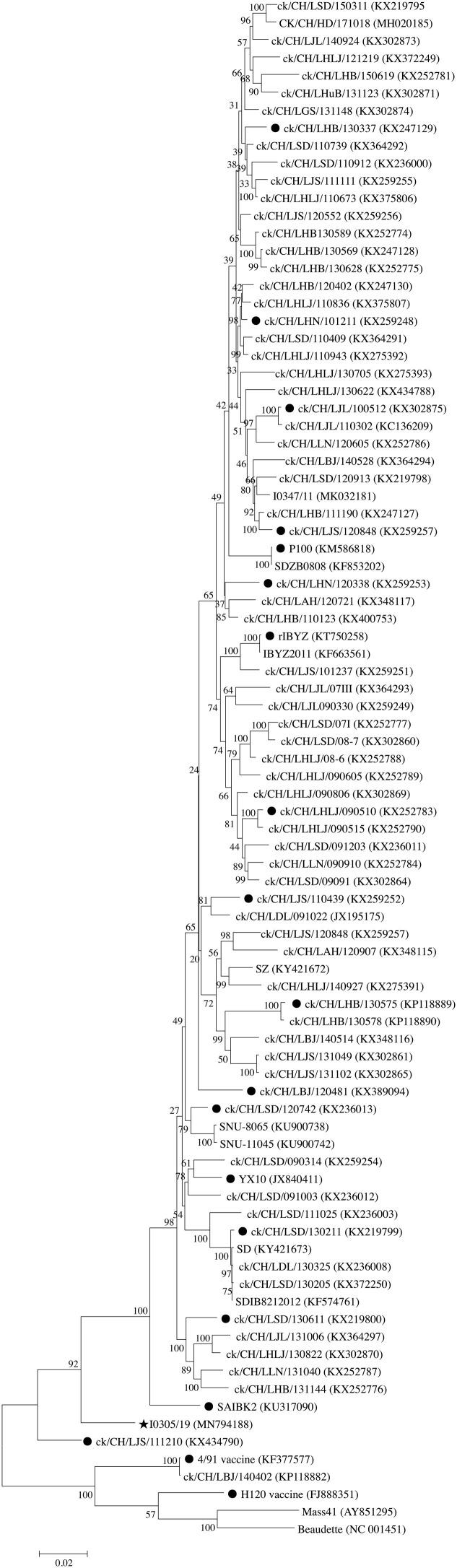
In the present study, an IBV strain I0305/19 was isolated from a diseased commercial broiler flock in 2019 in China with high morbidity and mortality. The isolate I0305/19 was clustered together with viruses in sublineage D of GI-19 lineage on the basis of the complete S1 sequence analysis. Isolate I0305/19 and other GI-19 viruses isolated in China have the amino acid sequence MIA at positions 110-112 in the S protein. Further analysis based on the complete genomic sequence showed that the isolate emerged through at least four recombination events between GI-19 ck/CH/LJS/120848- and GI-13 4/91-like strains, in which the S gene was found to be similar to that of the GI-19 ck/CH/LJS/120848-like strain. Pathological assessment showed the isolate was a nephropathogenic IBV strain that caused high morbidity of 100 % and mortality of 80 % in 1-day-old specific-pathogen-free (SPF) chicks. The isolate I0305/19 exhibited broader tropisms in different tissues, including tracheas, lungs, bursa of Fabricius, spleen, liver, kidneys, proventriculus, small intestines, large intestines, cecum, and cecal tonsils. Furthermore, subpopulations of the virus were found in tissues of infected chickens; this finding is important in understanding how the virulent IBV strains can potentially replicate and evolve to cause disease. This information is also valuable for understanding the mechanisms of replication and evolution of other coronaviruses such as the newly emerged SARS-CoV-2.
在本研究中,一株分离自 2019 年中国某发病商品肉鸡群、具有高发病率和死亡率的 IBV 毒株 I0305/19 被分离出来。基于完整 S1 序列分析,该分离株与 GI-19 谱系的亚谱系 D 中的病毒聚集在一起。分离株 I0305/19 和中国分离的其他 GI-19 病毒在 S 蛋白的 110-112 位氨基酸处具有 MIA 氨基酸序列。基于完整基因组序列的进一步分析表明,该分离株通过 GI-19 ck/CH/LJS/120848-和 GI-13 4/91-样株之间至少四次重组事件产生,其中 S 基因与 GI-19 ck/CH/LJS/120848-样株相似。病理学评估表明,该分离株是一株肾致病性 IBV 株,在 1 日龄 SPF 鸡中引起 100%的高发病率和 80%的死亡率。分离株 I0305/19 在不同组织中表现出更广泛的嗜性,包括气管、肺、法氏囊、脾、肝、肾、腺胃、小肠、大肠、盲肠和盲肠扁桃体。此外,在感染鸡的组织中发现了病毒的亚群;这一发现对于理解毒力 IBV 株如何潜在复制和进化以引起疾病非常重要。这一信息对于理解其他冠状病毒(如新出现的 SARS-CoV-2)的复制和进化机制也很有价值。



 Zotero 插件