
神经系统进化过程中内含子和基因大小的扩展。
Intron and gene size expansion during nervous system evolution.
机构信息
Grass Fellowship Program, Marine Biological Laboratory, Woods Hole, MA, 02543, USA.
Departments of Pathology and Genetics, Stanford University School of Medicine, Stanford, CA, 94305, USA.
出版信息
BMC Genomics. 2020 May 14;21(1):360. doi: 10.1186/s12864-020-6760-4.
BACKGROUND
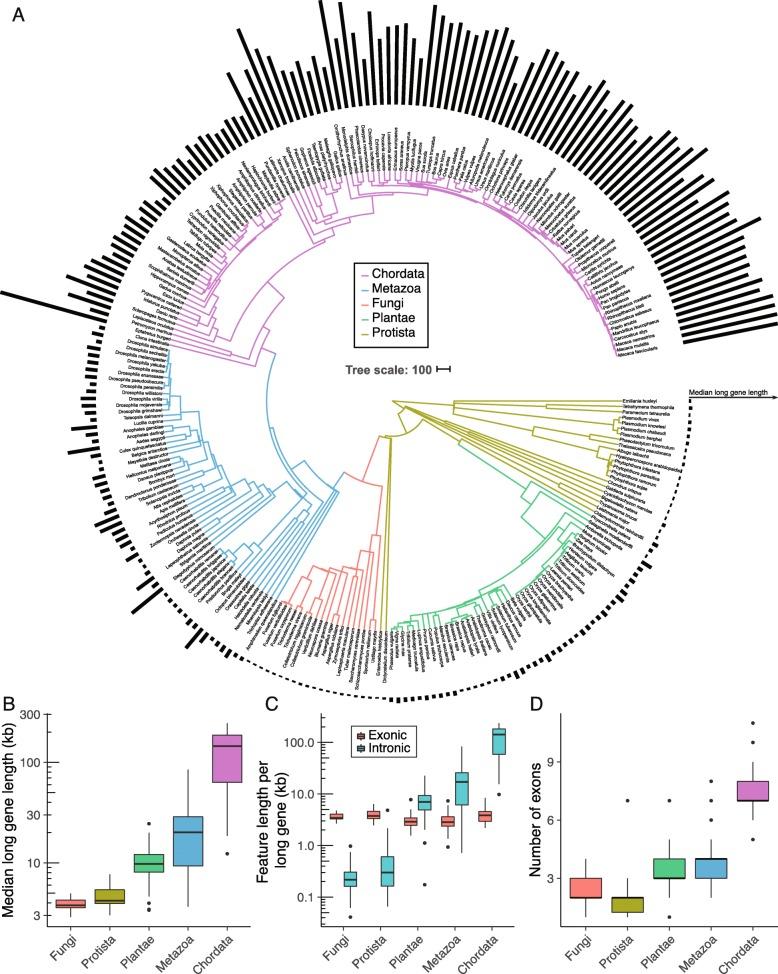
The evolutionary radiation of animals was accompanied by extensive expansion of gene and genome sizes, increased isoform diversity, and complexity of regulation.
RESULTS
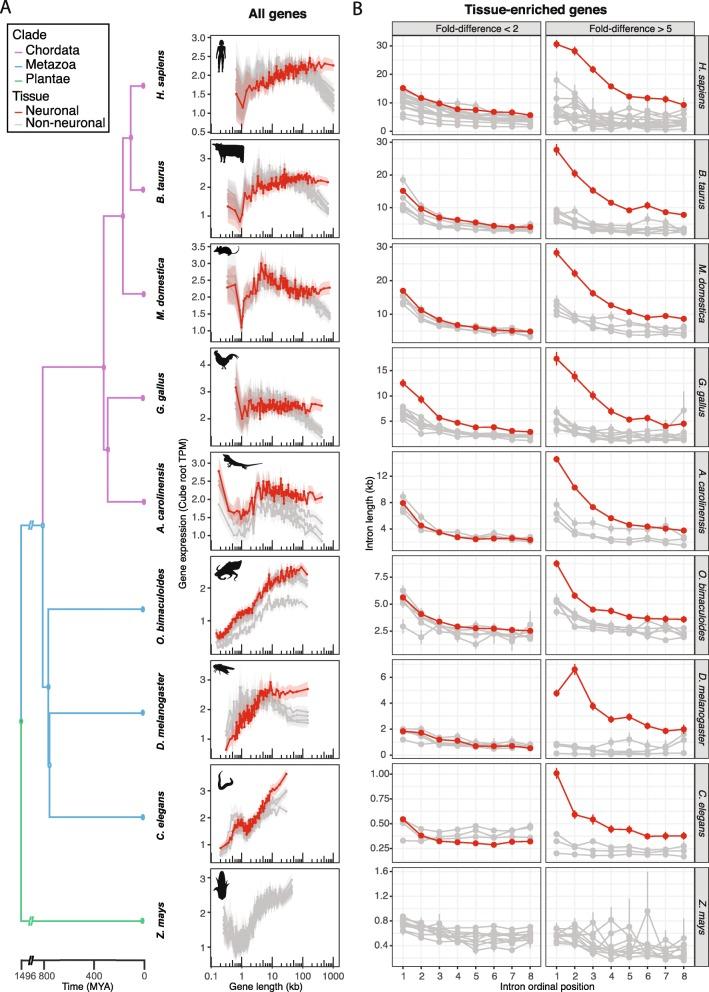
Here we show that the longest genes are enriched for expression in neuronal tissues of diverse vertebrates and of invertebrates. Additionally, we show that neuronal gene size expansion occurred predominantly through net gains in intron size, with a positional bias toward the 5' end of each gene.
CONCLUSIONS
We find that intron and gene size expansion is a feature of many genes whose expression is enriched in nervous systems. We speculate that unique attributes of neurons may subject neuronal genes to evolutionary forces favoring net size expansion. This process could be associated with tissue-specific constraints on gene function and/or the evolution of increasingly complex gene regulation in nervous systems.
背景
动物的进化辐射伴随着基因和基因组大小的广泛扩张、同工型多样性的增加以及调控的复杂性。
结果
在这里,我们表明,最长的基因在不同脊椎动物和无脊椎动物的神经元组织中表达丰富。此外,我们还表明,神经元基因大小的扩张主要是通过内含子大小的净增加来实现的,并且存在朝着每个基因 5' 端的位置偏向。
结论
我们发现,内含子和基因大小的扩张是许多在神经系统中表达丰富的基因的特征。我们推测,神经元的独特属性可能使神经元基因受到有利于净尺寸扩张的进化力量的影响。这个过程可能与基因功能的组织特异性限制以及神经系统中基因调控的日益复杂化的进化有关。
 Zotero 插件