
布基纳法索少女的铁营养状况可预测下一个雨季的疟疾风险。
Iron Status of Burkinabé Adolescent Girls Predicts Malaria Risk in the Following Rainy Season.
机构信息
Division of Population Health, Health Services Research and Primary Care, University of Manchester, Oxford Road, Manchester M13 9PL, UK.
Clinical Research Unit of Nanoro, (IRSS-URCN), B.P.218 Ouagadougou 11, Burkina Faso.
出版信息
Nutrients. 2020 May 16;12(5):1446. doi: 10.3390/nu12051446.
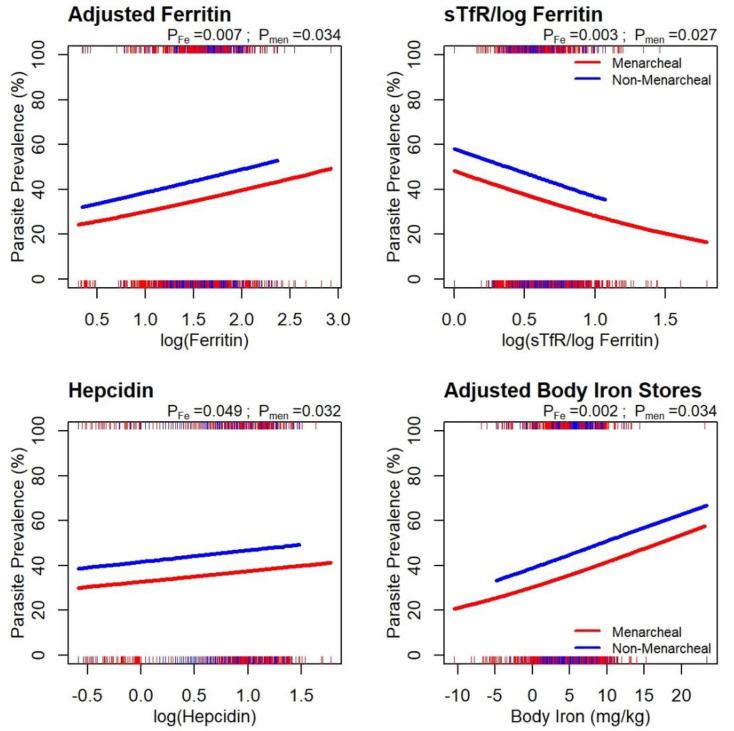
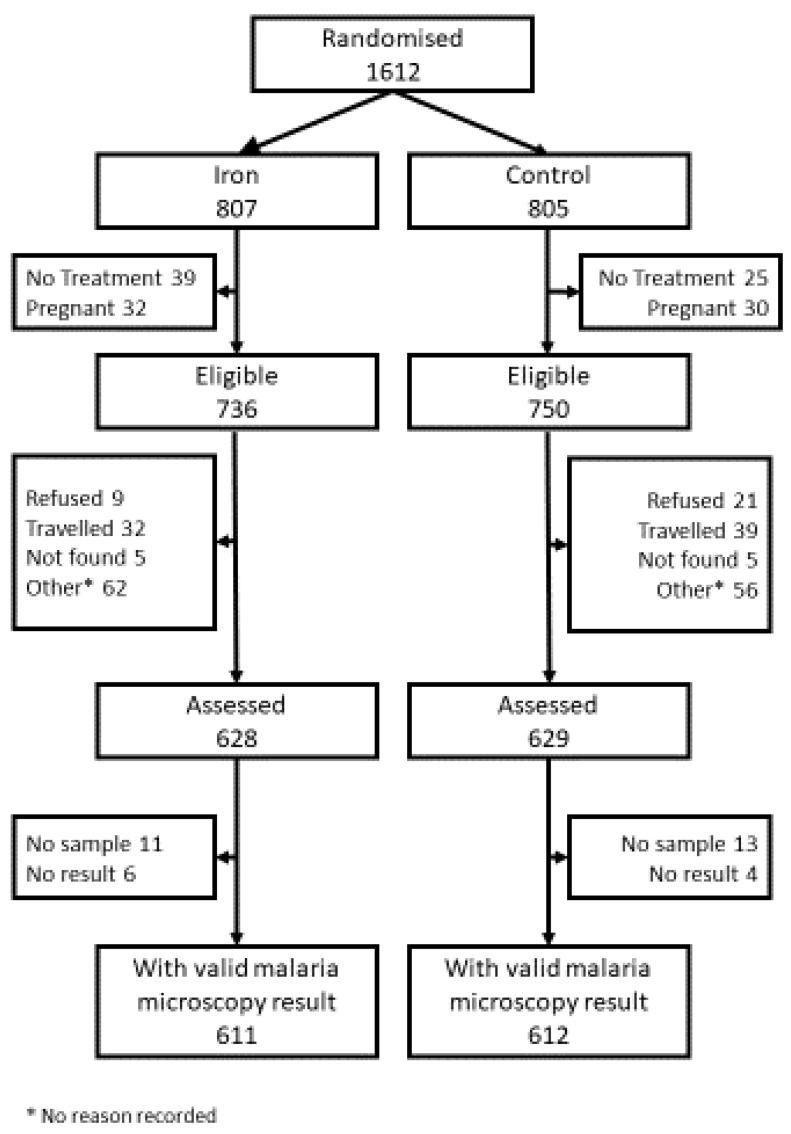
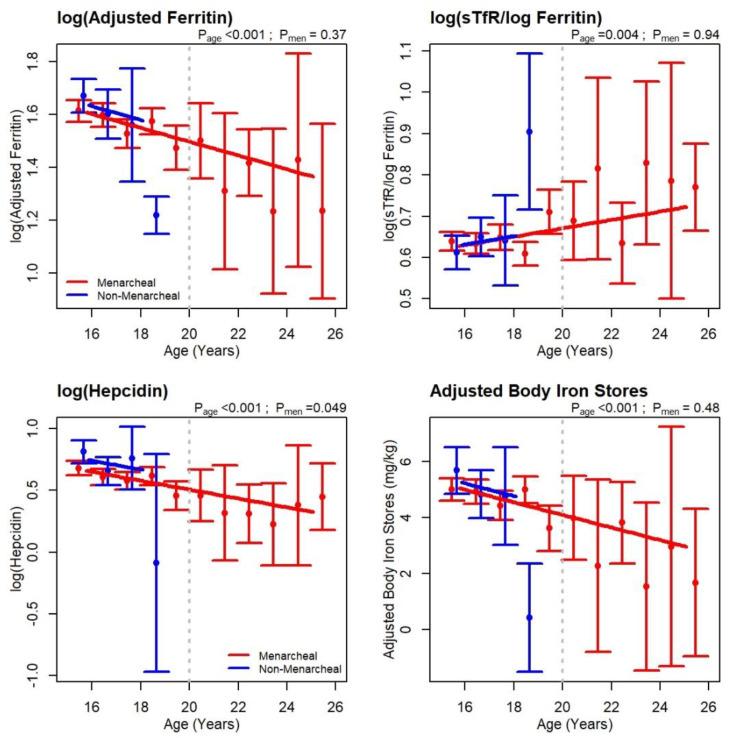
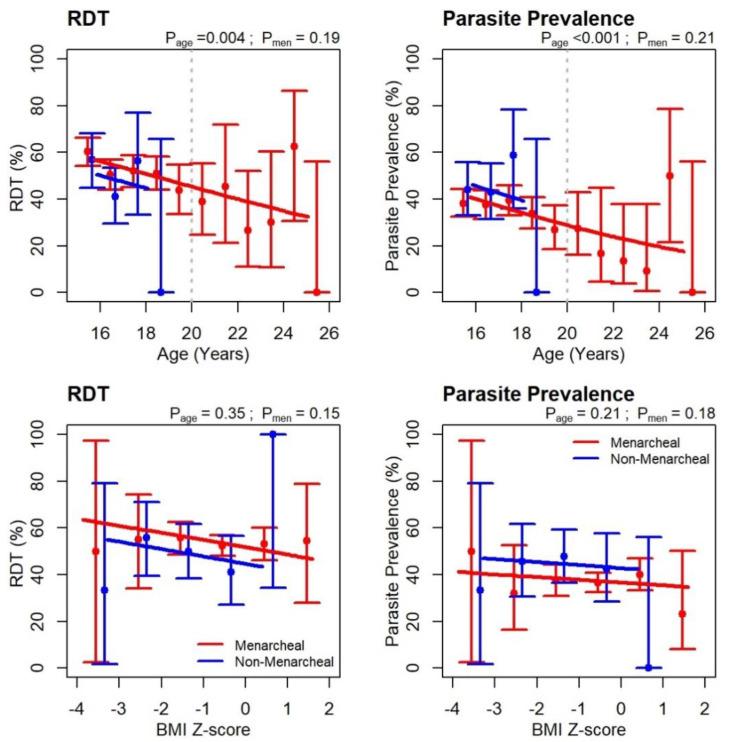
High levels of storage iron may increase malaria susceptibility. This risk has not been investigated in semi-immune adolescents. We investigated whether baseline iron status of non-pregnant adolescent girls living in a high malaria transmission area in Burkina Faso affected malaria risk during the following rainy season. For this prospective study, we analysed data from an interim safety survey, conducted six months into a randomised iron supplementation trial. We used logistic regression to model the risk of infection prevalence by microscopy, the pre-specified interim safety outcome, in relation to iron status, nutritional indicators and menarche assessed at recruitment. The interim survey was attended by 1223 (82%) of 1486 eligible participants, 1084 (89%) of whom were <20 years at baseline and 242 (22%) were pre-menarcheal. At baseline, prevalence of low body iron stores was 10%. At follow-up, 38% of adolescents had predominantly asymptomatic malaria parasitaemias, with no difference by menarcheal status. Higher body iron stores at baseline predicted an increased malaria risk in the following rainy season (OR 1.18 (95% CI 1.05, 1.34, = 0.007) after adjusting for bed net use, age, menarche, and body mass index. We conclude that routine iron supplementation should not be recommended without prior effective malaria control.
高储存铁水平可能会增加疟疾易感性。这种风险在半免疫青少年中尚未得到研究。我们研究了布基纳法索高疟疾传播地区生活的非孕妇少女的基础铁状况是否会影响下一个雨季的疟疾风险。对于这项前瞻性研究,我们分析了一项随机补铁试验进行六个月时进行的中期安全性调查的数据。我们使用逻辑回归模型,根据铁状态、营养指标和招募时评估的初潮,来预测显微镜检查感染率(规定的中期安全性结局)的风险。1486 名符合条件的参与者中有 1223 名(82%)参加了中期调查,其中 1084 名(89%)年龄小于 20 岁,242 名(22%)处于初潮前。基线时,低体铁储存的患病率为 10%。随访时,38%的青少年有主要无症状疟原虫血症,初潮状态无差异。基线时较高的体铁储存预示着在下一个雨季疟疾风险增加(调整蚊帐使用、年龄、初潮和体重指数后,OR 为 1.18(95%CI 1.05,1.34), = 0.007)。我们得出结论,在没有有效的疟疾控制措施之前,不应常规推荐补铁。

 Zotero 插件