
严重急性呼吸综合征冠状病毒 2 在人呼吸道上皮细胞中的复制。
Replication of Severe Acute Respiratory Syndrome Coronavirus 2 in Human Respiratory Epithelium.
机构信息
Malopolska Centre of Biotechnology, Jagiellonian University, Krakow, Poland.
Microbiology Department, Faculty of Biochemistry, Biophysics and Biotechnology, Jagiellonian University, Krakow, Poland.
出版信息
J Virol. 2020 Jul 16;94(15). doi: 10.1128/JVI.00957-20.
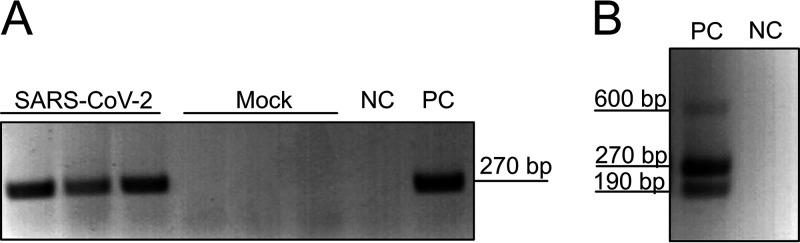
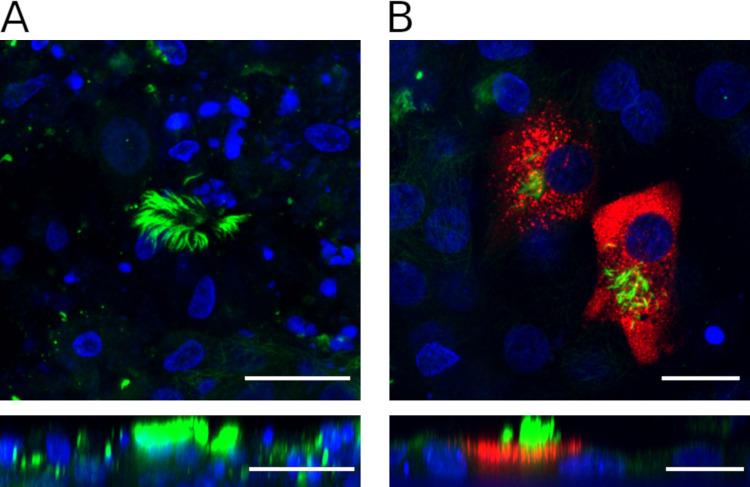
Currently, there are four seasonal coronaviruses associated with relatively mild respiratory tract disease in humans. However, there is also a plethora of animal coronaviruses which have the potential to cross the species border. This regularly results in the emergence of new viruses in humans. In 2002, severe acute respiratory syndrome coronavirus (SARS-CoV) emerged and rapidly disappeared in May 2003. In 2012, Middle East respiratory syndrome coronavirus (MERS-CoV) was identified as a possible threat to humans, but its pandemic potential so far is minimal, as human-to-human transmission is ineffective. The end of 2019 brought us information about severe acute respiratory syndrome coronavirus 2 (SARS-CoV-2) emergence, and the virus rapidly spread in 2020, causing an unprecedented pandemic. At present, studies on the virus are carried out using a surrogate system based on the immortalized simian Vero E6 cell line. This model is convenient for diagnostics, but it has serious limitations and does not allow for understanding of the biology and evolution of the virus. Here, we show that fully differentiated human airway epithelium cultures constitute an excellent model to study infection with the novel human coronavirus SARS-CoV-2. We observed efficient replication of the virus in the tissue, with maximal replication at 2 days postinfection. The virus replicated in ciliated cells and was released apically. Severe acute respiratory syndrome coronavirus 2 (SARS-CoV-2) emerged by the end of 2019 and rapidly spread in 2020. At present, it is of utmost importance to understand the biology of the virus, rapidly assess the treatment potential of existing drugs, and develop new active compounds. While some animal models for such studies are under development, most of the research is carried out in Vero E6 cells. Here, we propose fully differentiated human airway epithelium cultures as a model for studies on SARS-CoV-2.
目前,有四种季节性冠状病毒与人类相对轻微的呼吸道疾病有关。然而,还有大量的动物冠状病毒有可能跨越物种边界。这经常导致新病毒在人类中出现。2002 年,严重急性呼吸综合征冠状病毒(SARS-CoV)出现,并于 2003 年 5 月迅速消失。2012 年,中东呼吸综合征冠状病毒(MERS-CoV)被确定为人类的潜在威胁,但迄今为止其大流行的潜力很小,因为人与人之间的传播效果不佳。2019 年底,我们得到了关于严重急性呼吸综合征冠状病毒 2(SARS-CoV-2)出现的信息,该病毒在 2020 年迅速传播,造成了前所未有的大流行。目前,对该病毒的研究是使用基于永生化的食蟹猴肾细胞系(Vero E6)的替代系统进行的。该模型便于诊断,但存在严重的局限性,无法了解病毒的生物学和进化。在这里,我们展示了完全分化的人呼吸道上皮细胞培养物是研究新型人类冠状病毒 SARS-CoV-2 感染的理想模型。我们观察到病毒在组织中有效复制,感染后 2 天达到最大复制。病毒在纤毛细胞中复制,并从顶端释放。严重急性呼吸综合征冠状病毒 2(SARS-CoV-2)于 2019 年底出现,并于 2020 年迅速传播。目前,了解病毒的生物学特性、快速评估现有药物的治疗潜力并开发新的活性化合物至关重要。虽然一些此类研究的动物模型正在开发中,但大多数研究是在 Vero E6 细胞中进行的。在这里,我们提出完全分化的人呼吸道上皮细胞培养物作为 SARS-CoV-2 研究的模型。


 Zotero 插件