
新型冠状病毒肺炎:炎症关联及营养在潜在缓解中的作用。
COVID-19: The Inflammation Link and the Role of Nutrition in Potential Mitigation.
机构信息
Department of Biological Sciences, University of Limerick, Limerick V94 T9PX, Ireland.
Health Research Institute, University of Limerick, Limerick V94 T9PX, Ireland.
出版信息
Nutrients. 2020 May 19;12(5):1466. doi: 10.3390/nu12051466.
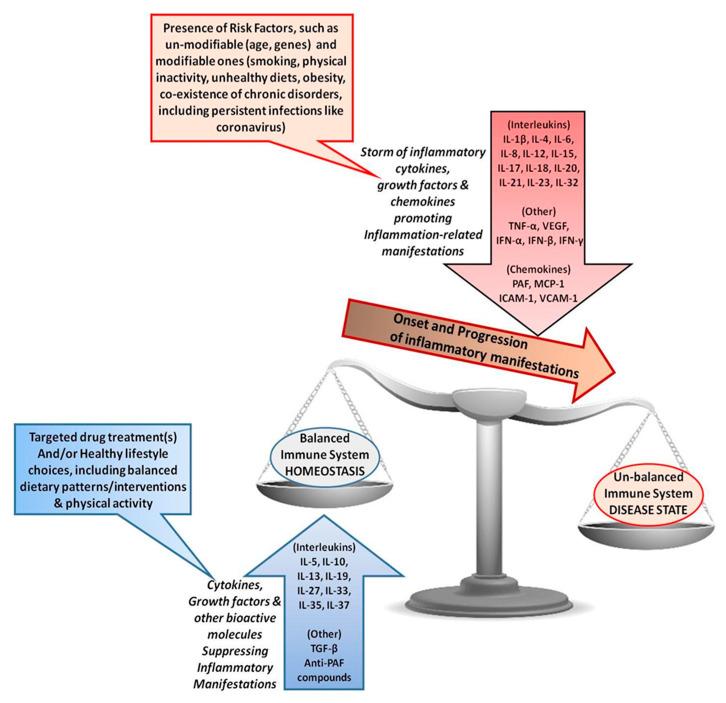
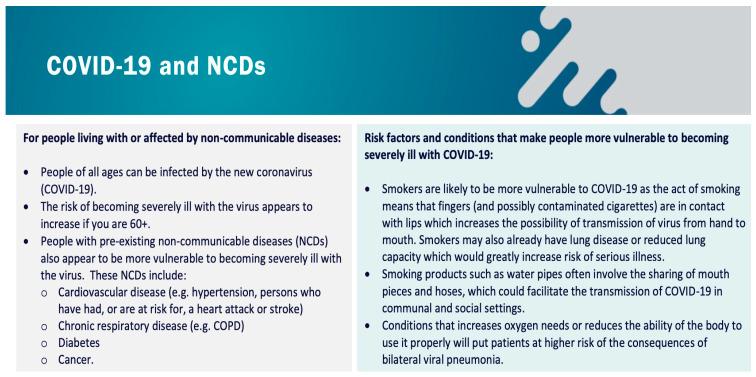
The novel coronavirus disease (COVID-19) pandemic caused by severe acute respiratory syndrome coronavirus 2 (SARS-CoV-2) has engulfed the world, affecting more than 180 countries. As a result, there has been considerable economic distress globally and a significant loss of life. Sadly, the vulnerable and immunocompromised in our societies seem to be more susceptible to severe COVID-19 complications. Global public health bodies and governments have ignited strategies and issued advisories on various handwashing and hygiene guidelines, social distancing strategies, and, in the most extreme cases, some countries have adopted "stay in place" or lockdown protocols to prevent COVID-19 spread. Notably, there are several significant risk factors for severe COVID-19 infection. These include the presence of poor nutritional status and pre-existing noncommunicable diseases (NCDs) such as diabetes mellitus, chronic lung diseases, cardiovascular diseases (CVD), obesity, and various other diseases that render the patient immunocompromised. These diseases are characterized by systemic inflammation, which may be a common feature of these NCDs, affecting patient outcomes against COVID-19. In this review, we discuss some of the anti-inflammatory therapies that are currently under investigation intended to dampen the cytokine storm of severe COVID-19 infections. Furthermore, nutritional status and the role of diet and lifestyle is considered, as it is known to affect patient outcomes in other severe infections and may play a role in COVID-19 infection. This review speculates the importance of nutrition as a mitigation strategy to support immune function amid the COVID-19 pandemic, identifying food groups and key nutrients of importance that may affect the outcomes of respiratory infections.
新型冠状病毒病(COVID-19)是由严重急性呼吸系统综合症冠状病毒 2(SARS-CoV-2)引起的大流行,已席卷全球,影响了 180 多个国家。结果是全球经济遭受了巨大的困难,大量人员死亡。不幸的是,我们社会中的弱势群体和免疫功能低下者似乎更容易受到严重 COVID-19 并发症的影响。全球公共卫生机构和政府已经制定了各种策略,并发布了关于洗手和卫生指南、社交距离策略的建议,在最极端的情况下,一些国家已经采取了“就地避难”或封锁协议来阻止 COVID-19 的传播。值得注意的是,有几个严重 COVID-19 感染的重大风险因素。这些因素包括营养不良和先前存在的非传染性疾病(NCDs)的存在,如糖尿病、慢性肺部疾病、心血管疾病(CVD)、肥胖症和其他使患者免疫功能低下的各种疾病。这些疾病的特点是全身炎症,这可能是这些 NCDs 的共同特征,影响患者对 COVID-19 的治疗结果。在这篇综述中,我们讨论了一些目前正在研究中的抗炎治疗方法,旨在减轻严重 COVID-19 感染的细胞因子风暴。此外,还考虑了营养状况和饮食和生活方式的作用,因为已知它会影响其他严重感染的患者结果,并且可能在 COVID-19 感染中发挥作用。这篇综述推测了营养作为减轻 COVID-19 大流行期间支持免疫功能的缓解策略的重要性,确定了可能影响呼吸道感染结果的重要食物组和关键营养素。

 Zotero 插件