
癌症中 NK 细胞介导的细胞毒性的凋亡抵抗机制。
Mechanisms of Apoptosis Resistance to NK Cell-Mediated Cytotoxicity in Cancer.
机构信息
Department of Functional Biology, Immunology, University of Oviedo, 33006 Oviedo, Spain.
Instituto Universitario de Oncología del Principado de Asturias, IUOPA, 33006 Oviedo, Spain.
出版信息
Int J Mol Sci. 2020 May 25;21(10):3726. doi: 10.3390/ijms21103726.
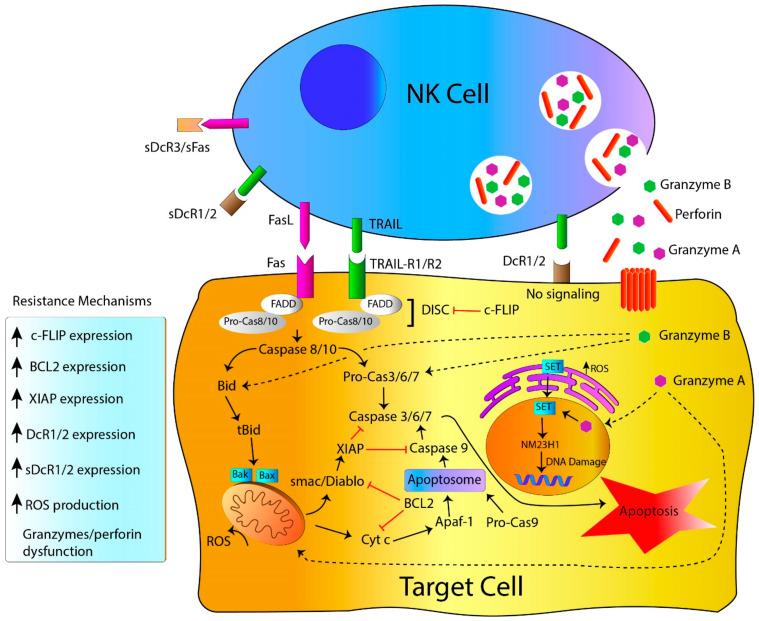
Natural killer (NK) cells are major contributors to immunosurveillance and control of tumor development by inducing apoptosis of malignant cells. Among the main mechanisms involved in NK cell-mediated cytotoxicity, the death receptor pathway and the release of granules containing perforin/granzymes stand out due to their efficacy in eliminating tumor cells. However, accumulated evidence suggest a profound immune suppression in the context of tumor progression affecting effector cells, such as NK cells, leading to decreased cytotoxicity. This diminished capability, together with the development of resistance to apoptosis by cancer cells, favor the loss of immunogenicity and promote immunosuppression, thus partially inducing NK cell-mediated killing resistance. Altered expression patterns of pro- and anti-apoptotic proteins along with genetic background comprise the main mechanisms of resistance to NK cell-related apoptosis. Herein, we summarize the main effector cytotoxic mechanisms against tumor cells, as well as the major resistance strategies acquired by tumor cells that hamper the extrinsic and intrinsic apoptotic pathways related to NK cell-mediated killing.
自然杀伤 (NK) 细胞是通过诱导恶性细胞凋亡来进行免疫监视和控制肿瘤发展的主要贡献者。在 NK 细胞介导的细胞毒性作用涉及的主要机制中,死亡受体途径和含有穿孔素/颗粒酶的颗粒的释放因其在消除肿瘤细胞方面的有效性而引人注目。然而,大量证据表明,在肿瘤进展的背景下存在深刻的免疫抑制,影响效应细胞,如 NK 细胞,导致细胞毒性降低。这种能力的降低,加上癌细胞对细胞凋亡的抵抗力的发展,有利于丧失免疫原性并促进免疫抑制,从而部分诱导 NK 细胞介导的杀伤抵抗。抗凋亡蛋白和促凋亡蛋白的表达模式改变以及遗传背景构成了对 NK 细胞相关凋亡的抵抗的主要机制。本文总结了针对肿瘤细胞的主要效应细胞毒性机制,以及肿瘤细胞获得的主要抵抗策略,这些策略阻碍了与 NK 细胞介导的杀伤相关的外在和内在凋亡途径。
 Zotero 插件