
戴口罩、消毒和社交隔离措施降低家庭中 SARS-CoV-2 的二次传播:中国北京的一项队列研究。
Reduction of secondary transmission of SARS-CoV-2 in households by face mask use, disinfection and social distancing: a cohort study in Beijing, China.
机构信息
Institute for Infectious Disease and Endemic Disease Control, Beijing Center for Disease Prevention and Control, Beijing Research Center for Preventive medicine, Beijing, China.
State Key Laboratory of Remote Sensing Science, College of Global Change and Earth System Science, Beijing Normal University, Beijing, China.
出版信息
BMJ Glob Health. 2020 May;5(5). doi: 10.1136/bmjgh-2020-002794.
INTRODUCTION
Transmission of COVID-19 within families and close contacts accounts for the majority of epidemic growth. Community mask wearing, hand washing and social distancing are thought to be effective but there is little evidence to inform or support community members on COVID-19 risk reduction within families.
METHODS
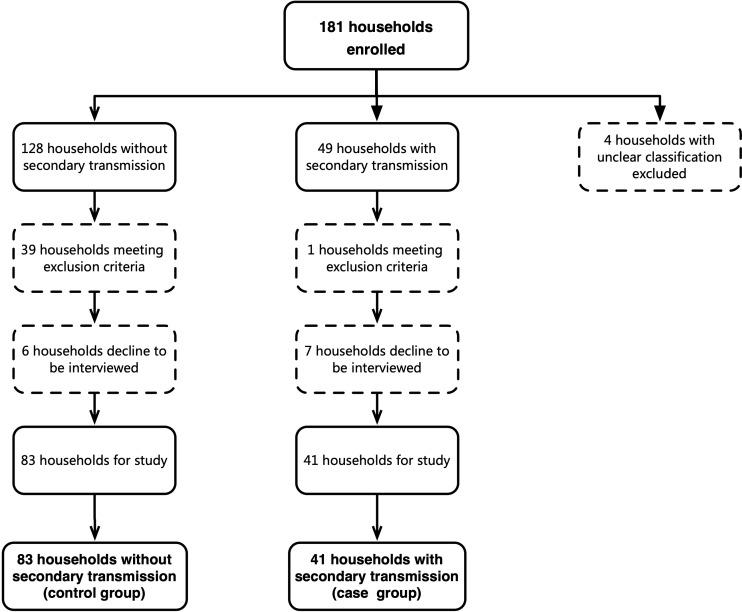
A retrospective cohort study of 335 people in 124 families and with at least one laboratory confirmed COVID-19 case was conducted from 28 February to 27 March 2020, in Beijing, China. The outcome of interest was secondary transmission of severe acute respiratory syndrome coronavirus 2 (SARS-CoV-2) within the family. Characteristics and practices of primary cases, of well family contacts and household hygiene practices were analysed as predictors of secondary transmission.
RESULTS
The secondary attack rate in families was 23.0% (77/335). Face mask use by the primary case and family contacts before the primary case developed symptoms was 79% effective in reducing transmission (OR=0.21, 95% CI 0.06 to 0.79). Daily use of chlorine or ethanol based disinfectant in households was 77% effective (OR=0.23, 95% CI 0.07 to 0.84). Wearing a mask after illness onset of the primary case was not significantly protective. The risk of household transmission was 18 times higher with frequent daily close contact with the primary case (OR=18.26, 95% CI 3.93 to 84.79), and four times higher if the primary case had diarrhoea (OR=4.10, 95% CI 1.08 to 15.60). Household crowding was not significant.
CONCLUSION
The study confirms the highest risk of transmission prior to symptom onset, and provides the first evidence of the effectiveness of mask use, disinfection and social distancing in preventing COVID-19. We also found evidence of faecal transmission. This can inform guidelines for community prevention in settings of intense COVID-19 epidemics.
简介
COVID-19 在家庭和密切接触者中的传播是疫情增长的主要原因。人们认为社区戴口罩、勤洗手和保持社交距离是有效的,但几乎没有证据可以为社区成员提供有关 COVID-19 家庭内降低风险的信息或支持。
方法
2020 年 2 月 28 日至 3 月 27 日,在中国北京,对 124 个家庭的 335 人进行了一项回顾性队列研究,这些家庭至少有 1 例实验室确诊的 COVID-19 病例。主要结果是家庭内严重急性呼吸综合征冠状病毒 2(SARS-CoV-2)的继发传播。对主要病例、良好家庭接触者的特征和实践以及家庭卫生习惯进行了分析,以预测继发传播。
结果
家庭内的继发感染率为 23.0%(77/335)。主要病例及其家庭接触者在出现症状前使用口罩可有效降低传播风险(OR=0.21,95%CI 0.06 至 0.79)。家庭每日使用含氯或含乙醇的消毒剂有效率为 77%(OR=0.23,95%CI 0.07 至 0.84)。主要病例发病后戴口罩并不能显著起到保护作用。与主要病例频繁每日密切接触的家庭传播风险增加 18 倍(OR=18.26,95%CI 3.93 至 84.79),如果主要病例有腹泻,风险增加 4 倍(OR=4.10,95%CI 1.08 至 15.60)。家庭拥挤程度没有显著意义。
结论
该研究证实了症状出现前传播的风险最高,并提供了口罩使用、消毒和社会隔离预防 COVID-19 的有效性的首个证据。我们还发现了粪便传播的证据。这可以为疫情严重地区的社区预防指南提供依据。
 Zotero 插件