
COVID-19 患者合并感染:系统评价和荟萃分析。
Co-infections in people with COVID-19: a systematic review and meta-analysis.
机构信息
Division of Epidemiology and Public Health, University of Nottingham, Nottingham, UK.
Faculty of Biology (School of Medicine), University of Cambridge, Cambridge, UK.
出版信息
J Infect. 2020 Aug;81(2):266-275. doi: 10.1016/j.jinf.2020.05.046. Epub 2020 May 27.
OBJECTIVES
In previous influenza pandemics, bacterial co-infections have been a major cause of mortality. We aimed to evaluate the burden of co-infections in patients with COVID-19.
METHODS
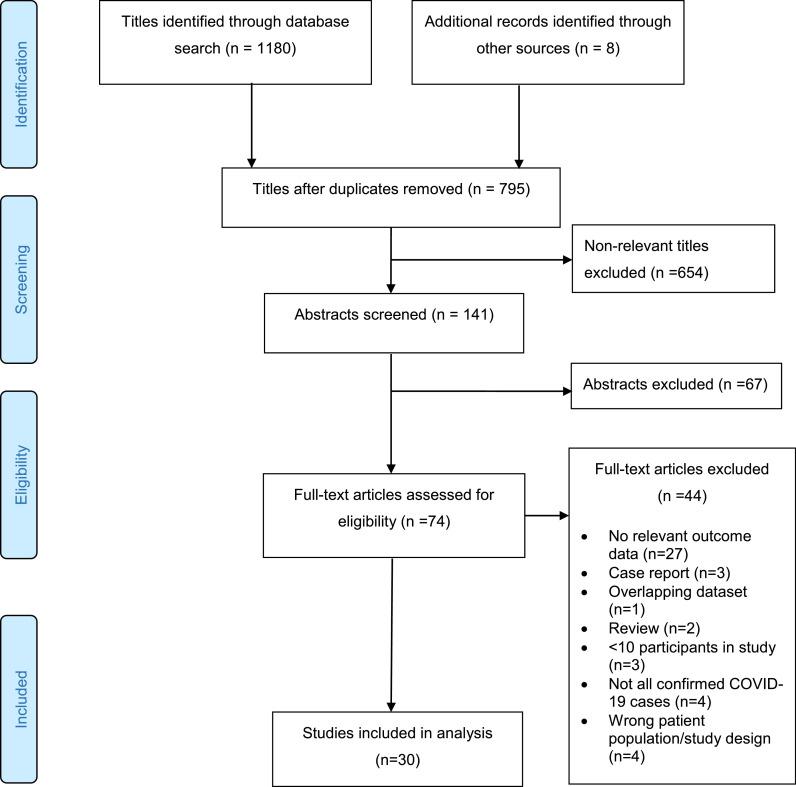
We systematically searched Embase, Medline, Cochrane Library, LILACS and CINAHL for eligible studies published from 1 January 2020 to 17 April 2020. We included patients of all ages, in all settings. The main outcome was the proportion of patients with a bacterial, fungal or viral co-infection. .
RESULTS
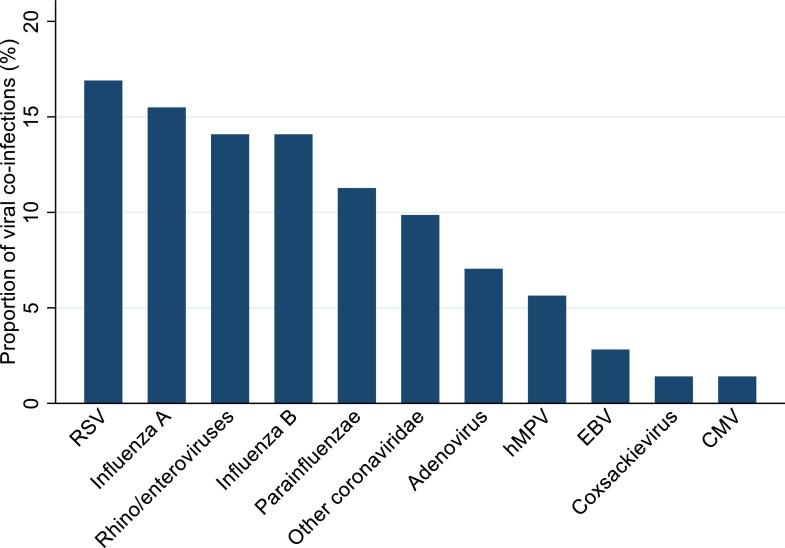
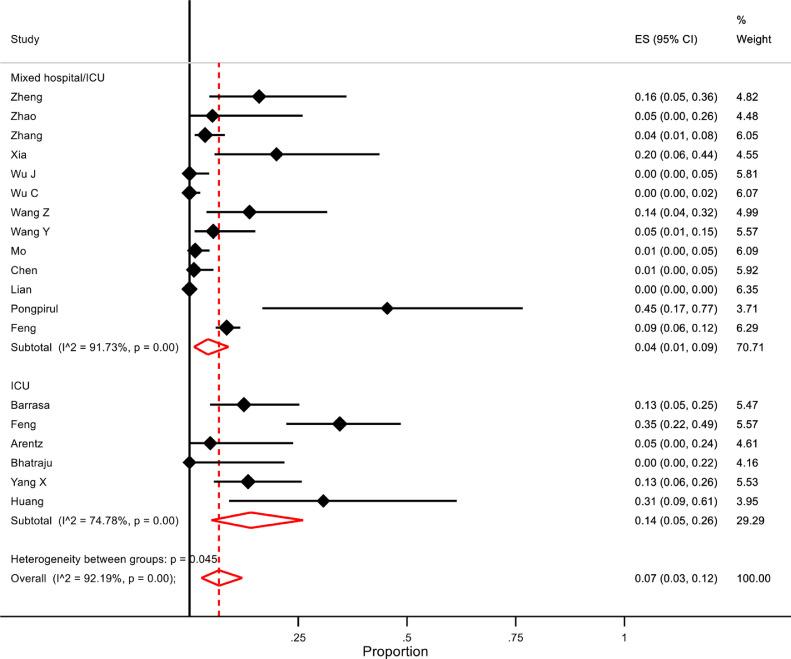
Thirty studies including 3834 patients were included. Overall, 7% of hospitalised COVID-19 patients had a bacterial co-infection (95% CI 3-12%, n=2183, I=92·2%). A higher proportion of ICU patients had bacterial co-infections than patients in mixed ward/ICU settings (14%, 95% CI 5-26, I=74·7% versus 4%, 95% CI 1-9, I= 91·7%). The commonest bacteria were Mycoplasma pneumonia, Pseudomonas aeruginosa and Haemophilus influenzae. The pooled proportion with a viral co-infection was 3% (95% CI 1-6, n=1014, I=62·3%), with Respiratory Syncytial Virus and influenza A the commonest. Three studies reported fungal co-infections.
CONCLUSIONS
A low proportion of COVID-19 patients have a bacterial co-infection; less than in previous influenza pandemics. These findings do not support the routine use of antibiotics in the management of confirmed COVID-19 infection.
目的
在以往的流感大流行中,细菌合并感染是导致死亡率升高的主要原因。本研究旨在评估 COVID-19 患者合并感染的负担。
方法
我们系统地检索了 Embase、Medline、Cochrane 图书馆、LILACS 和 CINAHL,以获取 2020 年 1 月 1 日至 2020 年 4 月 17 日发表的符合条件的研究。我们纳入了所有年龄段和所有环境中的患者。主要结局是细菌、真菌或病毒合并感染患者的比例。
结果
纳入了 30 项研究,共 3834 例患者。总体而言,7%的住院 COVID-19 患者合并细菌感染(95%CI:3-12%,n=2183,I²=92.2%)。与混合病房/ICU 环境中的患者相比,ICU 患者合并细菌感染的比例更高(14%,95%CI:5-26,I²=74.7% 与 4%,95%CI:1-9,I²=91.7%)。最常见的细菌是肺炎支原体、铜绿假单胞菌和流感嗜血杆菌。合并病毒感染的患者比例为 3%(95%CI:1-6%,n=1014,I²=62.3%),最常见的病毒是呼吸道合胞病毒和甲型流感病毒。三项研究报告了真菌感染。
结论
COVID-19 患者中合并细菌感染的比例较低,低于以往的流感大流行。这些发现不支持在管理确诊的 COVID-19 感染时常规使用抗生素。


 Zotero 插件