
严重急性呼吸综合征冠状病毒 2 中的结构蛋白。
Structural Proteins in Severe Acute Respiratory Syndrome Coronavirus-2.
机构信息
Department of Pharmacology, Manipal College of Pharmaceutical Sciences, Manipal Academy of Higher Education, Manipal, India.
Department of Pharmacology, Manipal College of Pharmaceutical Sciences, Manipal Academy of Higher Education, Manipal, India.
出版信息
Arch Med Res. 2020 Aug;51(6):482-491. doi: 10.1016/j.arcmed.2020.05.012. Epub 2020 May 25.
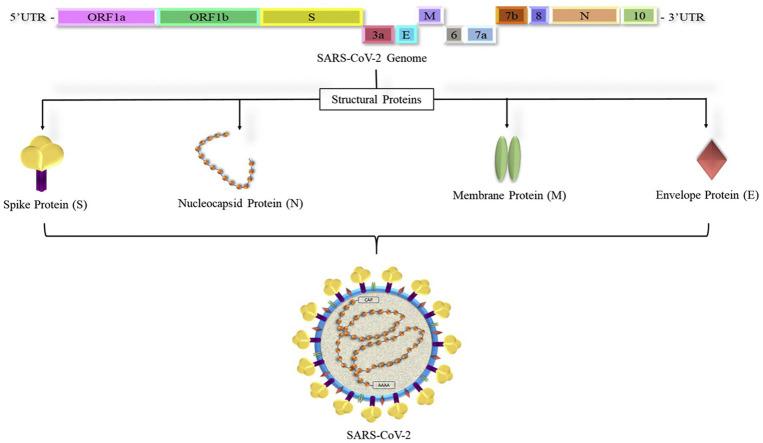
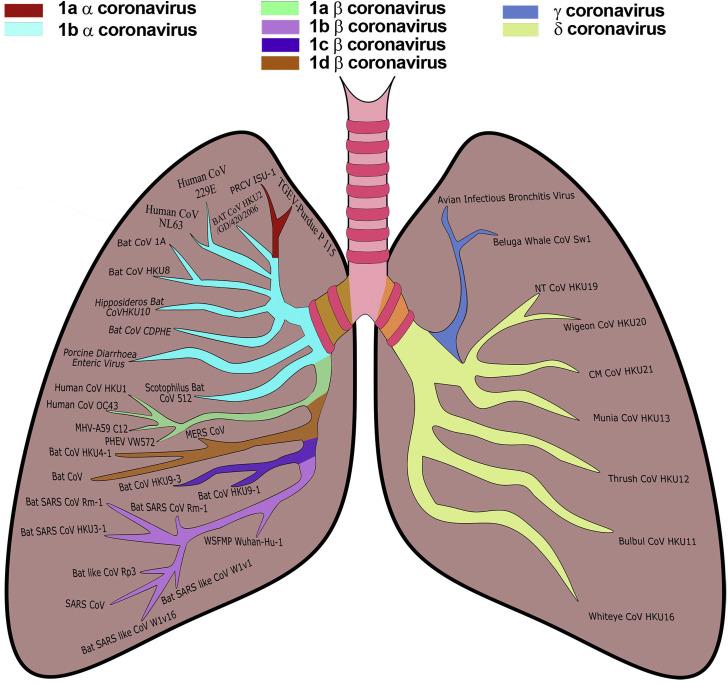
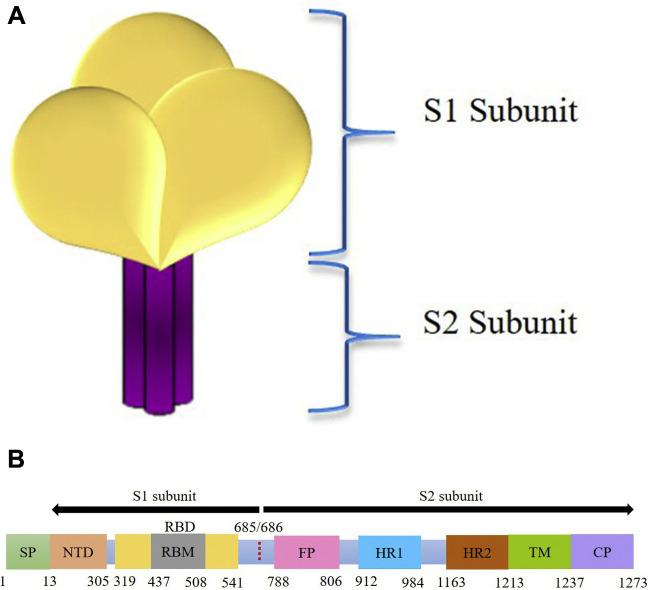
What began with a sign of pneumonia-related respiratory disorders in China has now become a pandemic named by WHO as Covid-19 known to be caused by Severe Acute Respiratory Syndrome Coronavirus-2 (SARS-CoV-2). The SARS-CoV-2 are newly emerged β coronaviruses belonging to the Coronaviridae family. SARS-CoV-2 has a positive viral RNA genome expressing open reading frames that code for structural and non-structural proteins. The structural proteins include spike (S), nucleocapsid (N), membrane (M), and envelope (E) proteins. The S1 subunit of S protein facilitates ACE2 mediated virus attachment while S2 subunit promotes membrane fusion. The presence of glutamine, asparagine, leucine, phenylalanine and serine amino acids in SARS-CoV-2 enhances ACE2 binding. The N protein is composed of a serine-rich linker region sandwiched between N Terminal Domain (NTD) and C Terminal Domain (CTD). These terminals play a role in viral entry and its processing post entry. The NTD forms orthorhombic crystals and binds to the viral genome. The linker region contains phosphorylation sites that regulate its functioning. The CTD promotes nucleocapsid formation. The E protein contains a NTD, hydrophobic domain and CTD which form viroporins needed for viral assembly. The M protein possesses hydrophilic C terminal and amphipathic N terminal. Its long-form promotes spike incorporations and the interaction with E facilitates virion production. As each protein is essential in viral functioning, this review describes the insights of SARS-CoV-2 structural proteins that would help in developing therapeutic strategies by targeting each protein to curb the rapidly growing pandemic.
最初在中国出现的肺炎相关呼吸道疾病现已成为一种大流行疾病,世界卫生组织将其命名为 COVID-19,其病原体是严重急性呼吸系统综合征冠状病毒 2(SARS-CoV-2)。SARS-CoV-2 是一种新出现的β属冠状病毒,属于冠状病毒科。SARS-CoV-2 的正链病毒 RNA 基因组可表达开放阅读框,编码结构蛋白和非结构蛋白。结构蛋白包括刺突(S)、核衣壳(N)、膜(M)和包膜(E)蛋白。S 蛋白的 S1 亚基有助于 ACE2 介导的病毒附着,而 S2 亚基则促进膜融合。SARS-CoV-2 中存在谷氨酰胺、天冬酰胺、亮氨酸、苯丙氨酸和丝氨酸氨基酸可增强 ACE2 结合。N 蛋白由富含丝氨酸的连接区夹在 N 端结构域(NTD)和 C 端结构域(CTD)之间组成。这些末端在病毒进入及其进入后的加工中起作用。NTD 形成正交晶体并与病毒基因组结合。连接区含有调节其功能的磷酸化位点。CTD 促进核衣壳形成。E 蛋白包含 NTD、疏水区和 CTD,它们形成病毒组装所需的 viroporins。M 蛋白具有亲水的 C 末端和两亲性的 N 末端。其长形促进刺突的掺入,与 E 的相互作用有助于病毒粒子的产生。由于每种蛋白在病毒功能中都是必不可少的,因此本综述描述了 SARS-CoV-2 结构蛋白的见解,这将有助于通过针对每种蛋白来开发治疗策略,以遏制这种迅速蔓延的大流行。



 Zotero 插件