
微塑料为水生环境中的微生物提供了新的小生境。
Microplastics provide new microbial niches in aquatic environments.
机构信息
Key Laboratory of Aquatic Botany and Watershed Ecology, Wuhan Botanical Garden, Chinese Academy of Sciences, Wuhan, 430074, China.
The James Hutton Institute, Craigiebuckler, Aberdeen, Scotland, ABI5 8QH, UK.
出版信息
Appl Microbiol Biotechnol. 2020 Aug;104(15):6501-6511. doi: 10.1007/s00253-020-10704-x. Epub 2020 Jun 4.
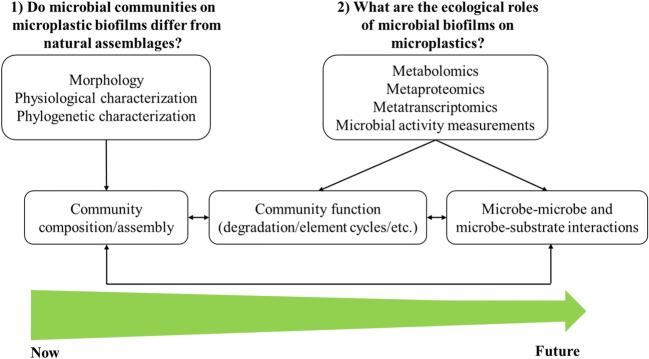
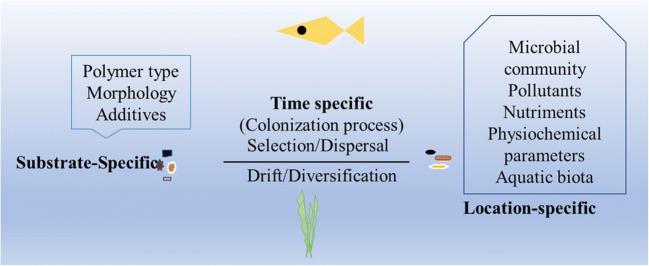
Microplastics in the biosphere are currently of great environmental concern because of their potential toxicity for aquatic biota and human health and association with pathogenic microbiota. Microplastics can occur in high abundance in all aquatic environments, including oceans, rivers and lakes. Recent findings have highlighted the role of microplastics as important vectors for microorganisms, which can form fully developed biofilms on this artificial substrate. Microplastics therefore provide new microbial niches in the aquatic environment, and the developing biofilms may significantly differ in microbial composition compared to natural free-living or particle-associated microbial populations in the surrounding water. In this article, we discuss the composition and ecological function of the microbial communities found in microplastic biofilms. The potential factors that influence the richness and diversity of such microbial microplastic communities are also evaluated. Microbe-microbe and microbe-substrate interactions in microplastic biofilms have been little studied and are not well understood. Multiomics tools together with morphological, physiological and biochemical analyses should be combined to provide a more comprehensive overview on the ecological role of microplastic biofilms. These new microbial niches have so far unknown consequences for microbial ecology and environmental processes in aquatic ecosystems. More knowledge is required on the microbial community composition of microplastic biofilms and their ecological functions in order to better evaluate consequences for the environment and animal health, including humans, especially since the worldwide abundance of microplastics is predicted to dramatically increase. Key Points • Bacteria are mainly studied in community analyses: fungi are neglected. • Microbial colonization of microplastics depends on substrate, location and time. • Community ecology is a promising approach to investigate microbial colonization. • Biodegradable plastics, and ecological roles of microplastic biofilms, need analysis.
在生物圈中,微塑料因其对水生生物群和人类健康的潜在毒性以及与病原微生物群的关联而引起了人们的极大关注。微塑料在所有水生环境中都可能大量存在,包括海洋、河流和湖泊。最近的研究结果强调了微塑料作为微生物重要载体的作用,微生物可以在这种人工基质上形成完全发育的生物膜。因此,微塑料为水生环境提供了新的微生物小生境,而正在形成的生物膜在微生物组成方面可能与周围水中的天然自由生活或颗粒相关的微生物种群有显著差异。在本文中,我们讨论了在微塑料生物膜中发现的微生物群落的组成和生态功能。还评估了影响此类微生物微塑料群落丰富度和多样性的潜在因素。微塑料生物膜中微生物-微生物和微生物-基质相互作用的研究还很少,并且了解得还不够充分。多组学工具以及形态学、生理学和生物化学分析应该结合起来,以更全面地了解微塑料生物膜的生态作用。这些新的微生物小生境对水生生态系统中的微生物生态学和环境过程还存在未知的后果。需要更多地了解微塑料生物膜中的微生物群落组成及其生态功能,以便更好地评估对环境和动物健康(包括人类)的影响,尤其是因为预计全世界的微塑料数量将大幅增加。要点 • 在群落分析中主要研究细菌:真菌被忽视。 • 微塑料的微生物定殖取决于基质、位置和时间。 • 群落生态学是研究微生物定殖的一种很有前途的方法。 • 需要分析可生物降解塑料和微塑料生物膜的生态作用。
 Zotero 插件