
系统药理学——剖析血竭改善缺血性中风预后的分子机制
Systems Pharmacology-Dissection of the Molecular Mechanisms of Dragon's Blood in Improving Ischemic Stroke Prognosis.
作者信息
Jiang Meng, Su Xing, Liu Jianling, Zheng Chunli, Li Xiaogang
机构信息
Precision Medicine Center, The First Affiliated Hospital of Xi'an Jiaotong University, 277 Yanta West Street, Xi'an 710061, China.
Key Laboratory of Xinjiang Phytomedicine Resource and Utilization, Ministry of Education, Shihezi University, Shihezi 832002, China.
出版信息
Evid Based Complement Alternat Med. 2020 May 17;2020:4858201. doi: 10.1155/2020/4858201. eCollection 2020.
MATERIALS AND METHODS
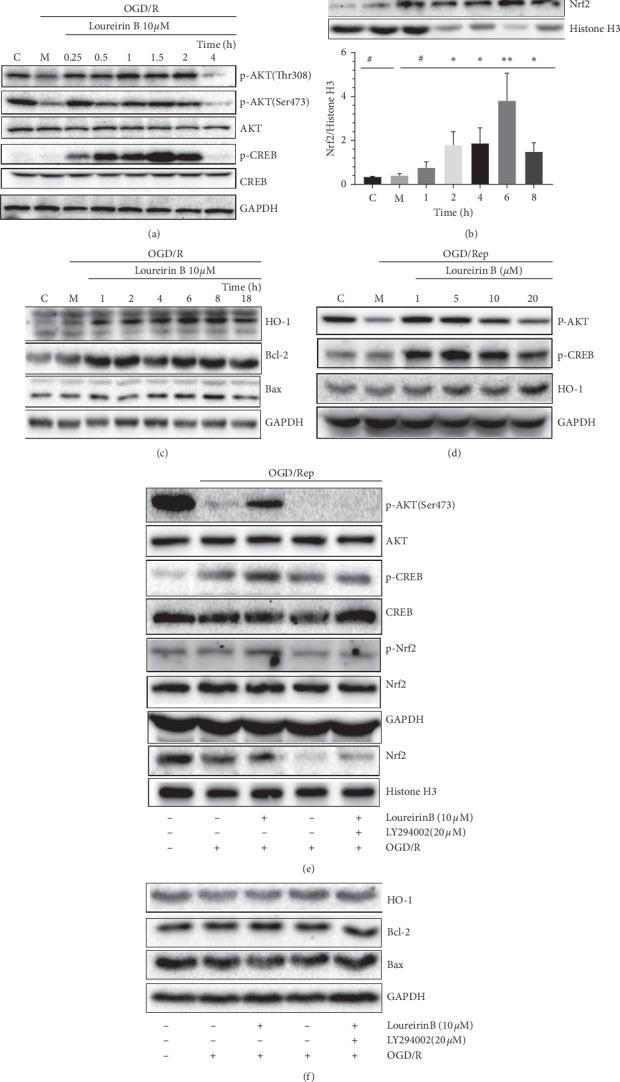
(1) Based on system-pharmacology platform, the potential active compounds of DB are screened out according to ADME. (2) The ischemic stroke-related targets are predicted by utilizing these active compounds as probes, mapping the targets to the CTD database to establish a molecular-target-disease network. (3) To analyze the mechanism of DB treatment for the prognosis of ischemic stroke, we used the Metascape and DAVID databases to construct "ischemic stroke pathways". (4) PC12 cells were used to explore the protective effect of loureirin B on oxygen-glucose deprivation/reperfusion (OGD/R) injury, and BV-2 cells were used to determine the anti-inflammation effect of 4',7-dihydroxyflavone.
RESULTS
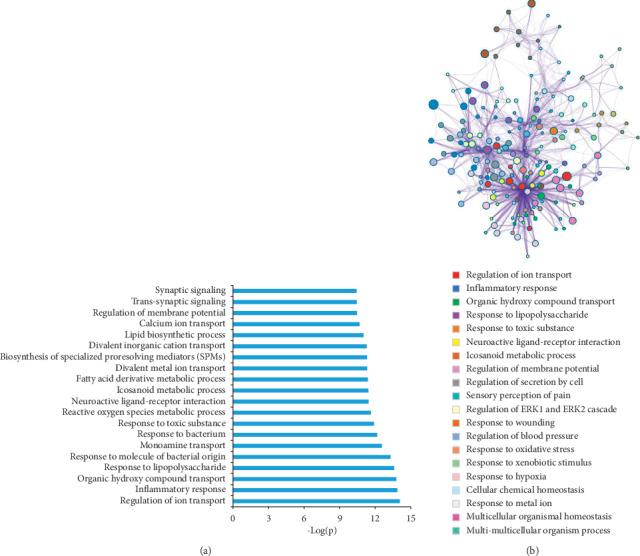
Finally, we obtained 38 active compounds and 58 stroke-related targets. Network and pathway analysis indicate that DB is effective in the treatment of ischemic stroke by enhancing cell survival and inhibiting inflammatory and antiplatelet activation. In experiments, the main component loureirin B promoted the expression of HO-1 and Bcl-2 via positive regulation of PI3K/AKT/CREB and Nrf2 signaling pathways in PC12 cells against OGD/R damage. And the anti-inflammatory activity of 4',7-dihydroxyflavone was related to the inhibition of COX-2, TNF-, and IL-6 in LPS-induced BV-2 cells.
CONCLUSIONS
In our study, the results illustrated that DB in improving ischemic stroke prognosis may involve enhancing cell survival and antioxidant, anti-inflammation, and antiplatelet activities.
材料与方法
(1)基于系统药理学平台,根据药物代谢动力学(ADME)筛选出丹参的潜在活性化合物。(2)以这些活性化合物为探针预测缺血性中风相关靶点,将靶点映射到CTD数据库以建立分子靶点-疾病网络。(3)为分析丹参治疗缺血性中风预后的机制,我们使用Metascape和DAVID数据库构建“缺血性中风通路”。(4)用PC12细胞探讨丹酚酸B对氧糖剥夺/再灌注(OGD/R)损伤的保护作用,用BV-2细胞确定4',7-二羟基黄酮的抗炎作用。
结果
最终,我们获得了38种活性化合物和58个中风相关靶点。网络和通路分析表明,丹参通过增强细胞存活、抑制炎症和抗血小板激活有效治疗缺血性中风。在实验中,主要成分丹酚酸B通过PI3K/AKT/CREB和Nrf2信号通路的正向调节促进PC12细胞中HO-1和Bcl-2的表达,以抵抗OGD/R损伤。4',7-二羟基黄酮的抗炎活性与抑制脂多糖诱导的BV-2细胞中COX-2、TNF-α和IL-6有关。
结论
在我们的研究中,结果表明丹参改善缺血性中风预后可能涉及增强细胞存活以及抗氧化、抗炎和抗血小板活性。





 Zotero 插件