
跨越液泡的卢比孔河:顶复门寄生虫效应蛋白运输的结构见解
Crossing the Vacuolar Rubicon: Structural Insights into Effector Protein Trafficking in Apicomplexan Parasites.
作者信息
Egea Pascal F
机构信息
Department of Biological Chemistry, David Geffen School of Medicine, University of California Los Angeles, Los Angeles, CA 90095, USA.
出版信息
Microorganisms. 2020 Jun 8;8(6):865. doi: 10.3390/microorganisms8060865.
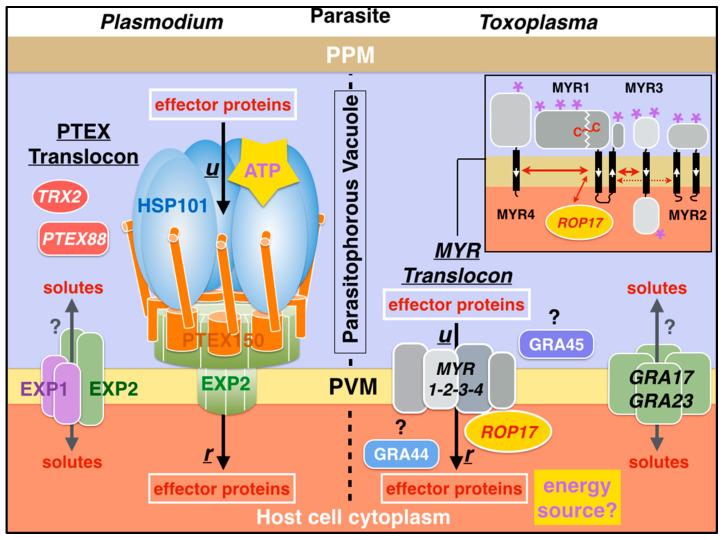
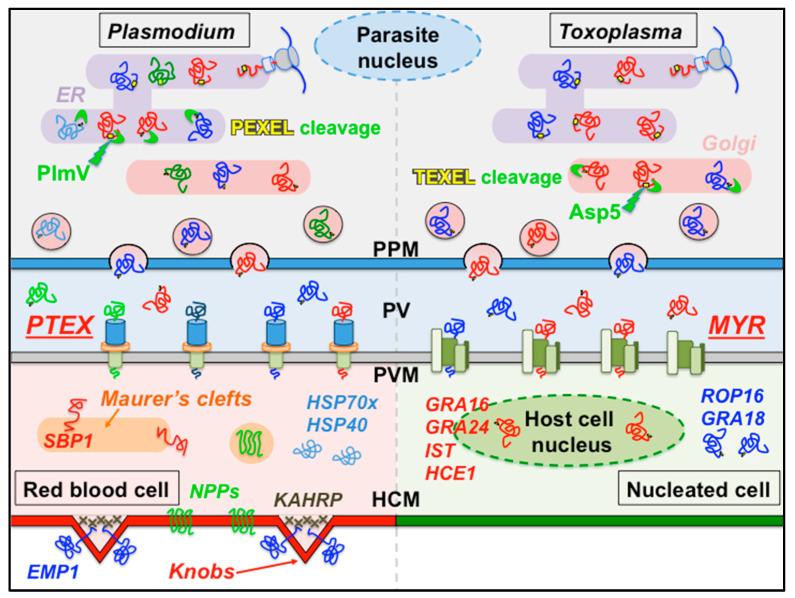
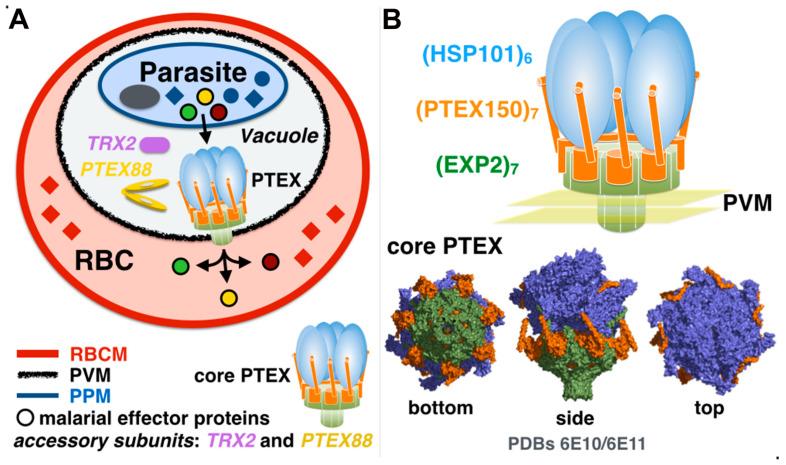
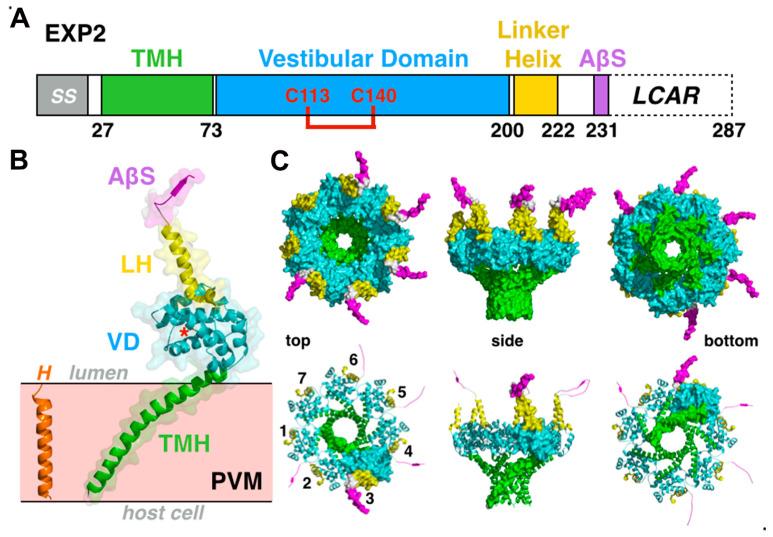
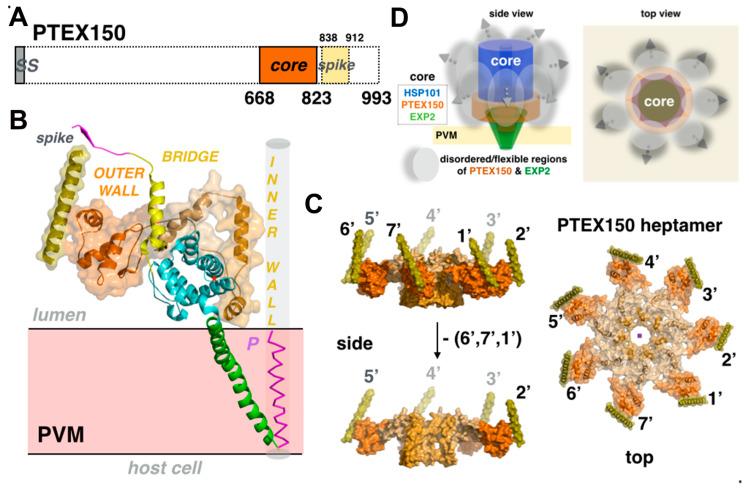
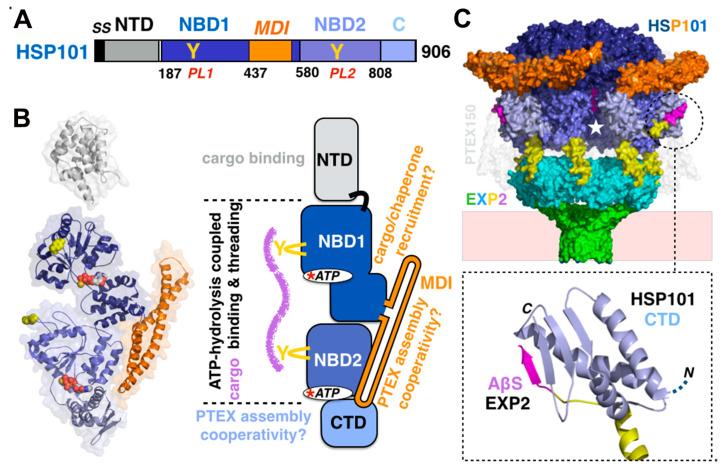
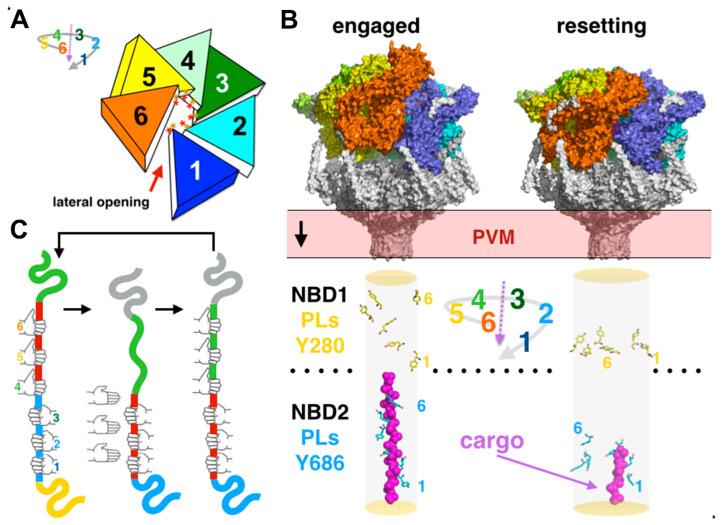
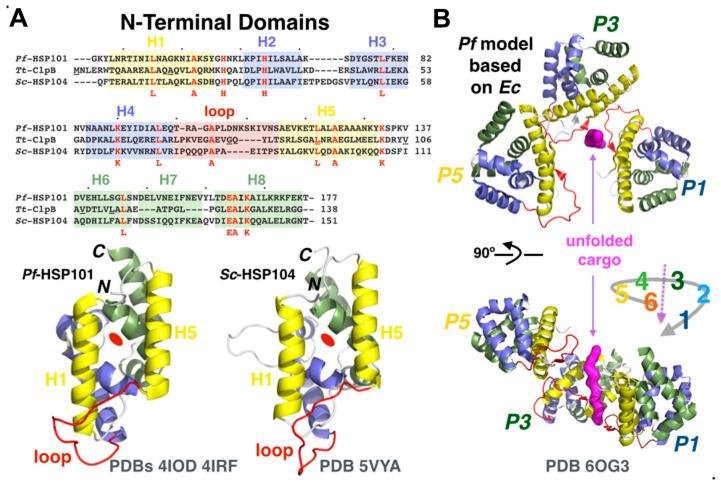
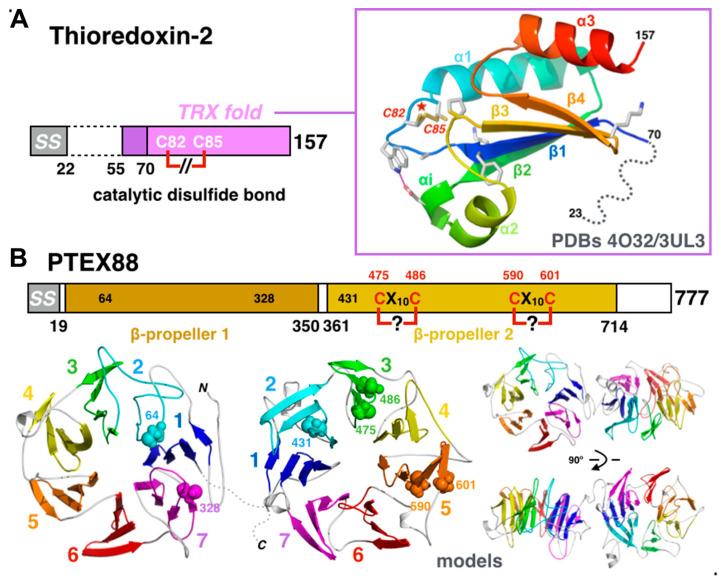
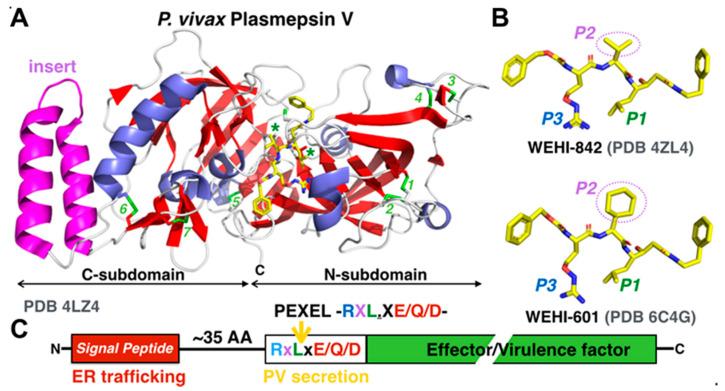
Apicomplexans form a large phylum of parasitic protozoa, including the genera , and , the causative agents of malaria, toxoplasmosis, and cryptosporidiosis, respectively. They cause diseases not only in humans but also in animals, with dramatic consequences in agriculture. Most apicomplexans are vacuole-dwelling and obligate intracellular parasites; as they invade the host cell, they become encased in a parasitophorous vacuole (PV) derived from the host cellular membrane. This creates a parasite-host interface that acts as a protective barrier but also constitutes an obstacle through which the pathogen must import nutrients, eliminate wastes, and eventually break free upon egress. Completion of the parasitic life cycle requires intense remodeling of the infected host cell. Host cell subversion is mediated by a subset of essential effector parasitic proteins and virulence factors actively trafficked across the PV membrane. In the malaria parasite a unique and highly specialized ATP-driven vacuolar secretion system, the translocon of exported proteins (PTEX), transports effector proteins across the vacuolar membrane. Its core is composed of the three essential proteins EXP2, PTEX150, and HSP101, and is supplemented by the two auxiliary proteins TRX2 and PTEX88. Many but not all secreted malarial effector proteins contain a vacuolar trafficking signal or export element (PEXEL) that requires processing by an endoplasmic reticulum protease, plasmepsin V, for proper export. Because vacuolar parasitic protein export is essential to parasite survival and virulence, this pathway is a promising target for the development of novel antimalarial therapeutics. This review summarizes the current state of structural and mechanistic knowledge on the parasitic vacuolar secretion and effector trafficking pathway, describing its most salient features and discussing the existing differences and commonalities with the vacuolar effector translocation machinery recently described in and other apicomplexans of significance to medical and veterinary sciences.
顶复门原生动物构成了一大类寄生原生动物,包括疟原虫属、弓形虫属和隐孢子虫属,分别是疟疾、弓形虫病和隐孢子虫病的病原体。它们不仅在人类中引发疾病,在动物中也会致病,给农业带来巨大影响。大多数顶复门原生动物寄生于液泡中,是专性细胞内寄生虫;当它们侵入宿主细胞时,会被源自宿主细胞膜的寄生泡(PV)包裹。这形成了一个寄生虫 - 宿主界面,它既是一道保护屏障,也是病原体必须通过其导入营养物质、排出废物并最终在逸出时挣脱的障碍。寄生生命周期的完成需要对受感染的宿主细胞进行大量重塑。宿主细胞的颠覆是由一组必需的效应寄生蛋白和毒力因子介导的,这些蛋白和因子通过PV膜进行主动运输。在疟原虫中,一种独特且高度专业化的由ATP驱动的液泡分泌系统——输出蛋白转运体(PTEX),将效应蛋白转运过液泡膜。其核心由三种必需蛋白EXP2、PTEX150和HSP101组成,并由两种辅助蛋白TRX2和PTEX88补充。许多但并非所有分泌的疟疾效应蛋白都含有一个液泡运输信号或肽段输出元件(PEXEL),该元件需要内质网蛋白酶——疟原虫天冬氨酸蛋白酶V进行加工才能正确输出。由于液泡寄生蛋白输出对寄生虫的存活和毒力至关重要,因此该途径是开发新型抗疟疗法的一个有前景的靶点。本综述总结了关于疟原虫液泡分泌和效应蛋白运输途径的结构和机制知识的现状,描述了其最显著的特征,并讨论了与最近在巴贝斯虫属和其他对医学和兽医学有重要意义的顶复门原生动物中描述的液泡效应蛋白转运机制的现有差异和共性。
 Zotero 插件