
表观遗传学预测重度抑郁症。
Epigenetic prediction of major depressive disorder.
机构信息
Division of Psychiatry, Centre for Clinical Brain Sciences, University of Edinburgh, Edinburgh, UK.
Centre for Genomic and Experimental Medicine, Institute of Genetics and Molecular Medicine, University of Edinburgh, Edinburgh, UK.
出版信息
Mol Psychiatry. 2021 Sep;26(9):5112-5123. doi: 10.1038/s41380-020-0808-3. Epub 2020 Jun 10.
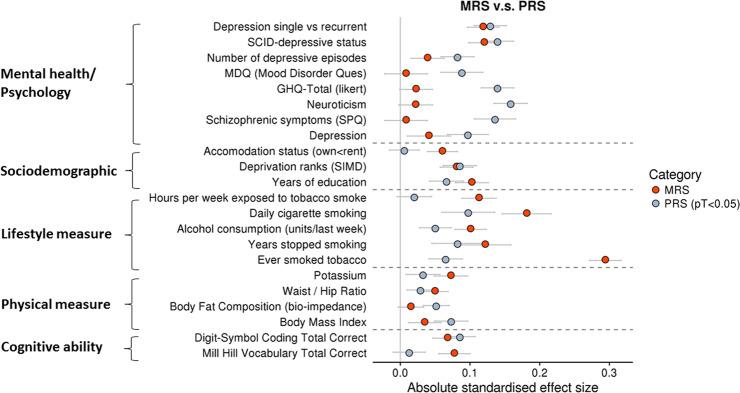
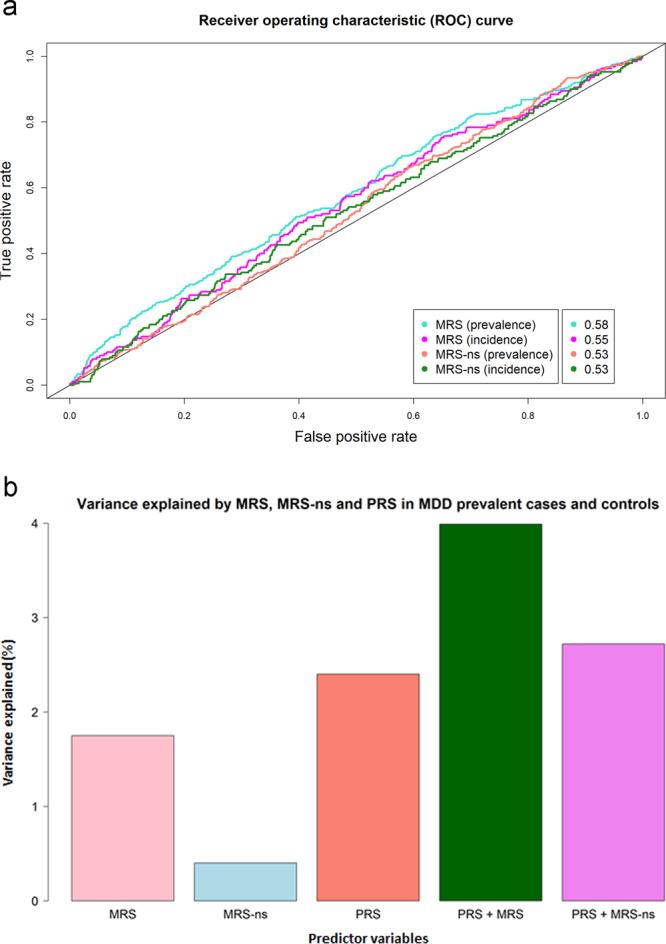
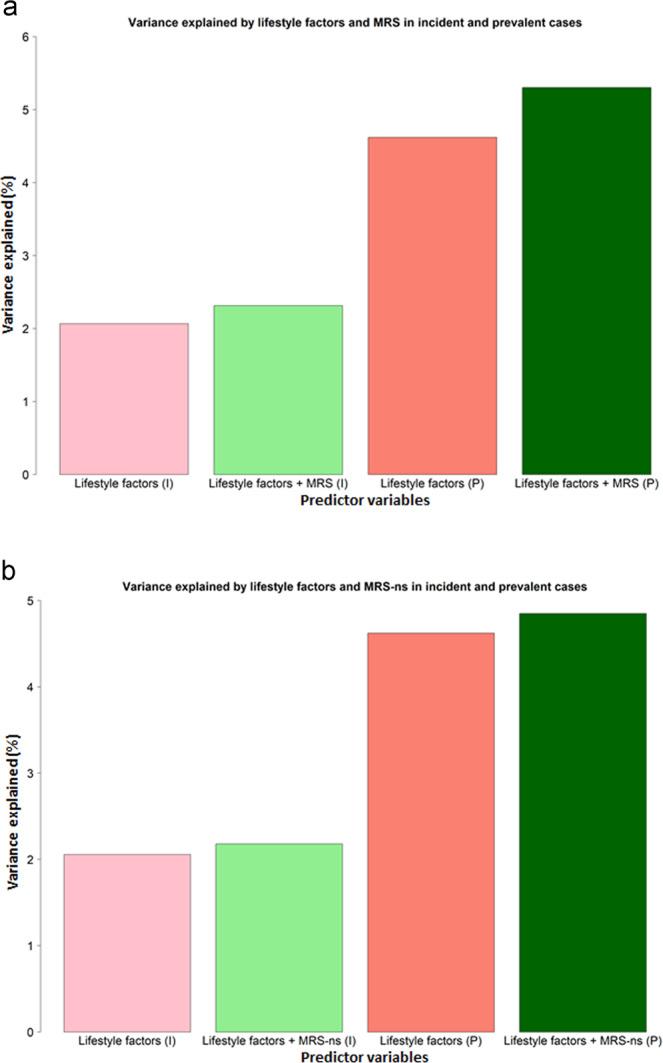
Variation in DNA methylation (DNAm) is associated with lifestyle factors such as smoking and body mass index (BMI) but there has been little research exploring its ability to identify individuals with major depressive disorder (MDD). Using penalised regression on genome-wide CpG methylation, we tested whether DNAm risk scores (MRS), trained on 1223 MDD cases and 1824 controls, could discriminate between cases (n = 363) and controls (n = 1417) in an independent sample, comparing their predictive accuracy to polygenic risk scores (PRS). The MRS explained 1.75% of the variance in MDD (β = 0.338, p = 1.17 × 10) and remained associated after adjustment for lifestyle factors (β = 0.219, p = 0.001, R = 0.68%). When modelled alongside PRS (β = 0.384, p = 4.69 × 10) the MRS remained associated with MDD (β = 0.327, p = 5.66 × 10). The MRS was also associated with incident cases of MDD who were well at recruitment but went on to develop MDD at a later assessment (β = 0.193, p = 0.016, R = 0.52%). Heritability analyses found additive genetic effects explained 22% of variance in the MRS, with a further 19% explained by pedigree-associated genetic effects and 16% by the shared couple environment. Smoking status was also strongly associated with MRS (β = 0.440, p ≤ 2 × 10). After removing smokers from the training set, the MRS strongly associated with BMI (β = 0.053, p = 0.021). We tested the association of MRS with 61 behavioural phenotypes and found that whilst PRS were associated with psychosocial and mental health phenotypes, MRS were more strongly associated with lifestyle and sociodemographic factors. DNAm-based risk scores of MDD significantly discriminated MDD cases from controls in an independent dataset and may represent an archive of exposures to lifestyle factors that are relevant to the prediction of MDD.
DNA 甲基化(DNAm)的变异与生活方式因素有关,例如吸烟和体重指数(BMI),但很少有研究探索其识别患有重度抑郁症(MDD)的个体的能力。我们使用基于全基因组 CpG 甲基化的惩罚回归,测试了 DNAm 风险评分(MRS)是否可以区分独立样本中的病例(n=363)和对照组(n=1417),并将其预测准确性与多基因风险评分(PRS)进行比较。MRS 解释了 MDD 变异的 1.75%(β=0.338,p=1.17×10),并且在调整生活方式因素后仍然存在关联(β=0.219,p=0.001,R=0.68%)。当与 PRS 一起建模时(β=0.384,p=4.69×10),MRS 与 MDD 仍然存在关联(β=0.327,p=5.66×10)。MRS 还与招募时状态良好但后来在后续评估中发展为 MDD 的 MDD 新发病例相关(β=0.193,p=0.016,R=0.52%)。遗传分析发现,加性遗传效应解释了 MRS 变异的 22%,与谱系相关遗传效应解释了 19%,与共享夫妇环境解释了 16%。吸烟状况也与 MRS 强烈相关(β=0.440,p≤2×10)。从训练集中去除吸烟者后,MRS 与 BMI 强烈相关(β=0.053,p=0.021)。我们测试了 MRS 与 61 种行为表型的关联,发现尽管 PRS 与社会心理和心理健康表型相关,但 MRS 与生活方式和社会人口因素的关联更强。基于 MDD 的 DNAm 风险评分可在独立数据集内显著区分 MDD 病例和对照组,并且可能代表与 MDD 预测相关的生活方式因素暴露的档案。
 Zotero 插件