
博赛匹韦、GC-376 和钙蛋白酶抑制剂 II、XII 通过靶向病毒主蛋白酶抑制 SARS-CoV-2 病毒复制。
Boceprevir, GC-376, and calpain inhibitors II, XII inhibit SARS-CoV-2 viral replication by targeting the viral main protease.
机构信息
Department of Pharmacology and Toxicology, College of Pharmacy, The University of Arizona, Tucson, AZ, 85721, USA.
Department of Molecular Medicine, Morsani College of Medicine, University of South Florida, Tampa, FL, 33612, USA.
出版信息
Cell Res. 2020 Aug;30(8):678-692. doi: 10.1038/s41422-020-0356-z. Epub 2020 Jun 15.
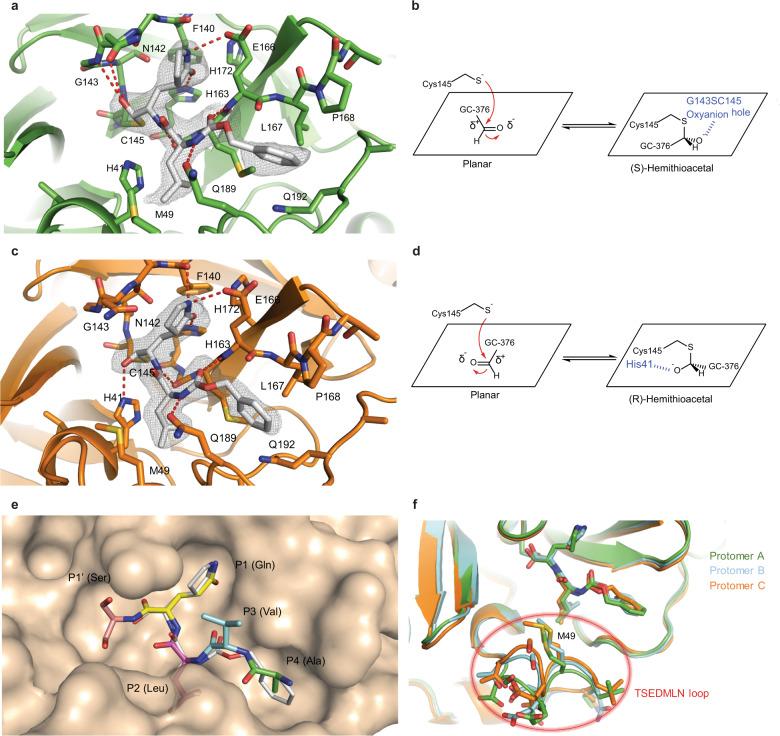
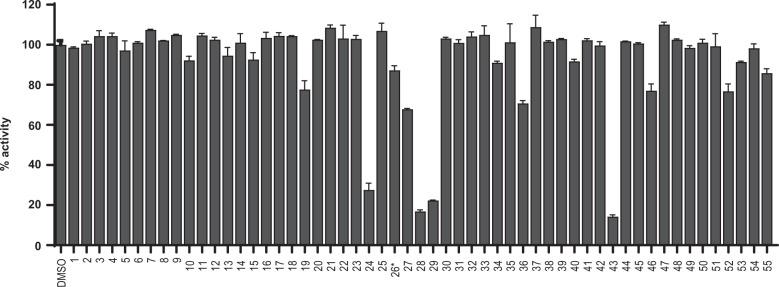
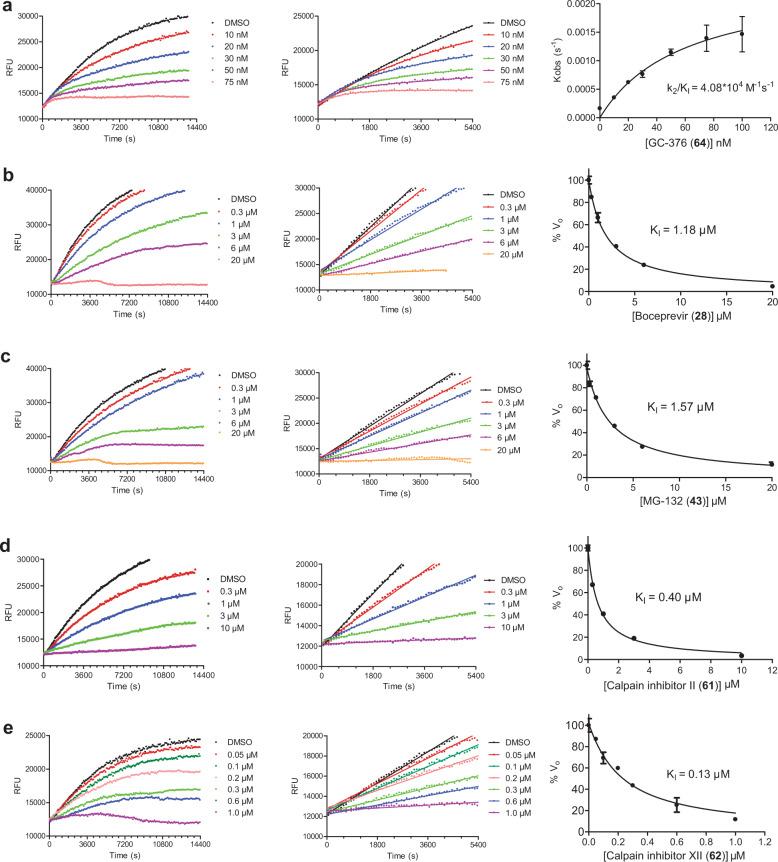
A new coronavirus SARS-CoV-2, also called novel coronavirus 2019 (2019-nCoV), started to circulate among humans around December 2019, and it is now widespread as a global pandemic. The disease caused by SARS-CoV-2 virus is called COVID-19, which is highly contagious and has an overall mortality rate of 6.35% as of May 26, 2020. There is no vaccine or antiviral available for SARS-CoV-2. In this study, we report our discovery of inhibitors targeting the SARS-CoV-2 main protease (M). Using the FRET-based enzymatic assay, several inhibitors including boceprevir, GC-376, and calpain inhibitors II, and XII were identified to have potent activity with single-digit to submicromolar IC values in the enzymatic assay. The mechanism of action of the hits was further characterized using enzyme kinetic studies, thermal shift binding assays, and native mass spectrometry. Significantly, four compounds (boceprevir, GC-376, calpain inhibitors II and XII) inhibit SARS-CoV-2 viral replication in cell culture with EC values ranging from 0.49 to 3.37 µM. Notably, boceprevir, calpain inhibitors II and XII represent novel chemotypes that are distinct from known substrate-based peptidomimetic M inhibitors. A complex crystal structure of SARS-CoV-2 M with GC-376, determined at 2.15 Å resolution with three protomers per asymmetric unit, revealed two unique binding configurations, shedding light on the molecular interactions and protein conformational flexibility underlying substrate and inhibitor binding by M. Overall, the compounds identified herein provide promising starting points for the further development of SARS-CoV-2 therapeutics.
一种新型冠状病毒 SARS-CoV-2,也称为 2019 年新型冠状病毒(2019-nCoV),于 2019 年 12 月左右开始在人群中传播,目前已广泛传播为全球大流行。由 SARS-CoV-2 病毒引起的疾病称为 COVID-19,它具有高度传染性,截至 2020 年 5 月 26 日的总体死亡率为 6.35%。目前尚无针对 SARS-CoV-2 的疫苗或抗病毒药物。在这项研究中,我们报告了我们发现针对 SARS-CoV-2 主要蛋白酶(M)的抑制剂。使用基于 FRET 的酶测定法,鉴定了几种抑制剂,包括博赛普韦、GC-376 和钙蛋白酶抑制剂 II 和 XII,它们在酶测定中具有单位数到亚微摩尔 IC 值的有效活性。使用酶动力学研究、热移位结合测定和天然质谱进一步表征了命中物的作用机制。重要的是,四种化合物(博赛普韦、GC-376、钙蛋白酶抑制剂 II 和 XII)以 EC 值在 0.49 至 3.37 μM 的范围在细胞培养中抑制 SARS-CoV-2 病毒复制。值得注意的是,博赛普韦、钙蛋白酶抑制剂 II 和 XII 代表与已知基于底物的肽模拟 M 抑制剂不同的新型化学型。与每个不对称单位中的三个三聚体一起,以 2.15 Å 的分辨率确定的 SARS-CoV-2 M 与 GC-376 的复杂晶体结构揭示了两种独特的结合构型,阐明了分子相互作用和蛋白质构象灵活性,这些构象是 M 中底物和抑制剂结合的基础。总的来说,本文鉴定的化合物为进一步开发 SARS-CoV-2 治疗药物提供了有希望的起点。



 Zotero 插件