
髓过氧化物酶衍生氧化剂次碘酸(HOSCN)在诱导巨噬细胞线粒体功能障碍中的作用。
The role of the myeloperoxidase-derived oxidant hypothiocyanous acid (HOSCN) in the induction of mitochondrial dysfunction in macrophages.
机构信息
The Heart Research Institute, 7 Eliza Street, Newtown, NSW, 2042, Australia; Sydney Medical School, University of Sydney, NSW, 2006, Australia.
Department of Biomedical Sciences, University of Copenhagen, Panum, Blegdamsvej 3B, Copenhagen N, DK-2200, Denmark.
出版信息
Redox Biol. 2020 Sep;36:101602. doi: 10.1016/j.redox.2020.101602. Epub 2020 Jun 10.
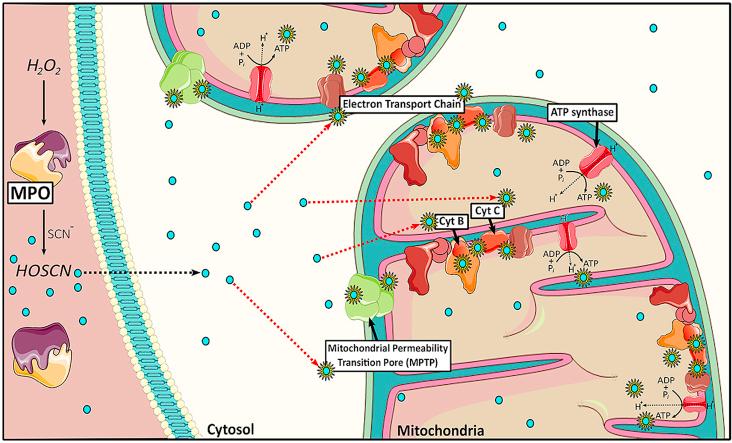
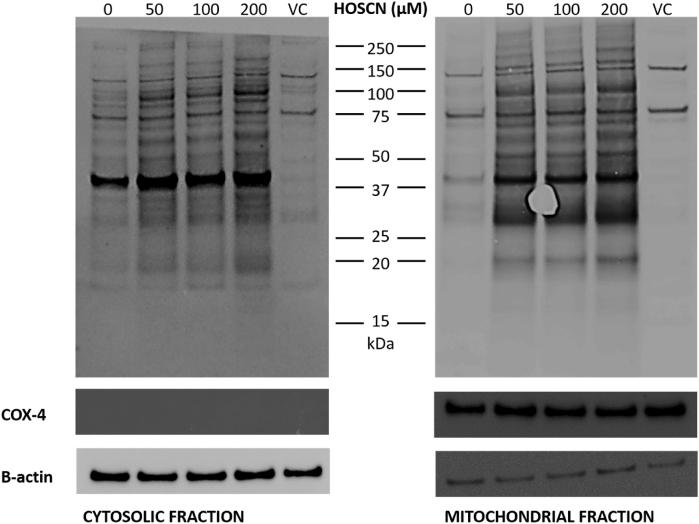
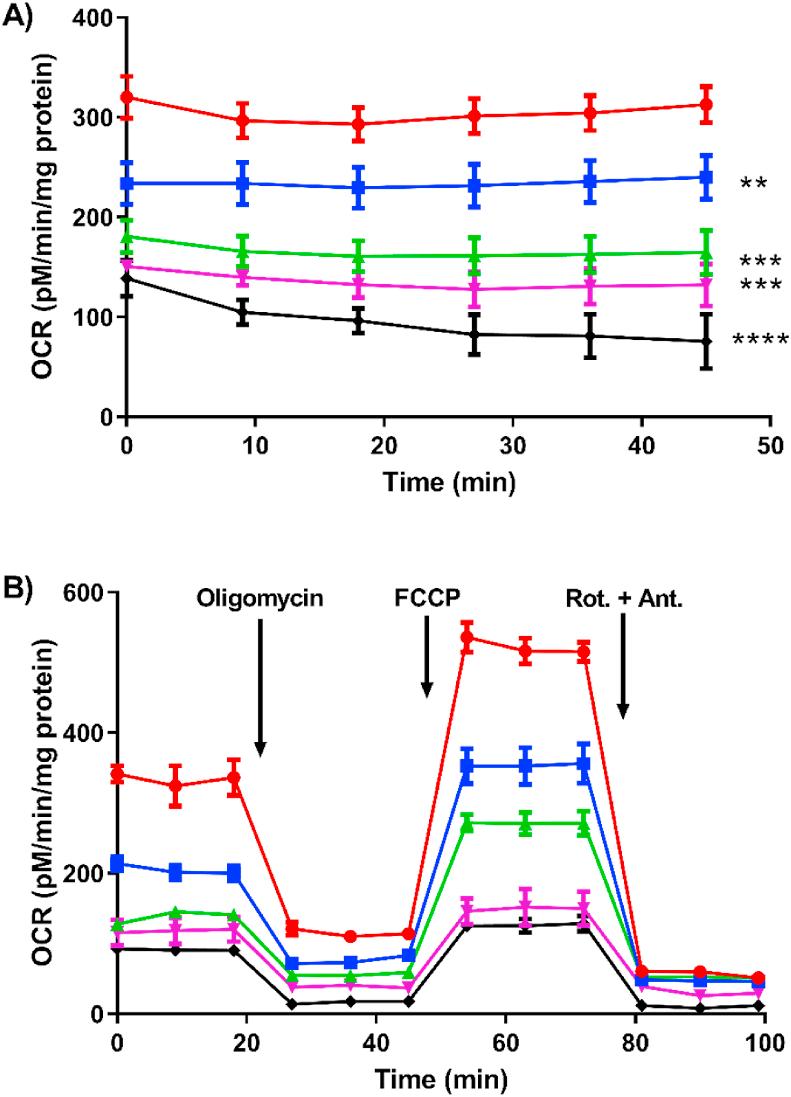
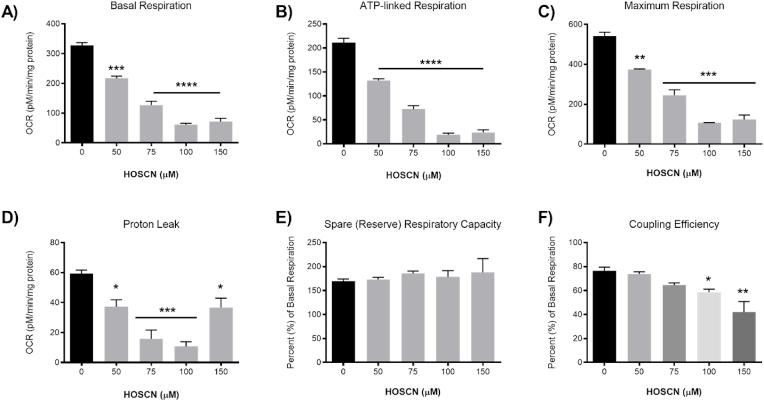
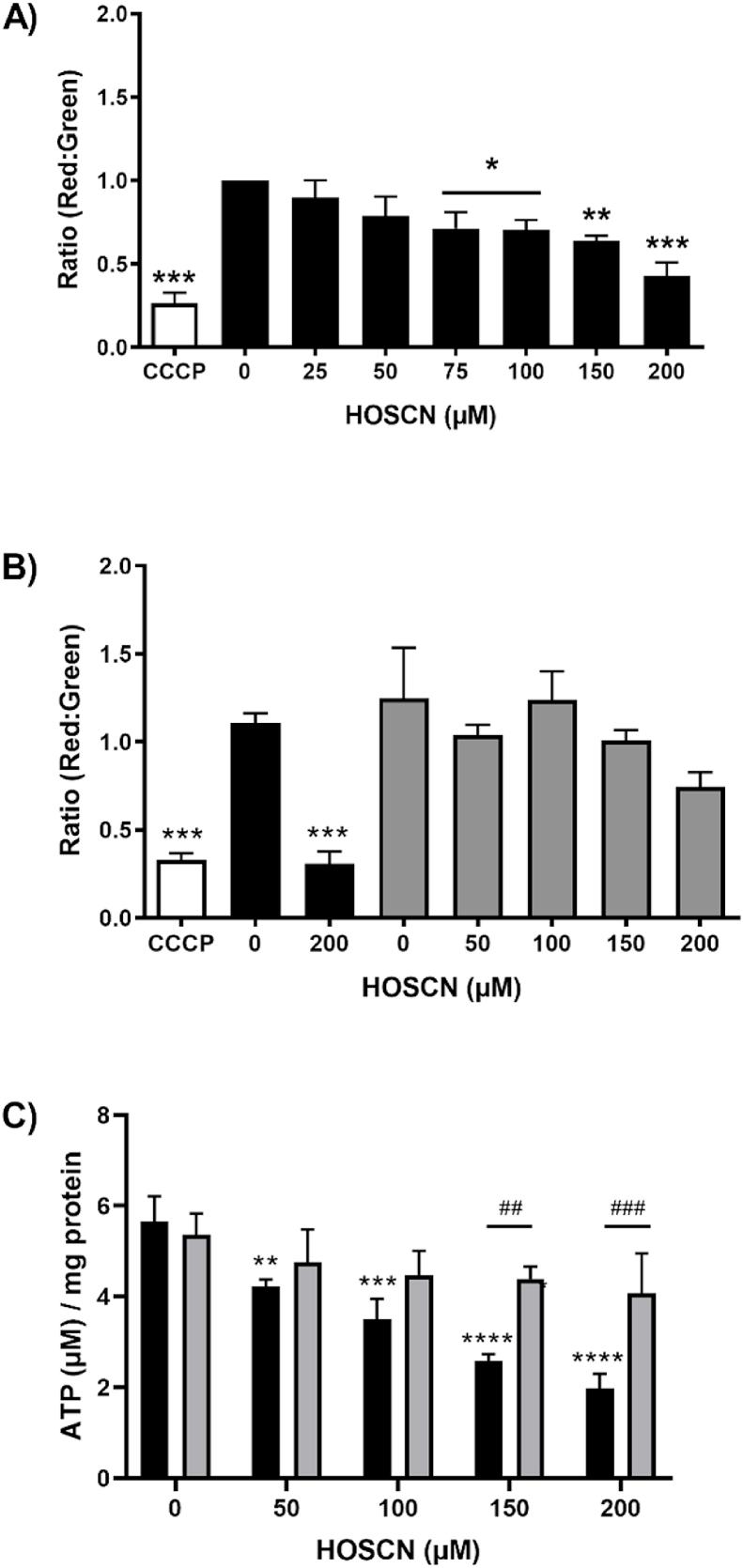
A host of chronic inflammatory diseases are accelerated by the formation of the powerful oxidant hypochlorous acid (HOCl) by myeloperoxidase (MPO). In the presence of thiocyanate (SCN), the production of HOCl by MPO is decreased in favour of the formation of a milder oxidant, hypothiocyanous acid (HOSCN). The role of HOSCN in disease has not been fully elucidated, though there is increasing interest in using SCN therapeutically in different disease settings. Unlike HOCl, HOSCN can be detoxified by thioredoxin reductase, and reacts selectively with thiols to result in reversible modifications, which could potentially reduce the extent of MPO-induced damage during chronic inflammation. In this study, we show that exposure of macrophages, a key inflammatory cell type, to HOSCN results in the reversible modification of multiple mitochondrial proteins, leading to increased mitochondrial membrane permeability, decreased oxidative phosphorylation and reduced formation of ATP. The increased permeability and reduction in ATP could be reversed by pre-treatment of the macrophages with cyclosporine A, implicating a role for the mitochondrial permeability transition pore. HOSCN also drives cells to utilise fatty acids as an energetic substrate after the inhibition of oxidative phosphorylation. Raman imaging studies highlighted the ability of HOSCN to perturb the electron transport chain of mitochondria and redistribute these organelles within the cell. Taken together, these data provide new insight into the pathways by which HOSCN can induce cytotoxicity and cellular damage, which may have relevance for the development of inflammatory disease, and therapeutic strategies to reduce HOCl-induced damage by supplementation with SCN.
许多慢性炎症性疾病的发生是由于髓过氧化物酶(MPO)形成强氧化剂次氯酸(HOCl)所致。在硫氰酸盐(SCN)存在的情况下,MPO 生成 HOCl 的过程会受到抑制,转而形成一种较温和的氧化剂,次碘酸(HOSCN)。虽然人们越来越有兴趣在不同的疾病环境中使用 SCN 进行治疗,但 HOSCN 在疾病中的作用尚未完全阐明。与 HOCl 不同,HOSCN 可以被硫氧还蛋白还原酶解毒,并且选择性地与硫醇反应,导致可逆修饰,这可能在慢性炎症期间减少 MPO 诱导的损伤程度。在这项研究中,我们表明,巨噬细胞(一种关键的炎症细胞类型)暴露于 HOSCN 会导致多种线粒体蛋白发生可逆修饰,从而导致线粒体膜通透性增加、氧化磷酸化减少和 ATP 形成减少。用环孢菌素 A 预处理巨噬细胞可以逆转增加的通透性和减少的 ATP 形成,这表明线粒体通透性转换孔起作用。HOSCN 还可以在氧化磷酸化受到抑制后促使细胞利用脂肪酸作为能量底物。拉曼成像研究强调了 HOSCN 扰乱线粒体电子传递链并在细胞内重新分布这些细胞器的能力。总之,这些数据提供了关于 HOSCN 如何诱导细胞毒性和细胞损伤的新途径的见解,这可能与炎症性疾病的发展以及通过补充 SCN 减少 HOCl 诱导的损伤的治疗策略有关。



 Zotero 插件