
社会经济差异对分布成本效益分析的影响。
Impact of Socioeconomic Differences on Distributional Cost-effectiveness Analysis.
机构信息
Centre for Health Economics, University of York, UK.
Sheffield Alcohol Research Group, Health Economics and Decision Science, ScHARR, University of Sheffield, UK.
出版信息
Med Decis Making. 2020 Jul;40(5):606-618. doi: 10.1177/0272989X20935883. Epub 2020 Jul 1.
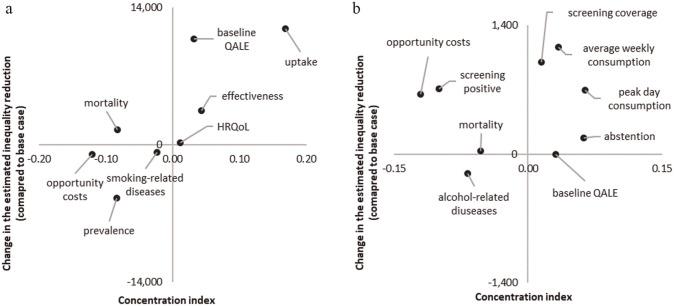
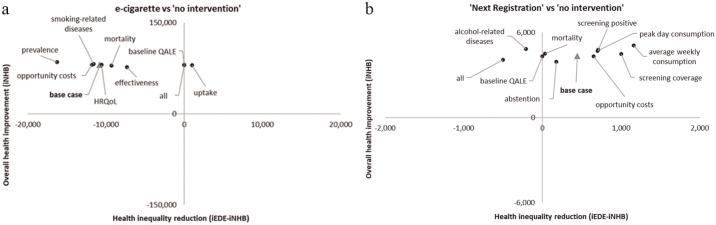
Public health decision makers value interventions for their effects on overall health and health inequality. Distributional cost-effectiveness analysis (DCEA) incorporates health inequality concerns into economic evaluation by accounting for how parameters, such as effectiveness, differ across population groups. A good understanding of how and when accounting for socioeconomic differences between groups affects the assessment of intervention impacts on overall health and health inequality could inform decision makers where DCEA would add most value. We interrogated 2 DCEA models of smoking and alcohol policies using first national level and then local authority level information on various socioeconomic differences in health and intervention use. Through a series of scenario analyses, we explored the impact of altering these differences on the DCEA results. When all available evidence on socioeconomic differences was incorporated, provision of a smoking cessation service was estimated to increase overall health and increase health inequality, while the screening and brief intervention for alcohol misuse was estimated to increase overall health and reduce inequality. Ignoring all or some socioeconomic differences resulted in minimal change to the estimated impact on overall health in both models; however, there were larger effects on the estimated impact on health inequality. Across the models, there were no clear patterns in how the extent and direction of socioeconomic differences in the inputs translated into the estimated impact on health inequality. Modifying use or coverage of either intervention so that each population group matched the highest level improved the impacts to a greater degree than modifying intervention effectiveness. When local level socioeconomic differences were considered, the magnitude of the impacts was altered; in some cases, the direction of impact on inequality was also altered.
公共卫生决策者重视干预措施对整体健康和健康不平等的影响。分配成本效益分析(DCEA)通过考虑参数(如效果)在人群组之间的差异,将健康不平等问题纳入经济评估中。深入了解如何以及何时考虑群体之间的社会经济差异如何影响对干预措施对整体健康和健康不平等影响的评估,可以为决策者提供在何处最需要 DCEA 的信息。我们使用全国一级和地方当局一级的关于健康和干预措施使用方面各种社会经济差异的信息,对 2 个吸烟和酒精政策的 DCEA 模型进行了检验。通过一系列情景分析,我们探讨了改变这些差异对 DCEA 结果的影响。当纳入所有关于社会经济差异的可用证据时,提供戒烟服务被估计会增加整体健康并增加健康不平等,而对酒精使用障碍进行筛查和简短干预被估计会增加整体健康并减少不平等。忽略所有或部分社会经济差异对两个模型中对整体健康的估计影响几乎没有变化;但是,对健康不平等的估计影响有更大的影响。在两个模型中,社会经济差异在投入中的程度和方向如何转化为对健康不平等的估计影响,没有明显的模式。修改两种干预措施的使用或覆盖范围,以使每个人群组与最高水平相匹配,可以在更大程度上改善影响;而修改干预效果的影响则较小。当考虑地方一级的社会经济差异时,影响的幅度发生了变化;在某些情况下,不平等的影响方向也发生了变化。


 Zotero 插件