
赖氨酸特异性去甲基酶 1(LSD1)的药理学抑制诱导了全局转录失调和超微结构改变,从而损害曼氏血吸虫的活力。
Pharmacological inhibition of lysine-specific demethylase 1 (LSD1) induces global transcriptional deregulation and ultrastructural alterations that impair viability in Schistosoma mansoni.
机构信息
Instituto de Bioquímica Médica Leopoldo de Meis, Programa de Biologia Molecular e Biotecnologia, Centro de Ciências da Saúde, Universidade Federal do Rio de Janeiro, Rio de Janeiro, Brazil.
Laboratório de Parasitologia, Instituto Butantan, São Paulo, Brazil.
出版信息
PLoS Negl Trop Dis. 2020 Jul 1;14(7):e0008332. doi: 10.1371/journal.pntd.0008332. eCollection 2020 Jul.
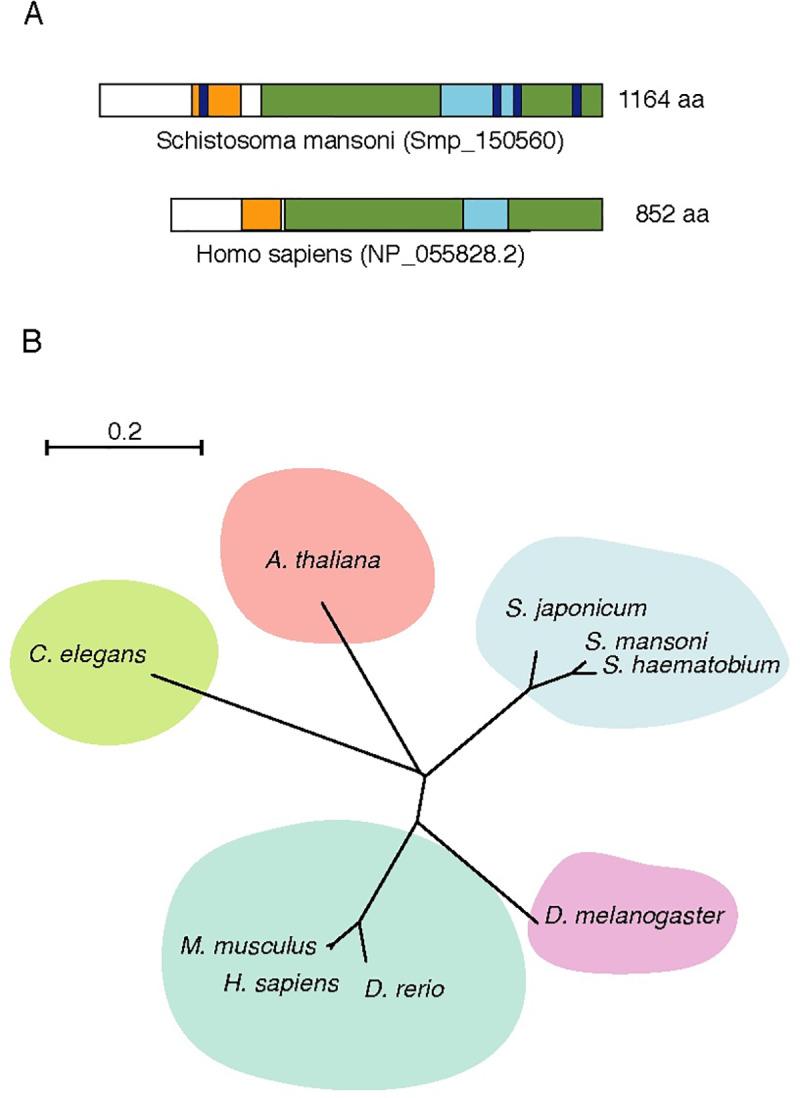
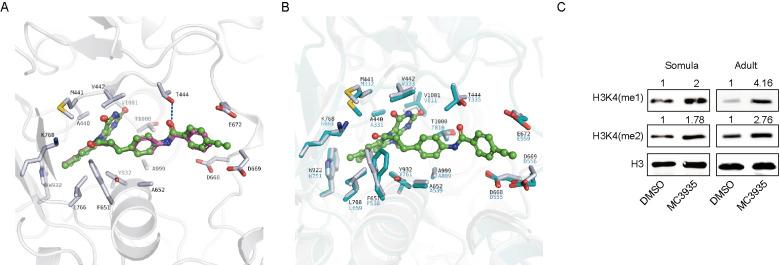
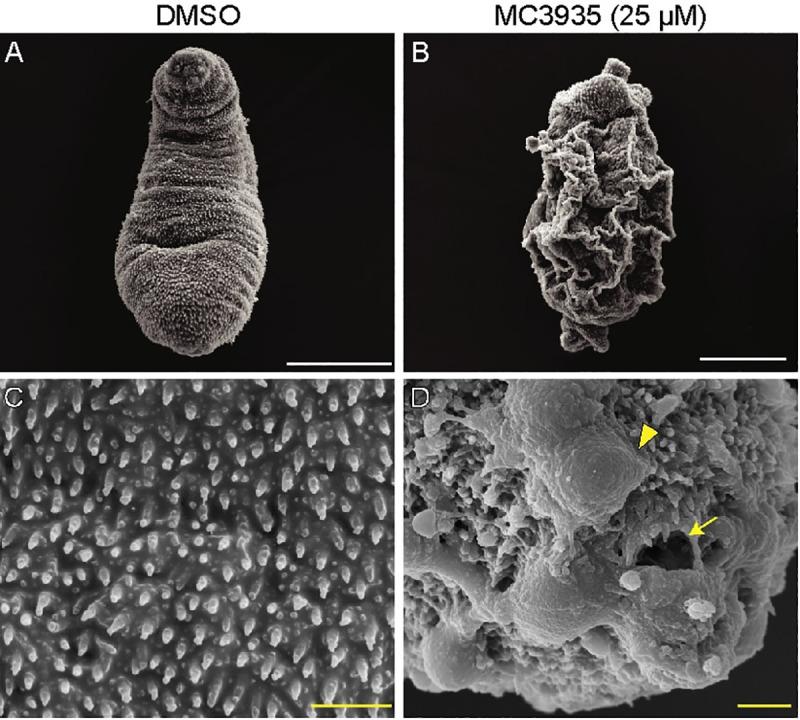
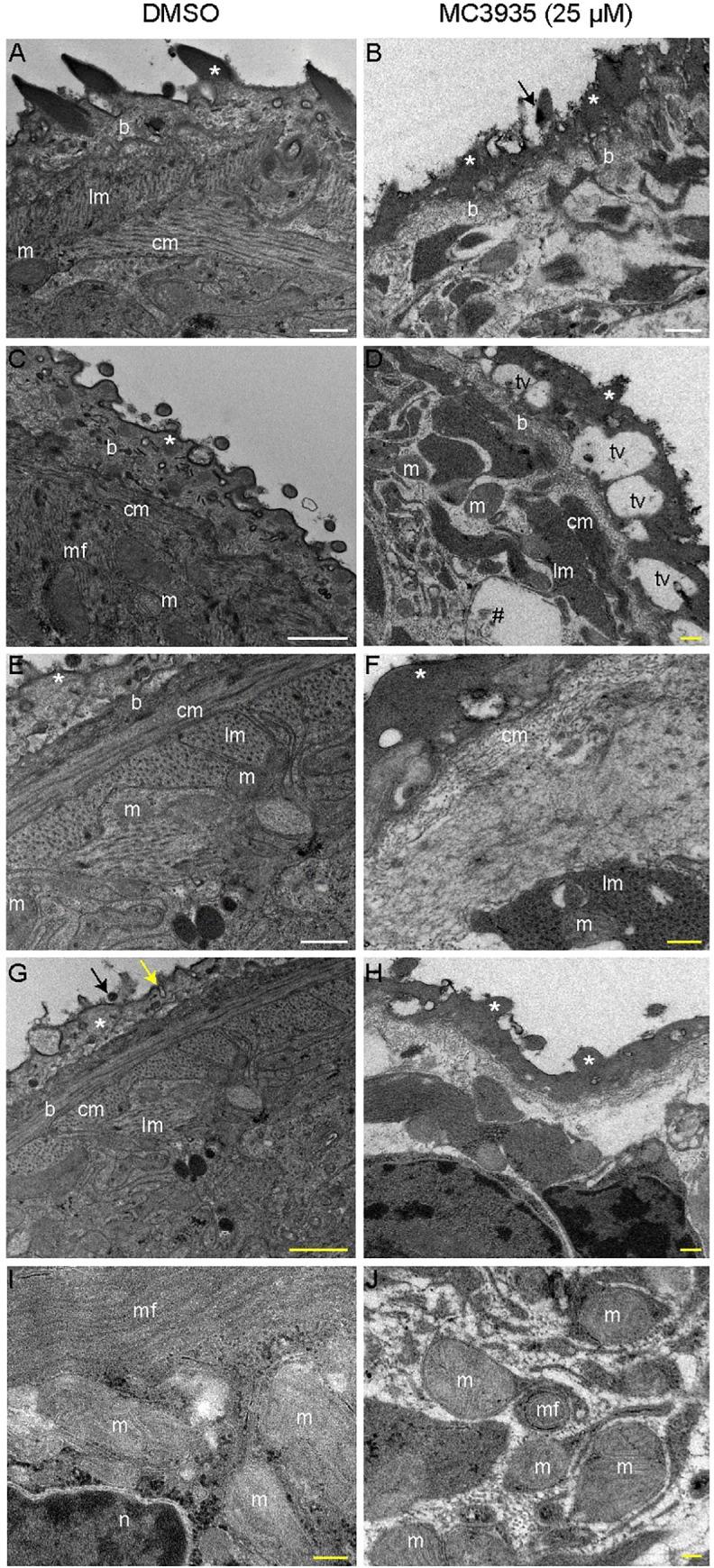
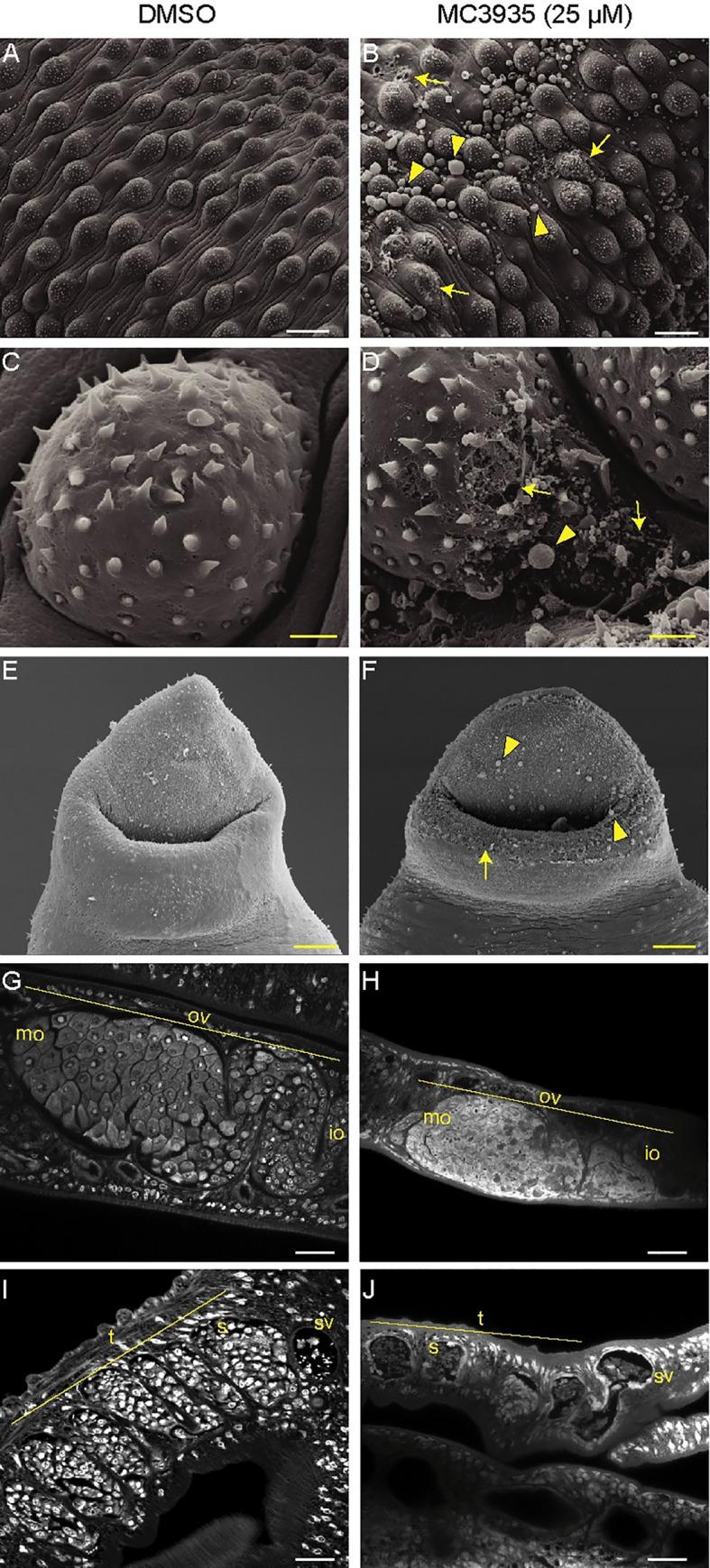
Treatment and control of schistosomiasis still rely on only one effective drug, praziquantel (PZQ) and, due to mass treatment, the increasing risk of selecting for schistosome strains that are resistant to PZQ has alerted investigators to the urgent need to develop novel therapeutic strategies. The histone-modifying enzymes (HMEs) represent promising targets for the development of epigenetic drugs against Schistosoma mansoni. In the present study, we targeted the S. mansoni lysine-specific demethylase 1 (SmLSD1), a transcriptional corepressor, using a novel and selective synthetic inhibitor, MC3935, which was used to treat schistosomula and adult worms in vitro. By using cell viability assays and optical and electron microscopy, we showed that treatment with MC3935 affected parasite motility, egg-laying, tegument, and cellular organelle structures, culminating in the death of schistosomula and adult worms. In silico molecular modeling and docking analysis suggested that MC3935 binds to the catalytic pocket of SmLSD1. Western blot analysis revealed that MC3935 inhibited SmLSD1 demethylation activity of H3K4me1/2. Knockdown of SmLSD1 by RNAi recapitulated MC3935 phenotypes in adult worms. RNA-Seq analysis of MC3935-treated parasites revealed significant differences in gene expression related to critical biological processes. Collectively, our findings show that SmLSD1 is a promising drug target for the treatment of schistosomiasis and strongly support the further development and in vivo testing of selective schistosome LSD1 inhibitors.
血吸虫病的治疗和控制仍然依赖于唯一有效的药物吡喹酮(PZQ),并且由于大规模治疗,选择对 PZQ 具有抗性的血吸虫株的风险不断增加,这促使研究人员迫切需要开发新的治疗策略。组蛋白修饰酶(HMEs)是开发针对曼氏血吸虫的表观遗传药物的有前途的靶标。在本研究中,我们针对曼氏血吸虫赖氨酸特异性去甲基酶 1(SmLSD1),一种转录核心抑制剂,使用了一种新型和选择性的合成抑制剂 MC3935,该抑制剂用于体外治疗尾蚴和成虫。通过使用细胞活力测定、光学和电子显微镜,我们表明 MC3935 处理会影响寄生虫的运动性、产卵、表皮和细胞细胞器结构,最终导致尾蚴和成虫死亡。计算机分子建模和对接分析表明,MC3935 结合到 SmLSD1 的催化口袋中。Western blot 分析显示 MC3935 抑制了 SmLSD1 对 H3K4me1/2 的去甲基化活性。SmLSD1 的 RNAi 敲低再现了 MC3935 在成虫中的表型。MC3935 处理寄生虫的 RNA-Seq 分析显示与关键生物学过程相关的基因表达存在显著差异。总之,我们的研究结果表明 SmLSD1 是治疗血吸虫病的有前途的药物靶标,并强烈支持进一步开发和体内测试选择性血吸虫 LSD1 抑制剂。



 Zotero 插件