
植物主导的低蛋白饮食用于慢性肾脏病的保守治疗。
Plant-Dominant Low-Protein Diet for Conservative Management of Chronic Kidney Disease.
机构信息
Department of Medicine, Division of Nephrology Hypertension and Kidney Transplantation, University of California Irvine (UCI), Orange, CA 90286, USA.
Tibor Rubin VA Long Beach Healthcare System, Long Beach, CA 90822, USA.
出版信息
Nutrients. 2020 Jun 29;12(7):1931. doi: 10.3390/nu12071931.
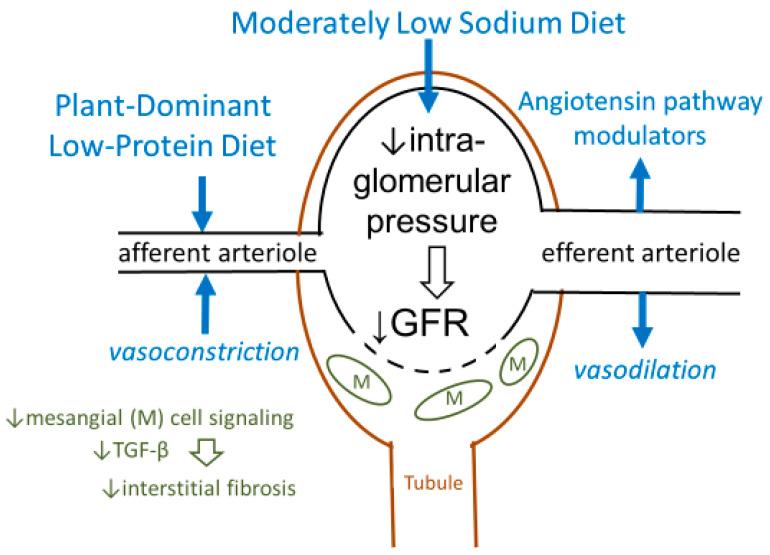
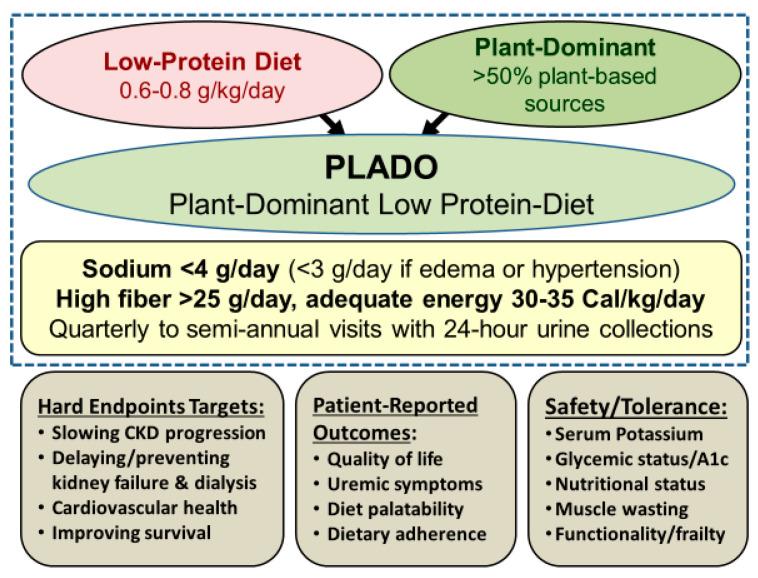
Chronic kidney disease (CKD) affects >10% of the adult population. Each year, approximately 120,000 Americans develop end-stage kidney disease and initiate dialysis, which is costly and associated with functional impairments, worse health-related quality of life, and high early-mortality rates, exceeding 20% in the first year. Recent declarations by the World Kidney Day and the U.S. Government Executive Order seek to implement strategies that reduce the burden of kidney failure by slowing CKD progression and controlling uremia without dialysis. Pragmatic dietary interventions may have a role in improving CKD outcomes and preventing or delaying dialysis initiation. Evidence suggests that a patient-centered plant-dominant low-protein diet (PLADO) of 0.6–0.8 g/kg/day composed of >50% plant-based sources, administered by dietitians trained in non-dialysis CKD care, is promising and consistent with the precision nutrition. The scientific premise of the PLADO stems from the observations that high protein diets with high meat intake not only result in higher cardiovascular disease risk but also higher CKD incidence and faster CKD progression due to increased intraglomerular pressure and glomerular hyperfiltration. Meat intake increases production of nitrogenous end-products, worsens uremia, and may increase the risk of constipation with resulting hyperkalemia from the typical low fiber intake. A plant-dominant, fiber-rich, low-protein diet may lead to favorable alterations in the gut microbiome, which can modulate uremic toxin generation and slow CKD progression, along with reducing cardiovascular risk. PLADO is a heart-healthy, safe, flexible, and feasible diet that could be the centerpiece of a conservative and preservative CKD-management strategy that challenges the prevailing dialysis-centered paradigm.
慢性肾脏病(CKD)影响超过 10%的成年人口。每年,约有 12 万名美国人发展为终末期肾病并开始透析,这既昂贵又与功能障碍、更差的健康相关生活质量和高早期死亡率相关,在第一年超过 20%。最近的世界肾脏日宣言和美国政府行政命令旨在实施策略,通过减缓 CKD 进展和控制尿毒症而无需透析来减轻肾衰竭负担。实用的饮食干预可能在改善 CKD 结局和预防或延迟透析开始方面发挥作用。有证据表明,以患者为中心的植物为主的低蛋白饮食(PLADO),蛋白质摄入量为 0.6-0.8g/kg/天,植物性来源占比>50%,由接受过非透析 CKD 护理培训的营养师提供,是有前途的,并且与精准营养一致。PLADO 的科学前提源于以下观察结果:高蛋白饮食和高肉类摄入不仅会导致更高的心血管疾病风险,而且由于肾小球内压和肾小球高滤过增加,还会导致更高的 CKD 发病率和更快的 CKD 进展。肉类摄入会增加含氮终产物的产生,使尿毒症恶化,并且由于典型的低纤维摄入,可能会增加便秘和高钾血症的风险。以植物为主、富含纤维、低蛋白的饮食可能会导致肠道微生物组发生有利的变化,从而调节尿毒症毒素的产生并减缓 CKD 的进展,同时降低心血管风险。PLADO 是一种心脏健康、安全、灵活且可行的饮食,可以成为保守和保存性 CKD 管理策略的核心,挑战当前以透析为中心的模式。


 Zotero 插件