
全球、区域和国家层面气管、支气管和肺癌的流行病学趋势:一项基于人群的研究。
Epidemiological trends of tracheal, bronchus, and lung cancer at the global, regional, and national levels: a population-based study.
机构信息
Department of Breast Surgery, The First Affiliated Hospital, College of Medicine, Zhejiang University, Hangzhou, China.
Department of Oncology, The Second Affiliated Hospital of Xi'an Jiaotong University, Xi'an, China.
出版信息
J Hematol Oncol. 2020 Jul 20;13(1):98. doi: 10.1186/s13045-020-00915-0.
BACKGROUND
Investigations of disease incidence, mortality, and disability-adjusted life years (DALYs) are valuable for facilitating preventive measures and health resource planning. We examined the tracheal, bronchus, and lung (TBL) cancer burdens worldwide according to sex, age, and social development index (SDI) at the global, regional, and national levels.
METHODS
We assessed the TBL cancer burden using data from the Global Burden of Disease (GBD) database, including 21 regions, 195 countries, and territories in the diagnostic period 1990-2017. The data of TBL cancer-related mortality and DALYs attributable to all known risk factors were also analyzed. Age-standardized rates (ASRs) and their estimated annual percentage changes (EAPCs) were calculated.
RESULTS
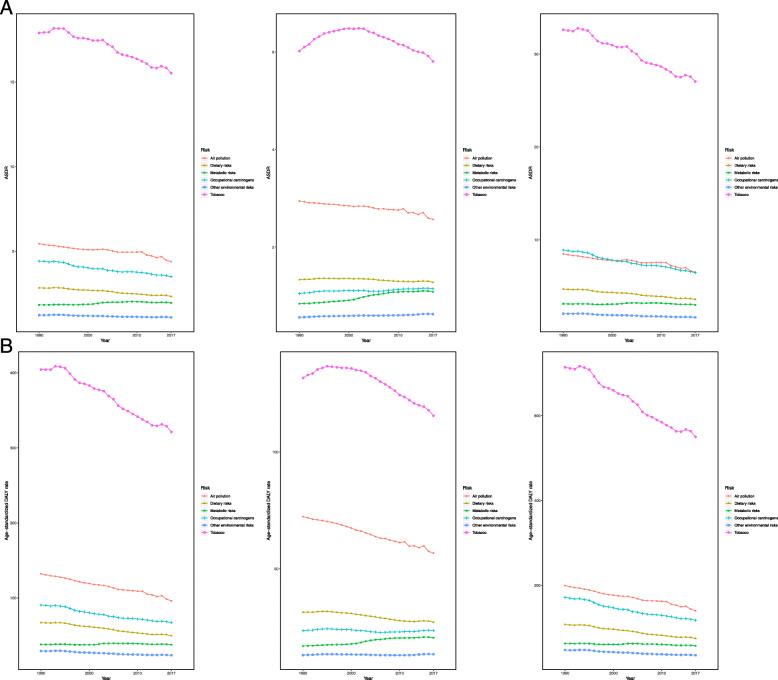
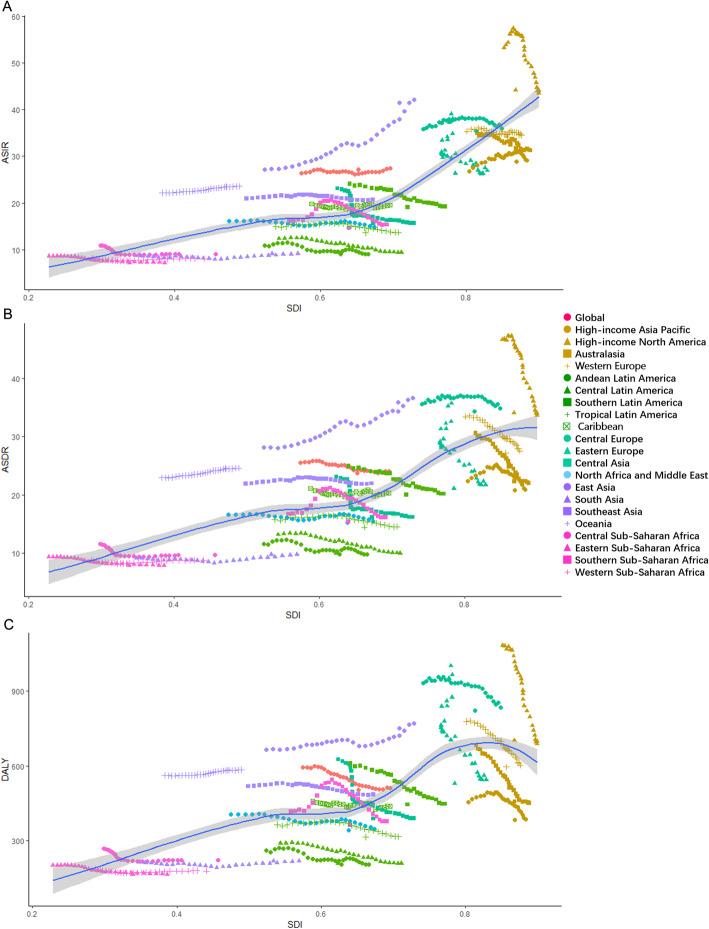
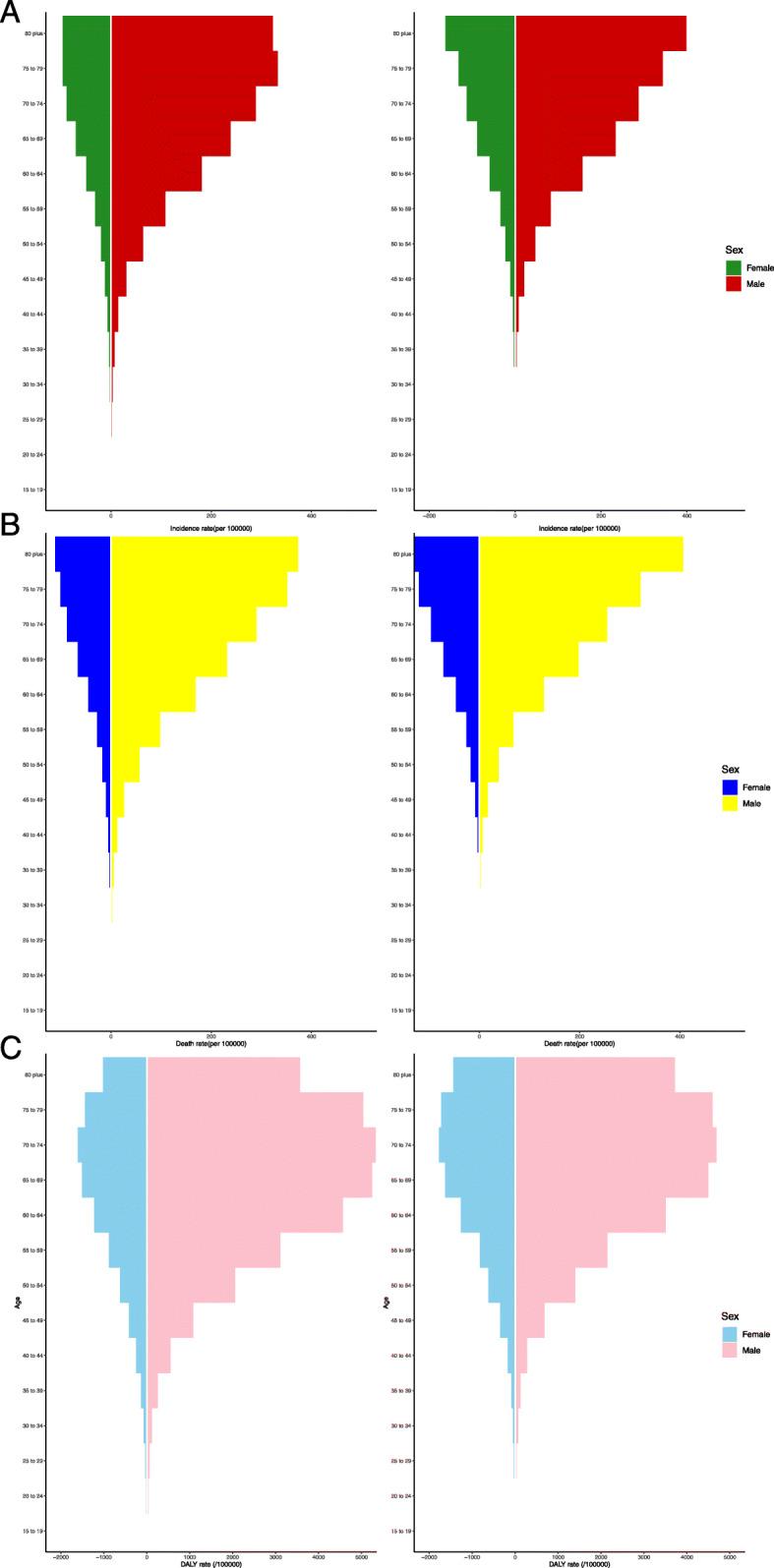
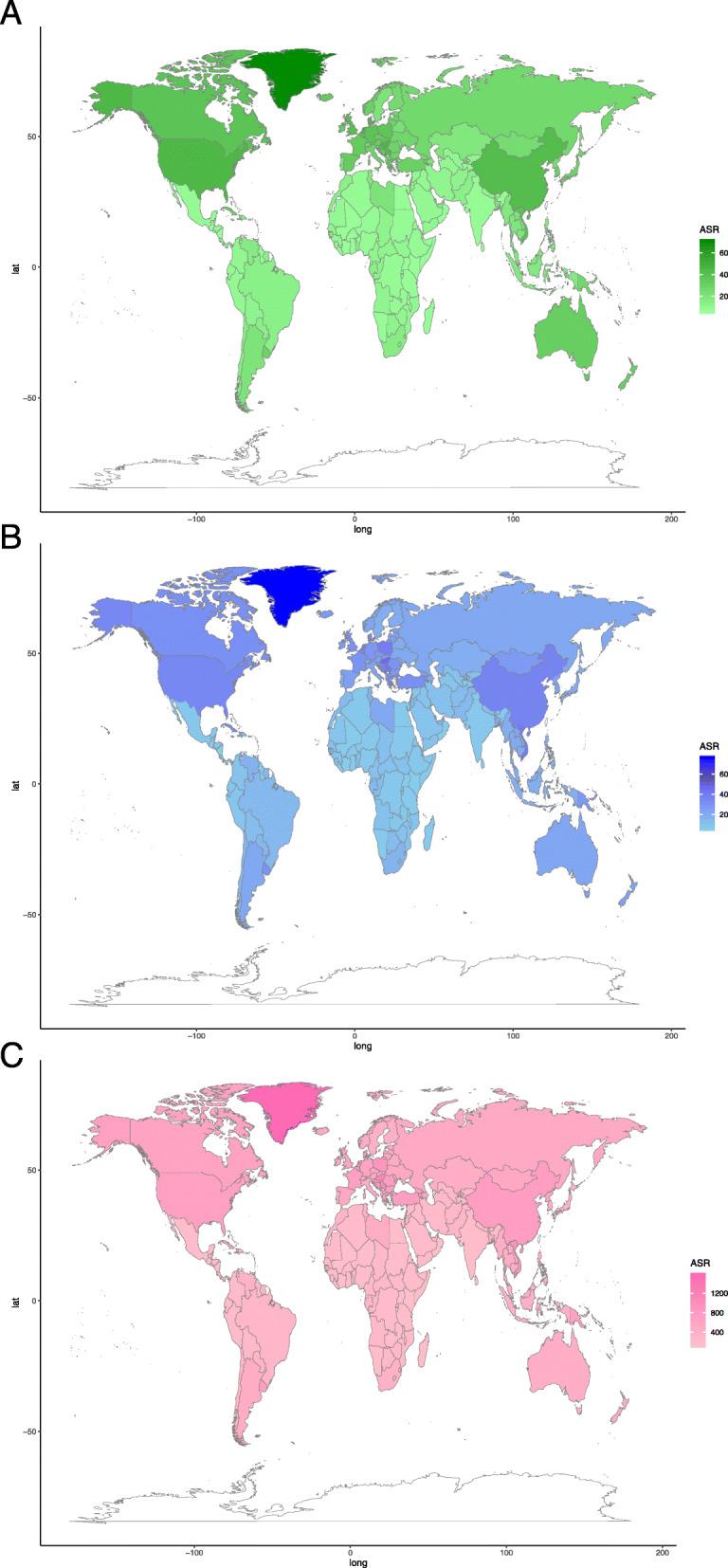
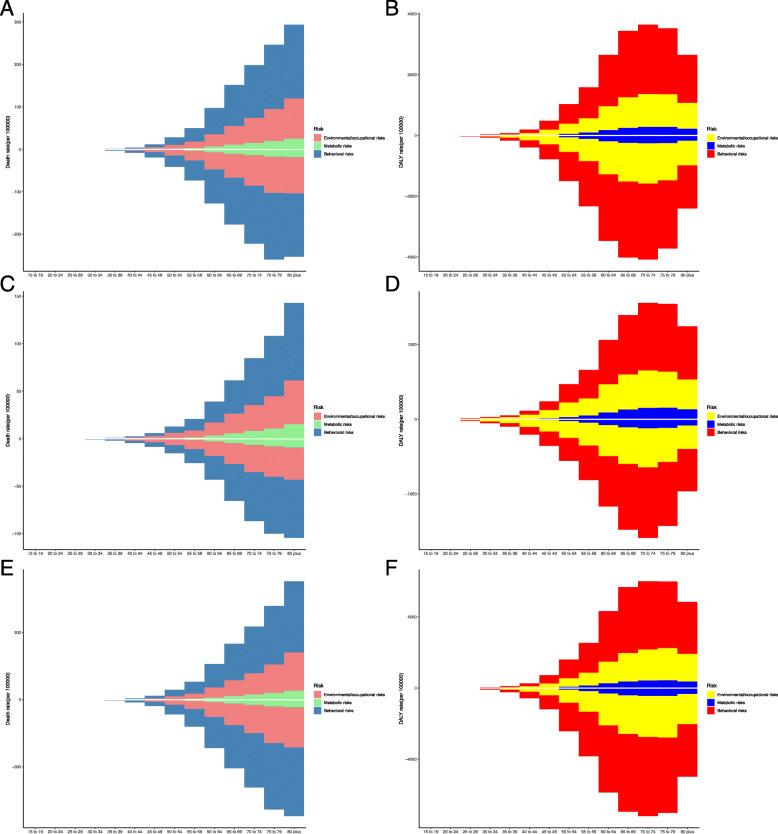
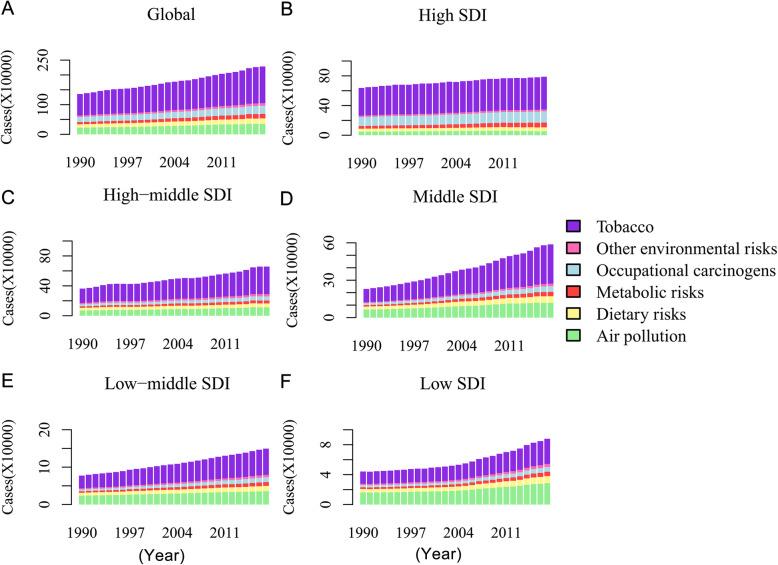
Incident cases, deaths, and DALYs of TBL cancer increased worldwide (100.44%, 82.30%, and 61.27%, respectively). The age-standardized incidence rate (ASIR) was stable (EAPC = 0.02, 95% confidence interval [CI] - 0.03 to 0.08), but the age-standardized death (EAPC = - 0.34, 95%CI - 0.38 to - 0.3) and DALY rate decreased generally (EAPC = - 0.74, 95%CI - 0.8 to - 0.68). However, the change trend of ASIR and ASDR among sexes was on the contrary. China and the USA always had the highest incidence, mortality, and DALYs of TBL cancer. Significant positive correlations between ASRs and SDI were observed, especially among females. High (36.86%), high-middle (28.78%), and middle SDI quintiles (24.91%) carried the majority burden of TBL cancer. Tobacco remained the top cause of TBL cancer death and DALYs, followed by air pollution, the leading cause in the low-middle and low-SDI quintiles. Metabolic risk-related TBL cancer mortality and DALYs among females increased but was stable among males. The main ages of TBL cancer onset and death were > 50 years, and the DALYs concentrated in 50 - 69 years.
CONCLUSIONS
To significantly reduce the growing burden of TBL cancer, treatment resources need to be skewed according to factors such as risks and geography, especially for high-risk groups and high-burden areas. Asia had the greatest TBL cancer burden, followed by high-income North America. Tobacco remains the leading cause of death and DALYs, followed by air pollution. Effective prevention measures against tobacco and air pollution should be strengthened.
背景
调查疾病发病率、死亡率和伤残调整生命年(DALY)对于促进预防措施和卫生资源规划非常有价值。我们在全球、区域和国家层面上,根据性别、年龄和社会发展指数(SDI)调查了全球范围内气管、支气管和肺癌(TBL)的负担。
方法
我们使用全球疾病负担(GBD)数据库中的数据评估了 TBL 癌症负担,包括 195 个国家和地区的 21 个区域。还分析了归因于所有已知危险因素的 TBL 癌症相关死亡和 DALY 的数据。计算了年龄标准化率(ASR)及其估计的年百分比变化(EAPC)。
结果
全球范围内 TBL 癌症的发病例数、死亡例数和 DALY 均有所增加(分别为 100.44%、82.30%和 61.27%)。年龄标准化发病率(ASIR)保持稳定(EAPC=0.02,95%置信区间[CI] - 0.03 至 0.08),但年龄标准化死亡率(EAPC=-0.34,95%CI - 0.38 至 - 0.3)和 DALY 率普遍下降(EAPC=-0.74,95%CI - 0.8 至 - 0.68)。然而,男女之间 ASIR 和 ASDR 的变化趋势相反。中国和美国始终是 TBL 癌症发病率、死亡率和 DALY 最高的国家。在所有性别中,ASR 与 SDI 之间存在显著的正相关关系,尤其是在女性中。高(36.86%)、高-中(28.78%)和中-高 SDI 五分位数(24.91%)承担了 TBL 癌症的大部分负担。烟草仍然是 TBL 癌症死亡和 DALY 的首要原因,其次是空气污染,这是低-中-低 SDI 五分位数的主要原因。女性的代谢风险相关 TBL 癌症死亡率和 DALY 有所增加,但男性则保持稳定。TBL 癌症发病和死亡的主要年龄大于 50 岁,DALY 集中在 50-69 岁。
结论
为了显著降低 TBL 癌症不断增长的负担,需要根据风险和地理位置等因素调整治疗资源,特别是针对高危人群和高负担地区。亚洲的 TBL 癌症负担最大,其次是高收入的北美。烟草仍然是死亡和 DALY 的主要原因,其次是空气污染。应加强针对烟草和空气污染的有效预防措施。
 Zotero 插件