
限时喂养可改善 cafeteria 饮食喂养大鼠的体重增加、血脂谱和动脉粥样硬化指数:腹股沟白色脂肪组织褐变的作用。
Time-Restricted Feeding Improves Body Weight Gain, Lipid Profiles, and Atherogenic Indices in Cafeteria-Diet-Fed Rats: Role of Browning of Inguinal White Adipose Tissue.
机构信息
Department of Pharmacology, Biohealth Institute and Neuroscience Institute, School of Medicine, University of Granada, 18016 Granada, Spain.
Team of Cellular and Molecular Physiopathology, Faculty of Biological Sciences, University of Sciences and Technology Houari Boumediene, El Alia, 16011 Algiers, Algeria.
出版信息
Nutrients. 2020 Jul 23;12(8):2185. doi: 10.3390/nu12082185.
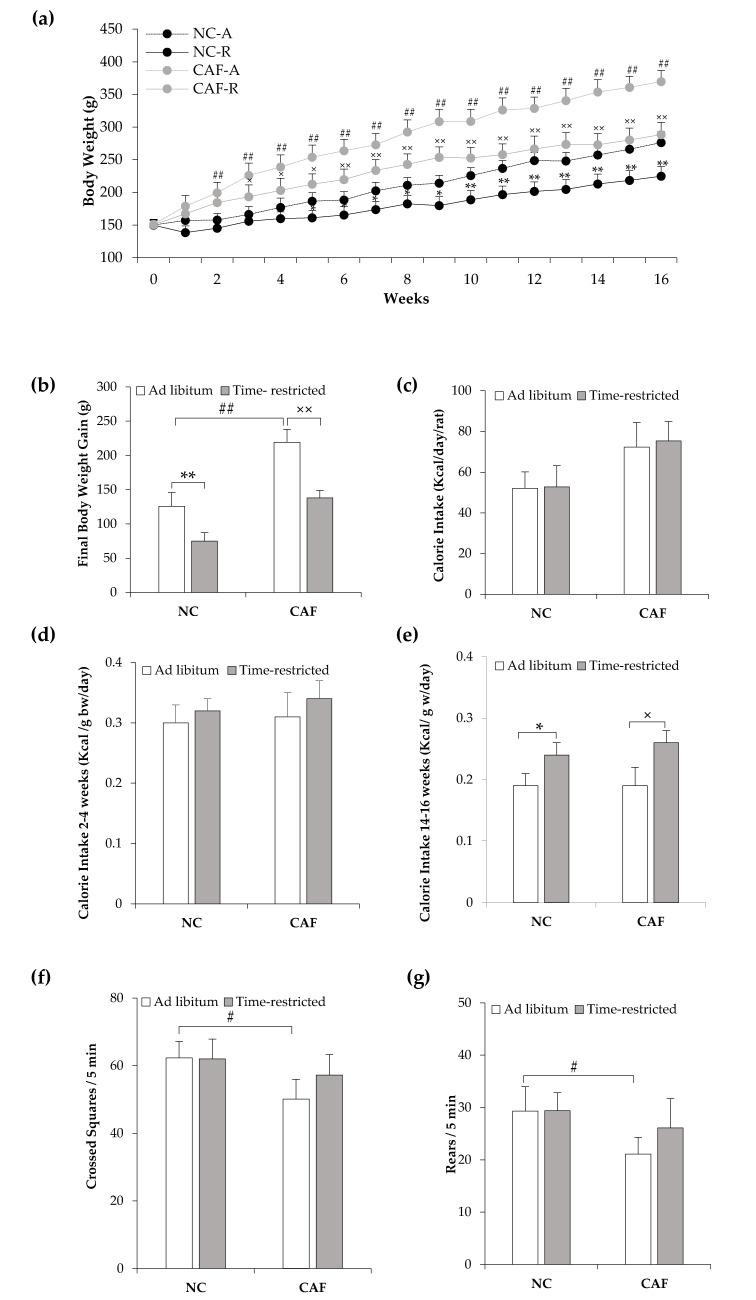
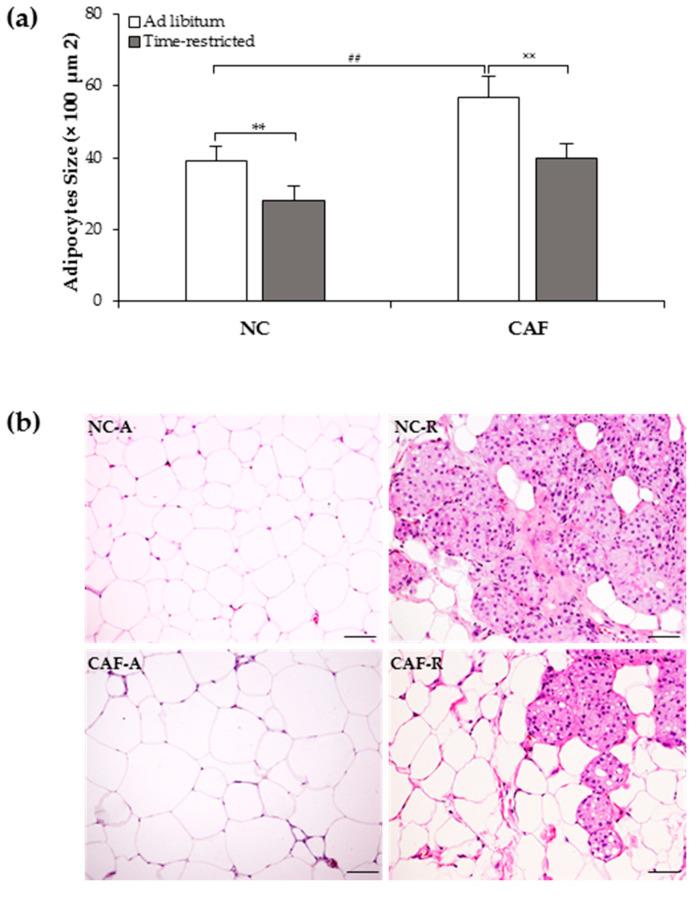
Time-restricted feeding (TRF) showed a potent effect in preventing obesity and improving metabolicoutcomes in several animal models of obesity. However, there is, as of yet, scarce evidence concerning its effectiveness against obesogenic challenges that more accurately mimic human Western diets, such as the cafeteria diet. Moreover, the mechanism for its efficacy is poorly understood. White adipose browning has been linked to body weight loss. Herein, we tested whether TRF has the potential to induce browning of inguinal white adipose tissue (iWAT) and to attenuate obesity and associated dyslipidemia in a cafeteria-diet-induced obesity model. Male Wistar rats were fed normal laboratory chow (NC) or cafeteria diet (CAF) for 16 weeks and were subdivided into two groups that were subjected to either ad libitum (ad lib, A) or TRF (R) for 8 h per day. Rats under the TRF regimen had a lower body weight gain and adiposity than the diet-matchedad lib rats, despite equivalent levels of food intake and locomotor activity. In addition, TRF improved the deranged lipid profile (total cholesterol (TC), triglycerides (TG), high-density lipoprotein (HDL-c), low-density lipoprotein (LDL-c)) and atherogenic indices (atherogenic index of plasma (AIP), atherogenic coefficient (AC), coronary risk index (CRI) in CAF-fed rats. Remarkably, TRF resulted in decreased size of adipocytes and induced emergence of multilocular brown-like adipocytes in iWAT of NC- and CAF-fed rats. Protein expression of browning markers, such as uncoupling protein-1 (UCP1) and peroxisome proliferator-activated receptor gamma coactivator 1-alpha (PGC1α), were also up-regulated in the iWAToftime-restricted NC- or CAF-fed rats. These findings suggest that a TRF regimen is an effective strategy to improve CAF diet-induced obesity, probably via a mechanismthe involving WAT browning process.
限时喂养(TRF)在几种肥胖动物模型中显示出预防肥胖和改善代谢结果的强大作用。然而,关于其对抗更准确模拟人类西方饮食的肥胖挑战的有效性的证据仍然很少,例如自助餐厅饮食。此外,其疗效的机制尚不清楚。白色脂肪褐变与体重减轻有关。在此,我们测试了限时喂养是否有可能诱导腹股沟白色脂肪组织(iWAT)的褐变,并在 cafeteria 饮食诱导的肥胖模型中减轻肥胖和相关的血脂异常。雄性 Wistar 大鼠分别用正常实验室饲料(NC)或 cafeteria 饮食(CAF)喂养 16 周,并分为两组,每天分别进行自由进食(ad lib,A)或限时喂养(R)8 小时。尽管食物摄入量和运动活动水平相等,但限时喂养组的大鼠体重增加和肥胖程度低于饮食匹配的自由进食大鼠。此外,限时喂养改善了紊乱的血脂谱(总胆固醇(TC)、甘油三酯(TG)、高密度脂蛋白胆固醇(HDL-c)、低密度脂蛋白胆固醇(LDL-c))和动脉粥样硬化指数(血浆动脉粥样硬化指数(AIP)、动脉粥样硬化系数(AC)、冠状动脉风险指数(CRI)在 CAF 喂养的大鼠中。值得注意的是,限时喂养导致 NC 和 CAF 喂养大鼠 iWAT 中脂肪细胞体积减小,并诱导多房棕色样脂肪细胞的出现。褐变标志物的蛋白表达,如解偶联蛋白 1(UCP1)和过氧化物酶体增殖物激活受体γ共激活因子 1-α(PGC1α),也在上限喂养的 iWAT 中上调NC 或 CAF 喂养的大鼠。这些发现表明,限时喂养方案是改善 CAF 饮食诱导肥胖的有效策略,可能通过涉及 WAT 褐变过程的机制。


 Zotero 插件