
从大规模神经影像学研究中了解双相情感障碍:来自 ENIGMA 双相情感障碍工作组的发现和未来方向。
What we learn about bipolar disorder from large-scale neuroimaging: Findings and future directions from the ENIGMA Bipolar Disorder Working Group.
机构信息
Imaging Genetics Center, Mark and Mary Stevens Neuroimaging and Informatics Institute, Keck School of Medicine, University of Southern California, Los Angeles, California, USA.
Genentech, Inc., South San Francisco, California, USA.
出版信息
Hum Brain Mapp. 2022 Jan;43(1):56-82. doi: 10.1002/hbm.25098. Epub 2020 Jul 29.
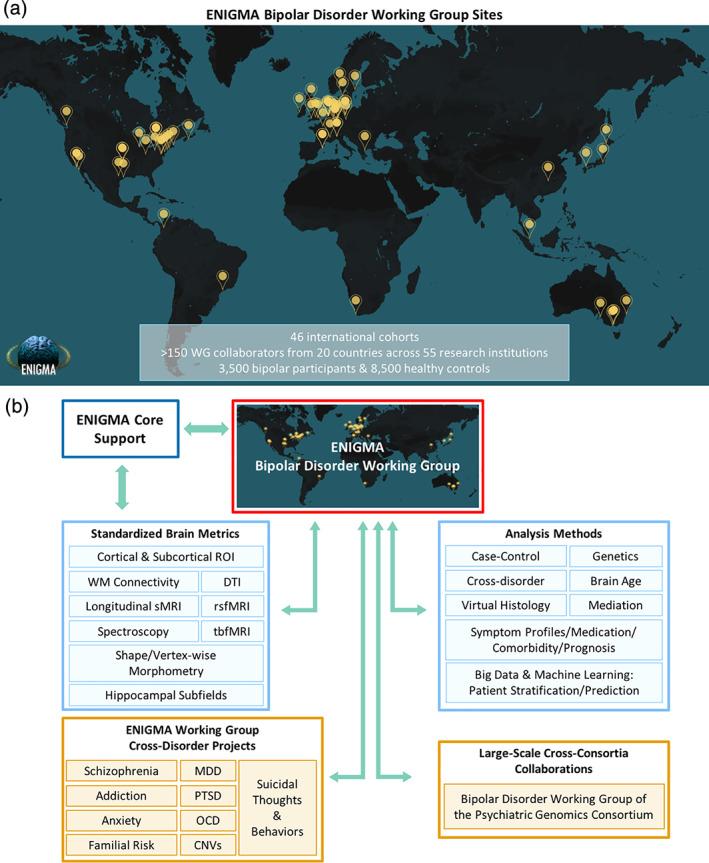
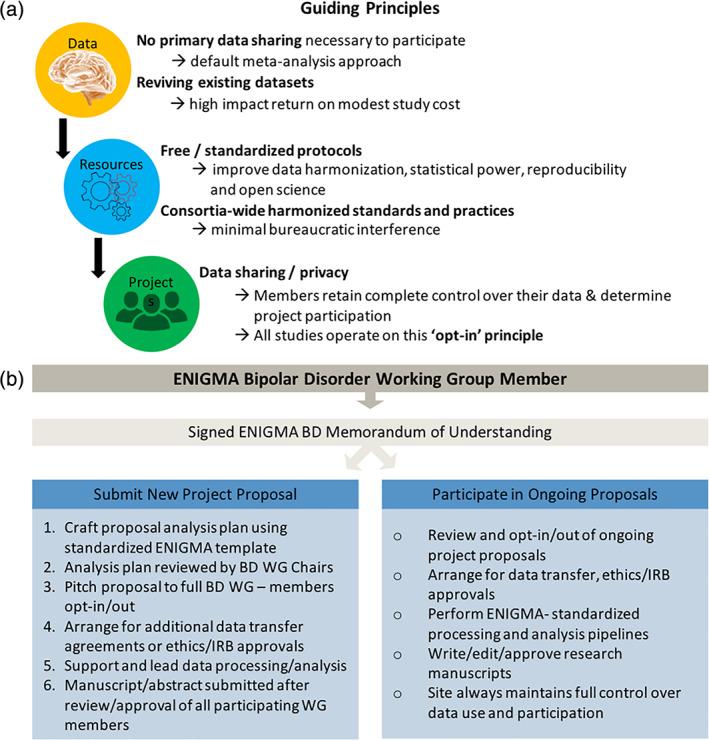
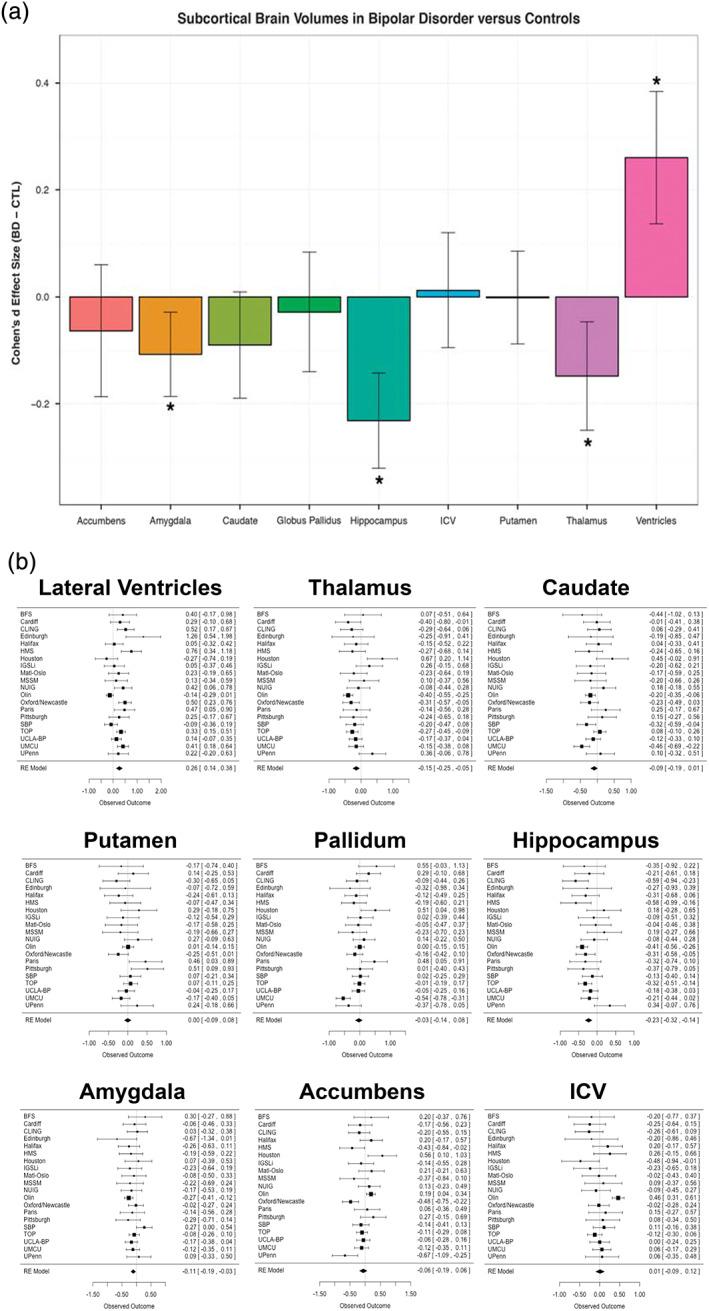
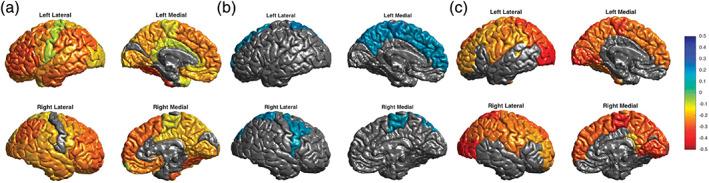
MRI-derived brain measures offer a link between genes, the environment and behavior and have been widely studied in bipolar disorder (BD). However, many neuroimaging studies of BD have been underpowered, leading to varied results and uncertainty regarding effects. The Enhancing Neuro Imaging Genetics through Meta-Analysis (ENIGMA) Bipolar Disorder Working Group was formed in 2012 to empower discoveries, generate consensus findings and inform future hypothesis-driven studies of BD. Through this effort, over 150 researchers from 20 countries and 55 institutions pool data and resources to produce the largest neuroimaging studies of BD ever conducted. The ENIGMA Bipolar Disorder Working Group applies standardized processing and analysis techniques to empower large-scale meta- and mega-analyses of multimodal brain MRI and improve the replicability of studies relating brain variation to clinical and genetic data. Initial BD Working Group studies reveal widespread patterns of lower cortical thickness, subcortical volume and disrupted white matter integrity associated with BD. Findings also include mapping brain alterations of common medications like lithium, symptom patterns and clinical risk profiles and have provided further insights into the pathophysiological mechanisms of BD. Here we discuss key findings from the BD working group, its ongoing projects and future directions for large-scale, collaborative studies of mental illness.
MRI 衍生的脑测量提供了基因、环境和行为之间的联系,并且已经在双相情感障碍 (BD) 中得到了广泛的研究。然而,许多 BD 的神经影像学研究都没有足够的效力,导致结果不一致,并且对影响的不确定性。增强通过荟萃分析进行神经影像学遗传学 (ENIGMA) 双相情感障碍工作组于 2012 年成立,旨在赋予发现权、产生共识结果,并为未来的双相情感障碍假设驱动研究提供信息。通过这项工作,来自 20 个国家和 55 个机构的 150 多名研究人员汇集了数据和资源,进行了有史以来最大规模的 BD 神经影像学研究。ENIGMA 双相情感障碍工作组应用标准化的处理和分析技术,对多模态脑 MRI 的大规模元分析和 mega 分析进行赋能,并提高将大脑变化与临床和遗传数据相关联的研究的可重复性。BD 工作组的初步研究揭示了与 BD 相关的广泛的皮质厚度、皮质下体积和白质完整性破坏的模式。研究结果还包括绘制常见药物(如锂)、症状模式和临床风险特征的大脑改变图谱,并为双相情感障碍的病理生理学机制提供了进一步的见解。在这里,我们讨论了 BD 工作组的主要发现、正在进行的项目以及大规模合作研究精神疾病的未来方向。


 Zotero 插件