
肿瘤中的 CD8 淋巴细胞和非同义突变负荷与接受免疫检查点抑制剂治疗的膀胱癌患者的预后相关。
CD8 lymphocytes in tumors and nonsynonymous mutational load correlate with prognosis of bladder cancer patients treated with immune checkpoint inhibitors.
机构信息
Department of Medicine, The University of Chicago, Chicago, IL, USA.
Department of Gynecology, The First Hospital Affiliated to the China Medical University, Shenyang, Liaoning, China.
出版信息
Cancer Rep (Hoboken). 2018 Jun;1(1):e1002. doi: 10.1002/cnr2.1002. Epub 2018 Apr 10.
BACKGROUND
Anti-programed cell death 1 checkpoint inhibitors have recently demonstrated effectiveness against metastatic cancers including urothelial carcinoma.
AIMS
To identify biomarkers/factors that correlate with the clinical response in advanced bladder cancer patients who received immune checkpoint inhibitor treatment.
METHODS AND RESULTS
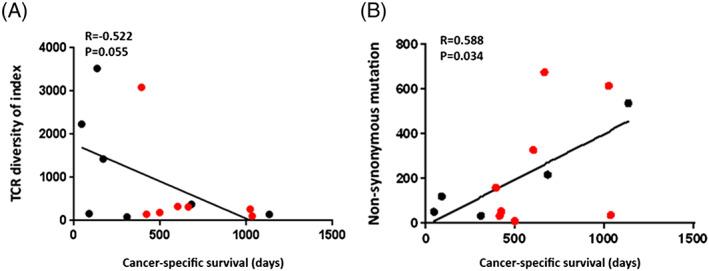
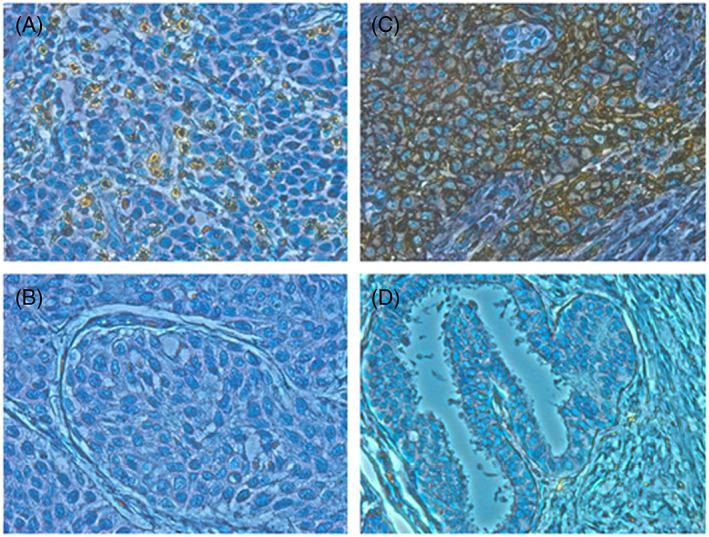
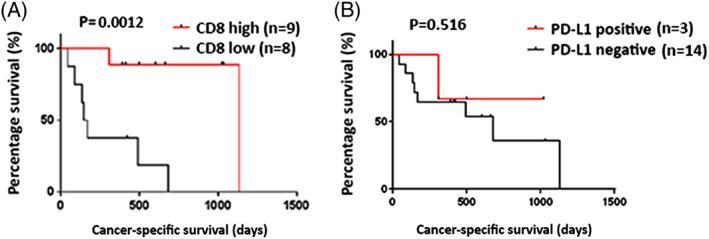
We investigated tumors from 18 bladder cancer patients who had received anti-programed cell death 1 (pembrolizumab) or anti-programmed death-ligand 1 therapy (atezolizumab or durvalumab) and performed exome analysis, T-cell receptor sequencing of the tumor-infiltrating lymphocytes (TILs), and immunohistochemical analysis of CD8 and programmed death-ligand 1 in cancer tissues. Immunohistochemical analysis of bladder cancer tissues demonstrated that a higher number of CD8 T-cell infiltration into cancer tissues was significantly associated with longer cancer-specific survival of the patients (P = .0012). T-cell receptor beta sequencing of TILs using genomic DNAs extracted from the tissues of 15 cases revealed that patients with higher clonal expansion of TILs had some tendency of longer cancer-specific survival (P = .055), than those with lower clonal expansion. We performed whole exome sequencing of 14 cases and found that patients carrying higher numbers of somatic mutations received greater benefit from immunotherapy (P = .034) and one patient who had high microsatellite instability has survived for 1034 days.
CONCLUSION
CD8 infiltration in tumors and nonsynonymous mutation load might be useful predictive markers for immune checkpoint inhibitors for bladder cancer patients.
背景
抗程序性细胞死亡 1 检查点抑制剂最近已被证明对包括尿路上皮癌在内的转移性癌症有效。
目的
确定与接受免疫检查点抑制剂治疗的晚期膀胱癌患者临床反应相关的生物标志物/因素。
方法和结果
我们研究了 18 名接受抗程序性细胞死亡 1(pembrolizumab)或抗程序性死亡配体 1 治疗(atezolizumab 或 durvalumab)的膀胱癌患者的肿瘤,并进行了外显子组分析、肿瘤浸润淋巴细胞(TILs)的 T 细胞受体测序以及肿瘤组织中 CD8 和程序性死亡配体 1 的免疫组织化学分析。膀胱癌组织的免疫组织化学分析表明,癌症组织中 CD8 T 细胞浸润的数量越多,患者的癌症特异性生存率显著更长(P =.0012)。使用从 15 例组织中提取的基因组 DNA 对 TILs 进行 T 细胞受体β测序,结果显示 TIL 克隆扩增较高的患者的癌症特异性生存率有一定的延长趋势(P =.055),而 TIL 克隆扩增较低的患者则无此趋势。我们对 14 例病例进行了全外显子组测序,发现携带更多体细胞突变的患者从免疫治疗中获益更大(P =.034),一名高度微卫星不稳定的患者已存活 1034 天。
结论
肿瘤中 CD8 的浸润和非同义突变负荷可能是膀胱癌患者免疫检查点抑制剂的有用预测标志物。
 Zotero 插件